
TL;DR:
- A wellness retreat is a structured, multi-day program focused on improving physical, mental, and emotional health through active participation. Its benefits include better mood, sleep, and stress levels, mainly achieved by removing participants from chronic stress environments. Choosing the right retreat involves aligning goals, program structure, and post-retreat practices to sustain long-term wellness.
A wellness retreat is defined as a multi-day, program-driven experience designed to improve physical, mental, and emotional well-being through structured activities, expert guidance, and an immersive environment. Unlike a spa day or a beach vacation, a wellness retreat asks you to actively participate in workshops, movement sessions, and reflection practices over several consecutive days. Explaining wellness retreats accurately matters because the term gets misused constantly, leading people to book the wrong experience for their needs. This guide covers what wellness retreats actually are, what science says about their benefits, and how to choose one that fits where you are right now.
What are wellness retreats, and how are they structured?
A wellness retreat is a structured, multi-day program built around improving health across physical, mental, and emotional dimensions. The key word is "structured." You are not simply relaxing by a pool. You follow a daily schedule that typically includes morning movement, nutritional meals, bodywork sessions, group workshops, and guided meditation or breathwork.
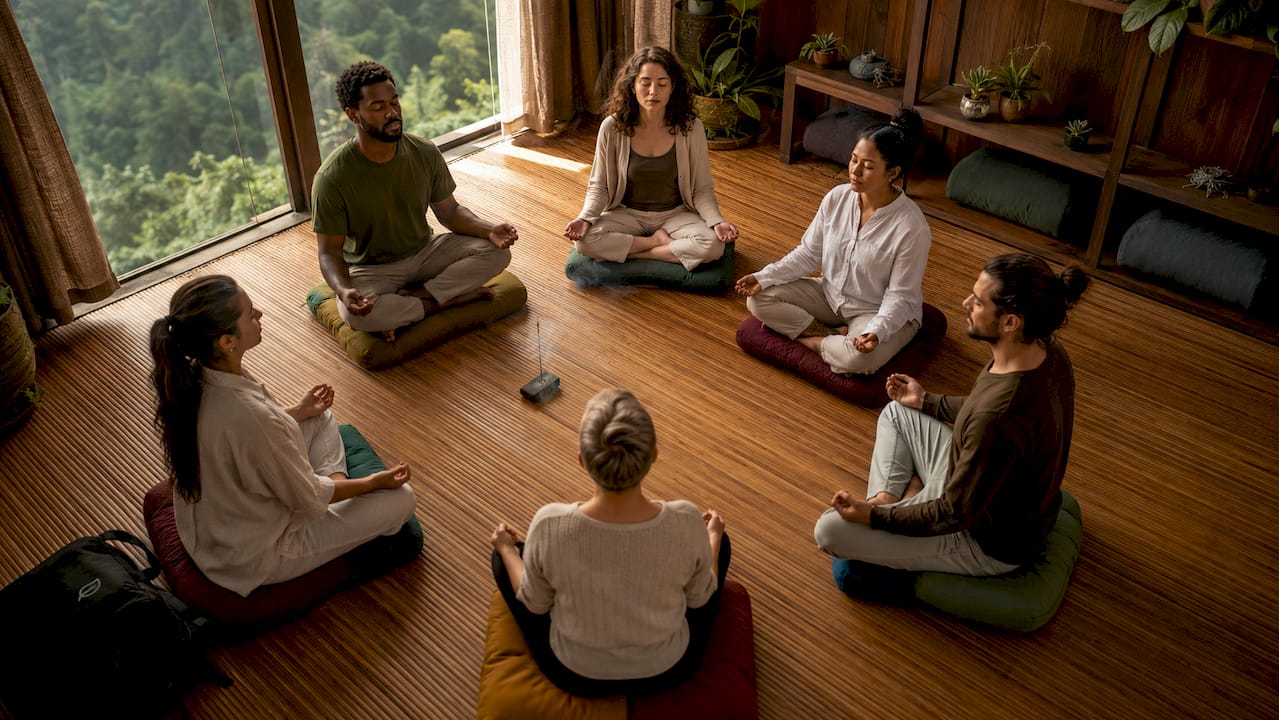
Retreats usually host 4 to 60+ participants during a stay. That range matters because it shapes the social dynamic you will experience. A small group of 8 people creates an intimate, almost therapeutic atmosphere. A group of 40 feels more like a conference with wellness programming layered in.
The recommended duration for a first-time retreat is 3–5 nights. Shorter stays rarely produce the behavioral or physiological shift that makes a retreat worthwhile. You need enough time for your nervous system to settle, your habits to loosen, and the new routines to take hold.
How retreats differ from spa visits
Spas focus on passive treatments and one-day visits, while wellness retreats are multi-day, behaviorally focused programs intended to produce lasting change. At a spa, a therapist does something to you. At a retreat, you do the work, supported by practitioners and peers. This distinction is not semantic. It determines whether you leave with a temporary sense of calm or a genuinely different relationship with sleep, food, and stress.
Onsite living is central to the retreat model. Eating, sleeping, and practicing in the same environment removes the friction of daily life and keeps your attention on the program. Most retreats also include a digital detox, meaning no social media, limited phone use, and no work email. Early wake-ups, often before 6:30 AM, are standard. These are not punishments. They are deliberate tools to break habitual patterns.
- Daily schedule: Morning yoga or movement, group breakfast, workshops on nutrition or mindfulness, afternoon bodywork, evening reflection or sharing sessions
- Program focus areas: Meditation, detox, Ayurveda, breathwork, sleep optimization, or medical wellness depending on the retreat type
- Living arrangement: Onsite accommodation to maintain full immersion throughout the stay
- Digital detox: Structured disconnection from devices to support mental clarity and presence
Pro Tip: Before booking, ask the retreat organizer for a sample daily schedule. If the schedule looks mostly like spa treatments with a yoga class added, you are looking at a spa vacation, not a wellness retreat.
What benefits do wellness retreats offer?
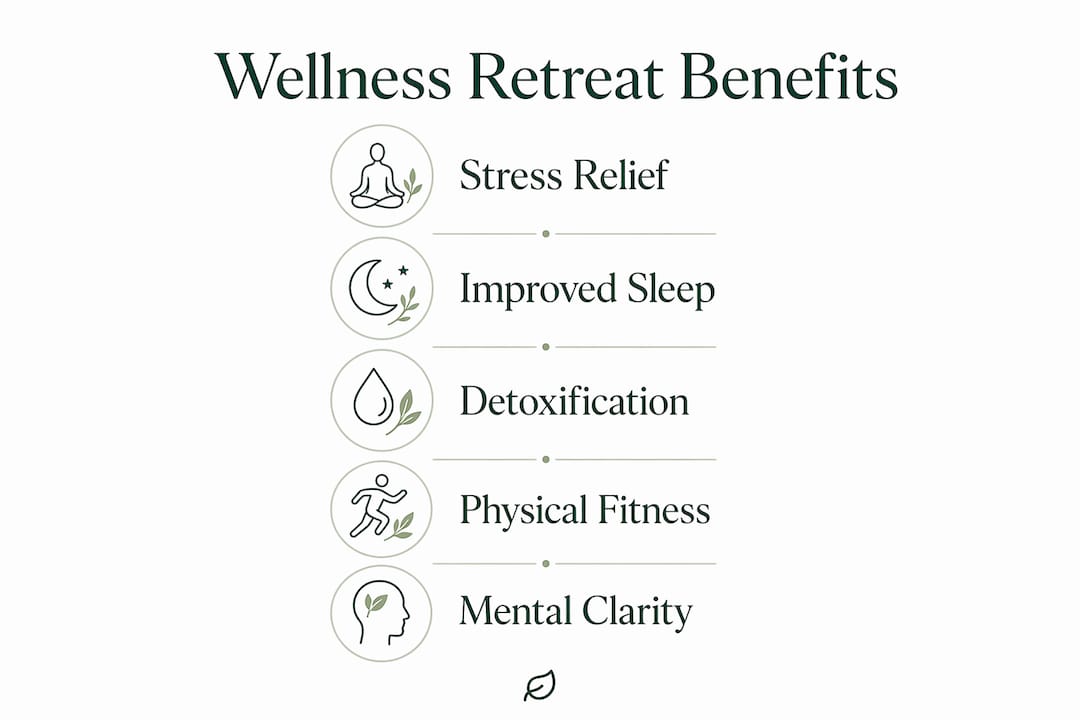
Scientific consensus in 2026 affirms that wellness retreats improve mood, sleep quality, and stress levels by interrupting daily stress routines. The evidence for these three outcomes is solid. The evidence for lifespan extension or biological age reversal is not.
Neuroscientific research identifies removing participants from chronic stress environments as the primary mechanism behind retreat benefits. When your brain exits a constant stress response state, memory, attention, and decision-making all improve. This is not a wellness industry talking point. It is basic neuroscience applied to a structured environment.
"Retreats work as intensive workshops to instill long-term beneficial habits such as consistent sleep and nutrition. The real value is the behavioral reset rather than longevity per se. Longevity evidence is marketing-heavy and not strongly supported scientifically."
Source: The evolution of the wellness retreat, BBC Travel, 2026
Retreats offer a combination of movement, rest, nutritious food, reduced stress, and time in nature that singular spa treatments cannot replicate. That combination is the point. No single modality produces the same result as several days of integrated programming.
What about cost?
Costs vary greatly, from affordable group programs to ultra-luxury medical retreats costing tens of thousands of dollars, not including travel and gear. Specialized medical clinics can charge several thousand pounds for a multi-night stay. That price range reflects a genuine spectrum of experiences, from community-based yoga retreats in rural settings to clinical longevity programs with lab testing and physician oversight.
The cost question connects directly to expectations. A $500 group retreat in the mountains will not deliver the same medical depth as a $15,000 clinical program. Both can produce real benefits, but only if you choose the right one for your actual goals. Matching price to purpose is part of choosing well.
The real long-term benefits come from integrating retreat practices into daily life after you return home. Without post-retreat practice, gains tend to fade within weeks. Structured follow-up, whether through virtual support, a local practitioner, or a personal wellness plan, significantly extends results. Exploring evidence-based wellness practices before and after your retreat gives you a framework for sustaining what you build there.
How to choose a wellness retreat that fits your needs
Choosing the right retreat starts with one honest question: what do you actually need right now? Not what sounds appealing in a brochure. What your body and mind genuinely require at this moment.
Experts recommend reflecting on whether you need community and motivation or privacy and one-on-one attention before booking. Group retreats work well if you draw energy from shared experience and peer accountability. Private retreats suit people who need space to process, or who have specific health concerns requiring personalized attention. Booking the wrong format is one of the most common retreat mistakes.
- Clarify your primary goal. Are you seeking stress relief, physical detox, better sleep, emotional processing, or a specific modality like Ayurveda or breathwork? Your answer narrows the field significantly.
- Match intensity to your readiness. A silent meditation retreat is not a good first retreat if you have never meditated. Start with a program that includes guided instruction and social interaction.
- Check the program structure. Look for a schedule that balances active programming with rest. A retreat that packs 10 hours of workshops into each day may leave you more depleted than restored.
- Research the practitioners. Verify that facilitators hold recognized credentials in their disciplines. Ask about their training, experience, and approach before committing.
- Consider the setting. Nature-based environments, mountains, coastlines, and forests, support nervous system recovery in ways that urban retreat centers often cannot match.
Tailoring your retreat choice to your current emotional and physical needs directly improves both satisfaction and outcomes. A retreat that challenges you slightly beyond your comfort zone tends to produce the most growth. One that overwhelms you produces resistance.
Pro Tip: Call the retreat center before booking. Ask how many participants are in each session, what the practitioner-to-participant ratio is, and whether the program includes integration support after you leave. Their answers reveal whether the program is genuinely participant-centered.
What should first-timers expect from a wellness retreat experience?
Arrival day is almost always awkward. You do not know anyone. The schedule feels unfamiliar. The food is different from what you eat at home. First-time attendees often find arrival day exhausting, and that is completely normal. The discomfort is part of the process, not a sign that you chose the wrong retreat.
Most first-timers experience rigorous schedules, including early wake-ups and digital detoxes. These are intentional. Breaking your habitual patterns of sleep, screen use, and eating is what creates the space for new habits to form. By day two or three, most participants report that the early mornings feel natural and the absence of their phone feels like relief.
Emotional breakthroughs are common, particularly in retreats that include group sharing sessions, somatic bodywork, or breathwork. These moments can feel surprising or even unsettling. They are a sign that the program is working at a deeper level than surface relaxation.
- Arrival day: Orientation, settling in, meeting fellow participants, and adjusting to the schedule
- Days 2–3: The program rhythm becomes familiar; physical and mental resistance often peaks before easing
- Mid-retreat: Deeper engagement with workshops and bodywork; emotional processing may intensify
- Final day: Integration sessions focused on how to carry practices home; reflection on personal insights
- Post-retreat: The critical window for habit formation; this is when the real work begins
Planning your transition home before you leave the retreat is one of the most underrated steps. Decide which two or three practices you will maintain. Schedule your first post-retreat check-in with a practitioner. Build the structure before you return to your regular environment. You can use a personalized holistic health plan to map out exactly how to keep your gains alive.
Key Takeaways
A wellness retreat produces lasting benefits only when you choose the right program for your current needs and actively integrate the practices into your daily life after returning home.
| Point | Details |
|---|---|
| Retreats require active participation | Multi-day structured programs differ fundamentally from passive spa visits or short treatments. |
| Science supports mood, sleep, and stress gains | Evidence is strong for these three outcomes; longevity claims lack solid scientific backing. |
| Duration matters for first-timers | A 3–5 night stay gives your nervous system enough time to shift out of chronic stress patterns. |
| Match the retreat format to your needs | Group retreats suit social learners; private retreats suit those needing personalized attention. |
| Post-retreat integration determines ROI | Gains fade without continued practice; structured follow-up extends results significantly. |
What I've learned from watching people get retreats wrong
People consistently treat wellness retreats as luxury vacations with a yoga class attached. That framing sets them up for disappointment. A retreat is closer to an intensive workshop than a holiday. The discomfort, the early mornings, the emotional moments, these are the mechanism, not the inconvenience.
The most common mistake I see is choosing a retreat based on the setting rather than the program. A beautiful location in Bali or Costa Rica is appealing, but if the daily schedule is mostly spa treatments with one group meditation, you are paying resort prices for a spa experience. The transformation comes from the programming, not the view.
I also think people underestimate how much the post-retreat period matters. The retreat itself is the spark. What you do in the two weeks after you return is what determines whether that spark becomes a lasting change or fades by the following Monday. Build your re-entry plan before you leave. Identify a local practitioner, a daily practice, and a check-in structure. Connecting with holistic guides for whole-person wellness before your retreat gives you a support network ready when you return.
The retreats that produce real change are the ones where participants arrive with a clear intention, engage fully with the program, and leave with a concrete plan. That combination is rarer than it should be, and it is entirely within your control.
— Andrew
Continuing your wellness after the retreat
Returning home from a retreat is when your real work begins. The practices you built over several days need a structure to survive contact with your regular schedule.
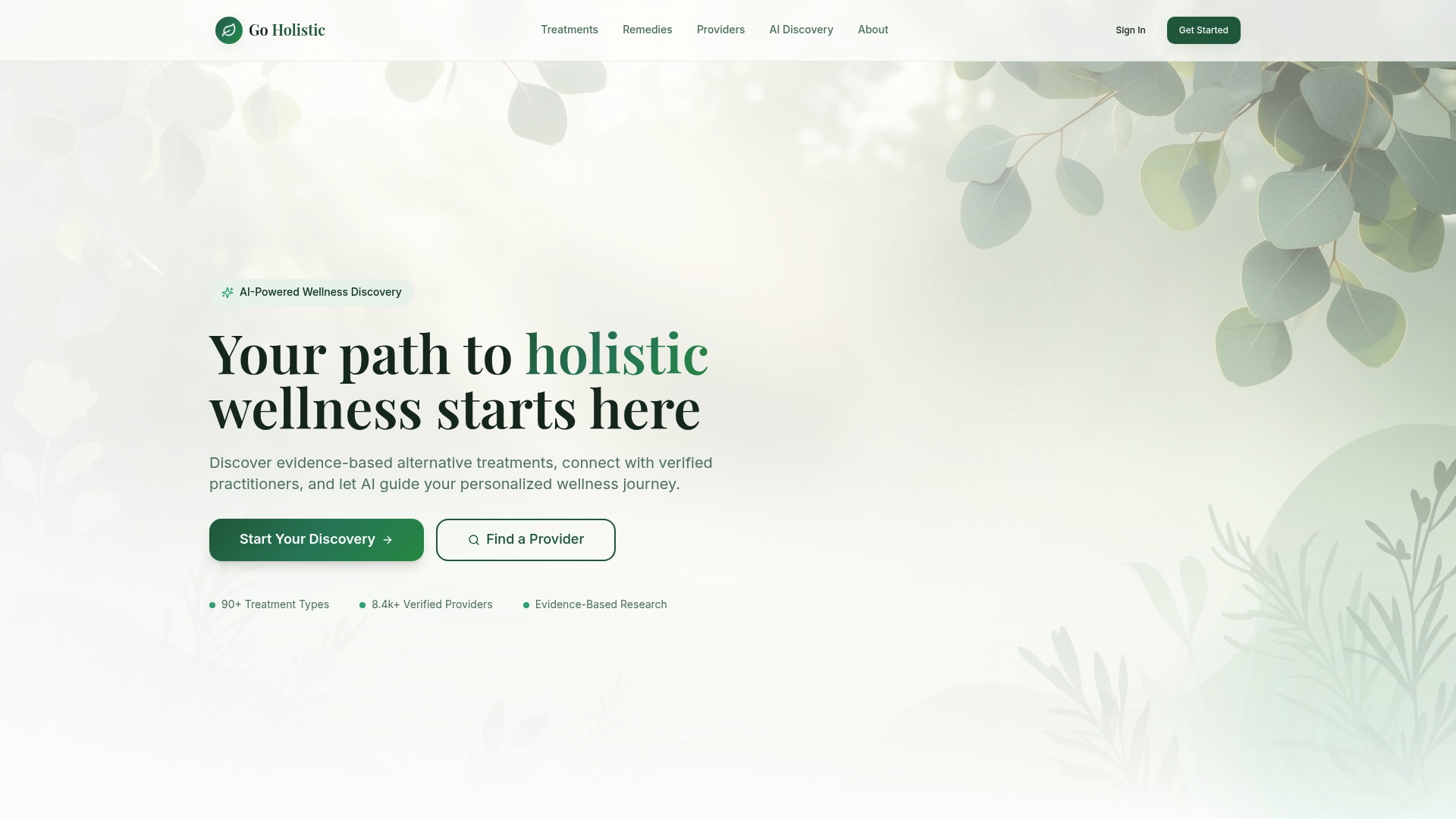
Goholistic connects you with verified holistic practitioners across disciplines including acupuncture, Ayurveda, massage therapy, and more, so you can continue the work your retreat started. The platform's AI-powered recommendations match your specific health concerns to evidence-based treatments drawn from a library of over 200 therapy types. Whether you want to maintain your sleep improvements, deepen your meditation practice, or address a specific physical concern, Goholistic helps you find the right practitioner and book a consultation without the guesswork. You can also find holistic practitioners near you to keep your care local and consistent.
FAQ
What is a wellness retreat, exactly?
A wellness retreat is a multi-day, structured program designed to improve physical, mental, and emotional health through expert-led activities, nutritious food, bodywork, and an immersive environment. It differs from a spa visit because it requires active participation over several consecutive days.
How long should a first wellness retreat be?
The recommended duration for a first-time wellness retreat is 3–5 nights. Shorter stays typically function more like spa visits and do not produce the behavioral or physiological shift that makes a retreat valuable.
Do wellness retreats have proven health benefits?
Scientific consensus confirms that wellness retreats improve mood, sleep quality, and stress levels by removing participants from chronic stress environments. Evidence for longevity or biological age reversal is not strongly supported.
How do I choose the right wellness retreat for my needs?
Identify your primary goal first, whether stress relief, detox, better sleep, or a specific modality, then match the retreat's format, intensity, and duration to your current readiness. Experts recommend reflecting on whether you need group support or private attention before booking.
How do I maintain the benefits after a wellness retreat?
The long-term benefits of a retreat depend on integrating the practices you learned into daily life. Structured follow-up with a local practitioner, a consistent daily routine, and a personal wellness plan all significantly extend your results.