

TL;DR:
- Myths about holistic health often lead to unsafe products or ignore proven treatments.
- The best approach combines evidence-based complementary therapies with conventional medicine and verified practitioners.
Holistic health myths are widespread misunderstandings that distort what natural and alternative healing practices actually offer. The term "integrative health" is the recognized clinical standard for care that combines conventional medicine with evidence-based complementary therapies. Yet misinformation keeps many people either dismissing these approaches entirely or trusting them without question. Both extremes cause real harm. This article sets the record straight on the most common misconceptions, drawing on regulatory data, practitioner training standards, and clinical research so you can make genuinely informed choices.
1. What are the most common holistic health myths?
Understanding which myths circulate most widely is the first step toward clearing them up. The misconceptions below cover safety, credentials, timelines, and scientific evidence.
- "Natural means safe." Natural products can contain undeclared pharmaceuticals. Regulatory alerts in 2025 identified 23 products with hidden drug ingredients marketed as natural remedies. That number shows the risk is not theoretical.
- "Holistic care replaces conventional medicine." Wellness integration frameworks recommend layering holistic approaches alongside clinical treatment, not instead of it.
- "All holistic practitioners have the same training." Credentials vary enormously. A licensed naturopathic doctor completes 4 years of graduate training, while some practitioners hold only a weekend certificate.
- "Holistic treatments work instantly." Traditional Chinese Medicine and many other modalities require treatment cycles lasting up to 3 months for chronic conditions.
- "There is no science behind holistic care." Academic medical centers including Cleveland Clinic, Mayo Clinic, and Johns Hopkins apply the same evidence standards to holistic modalities as they do to pharmaceutical interventions.
Each myth above has a clear, evidence-based answer. The sections that follow unpack each one in depth.
2. What "integrative health" really means and why misconceptions arise
Integrative health is defined as care that addresses the mind, body, and spirit together, combining conventional diagnosis with complementary therapies. The word "integrative" signals that nothing is discarded. Conventional medicine stays in the picture. Complementary approaches are added where evidence supports them.

The confusion starts with language. "Holistic" is a philosophy, not a protected job title. Credential variation among practitioners is wide, so the same label can describe a board-certified physician and someone with a two-day online course. That gap breeds distrust on one side and blind faith on the other.
Naturopathic medicine is one well-defined branch of this field. Licensed naturopathic doctors train for four or more years at accredited graduate schools, learning conventional diagnostics alongside botanical medicine, nutrition, and physical therapies. They qualify as primary care providers in many states. That is a very different credential from a wellness coach or a self-described energy healer.
Holistic psychotherapy offers another clear example. It builds on conventional psychology by adding nervous system regulation techniques for deeper, lasting change. It complements standard therapy rather than replacing it. Understanding these distinctions protects you from both over-reliance and unnecessary dismissal.
3. "Natural" does not mean safe: myths about natural products
The belief that natural products are automatically harmless is one of the most persistent common holistic misconceptions. Plants and herbs contain active compounds. Those compounds have real pharmacological effects, and some of them interact with prescription medications.
St. John's wort is a well-known example. It can cause serious herb-drug interactions, particularly with antidepressants, blood thinners, and birth control pills. The interaction is not mild. It can reduce the effectiveness of life-saving medications.
Regulatory data makes the risk concrete. In 2025, alerts flagged 23 products containing undeclared pharmaceuticals sold under natural or wellness branding. That means people were unknowingly consuming prescription-strength drugs. Checking product safety through official regulatory databases is a practical step every supplement user should take. The U.S. Food and Drug Administration maintains a public database of tainted supplement alerts.
Pro Tip: Before starting any supplement, search the FDA's tainted supplement database and tell your primary care physician exactly what you are taking. This one step prevents the majority of herb-drug interaction risks.
Disclosure matters as much as research. Your physician cannot protect you from interactions they do not know about. Full transparency with every member of your care team is non-negotiable.
4. Holistic treatments rarely deliver instant results
The expectation of overnight relief is one of the most damaging myths about alternative medicine. It sets people up to abandon effective therapies too early, before the treatment has had time to work.
Chronic conditions take time to develop. They also take time to address. Traditional Chinese Medicine, for example, typically structures care in treatment cycles that can span up to 3 months for conditions like chronic pain, fatigue, or digestive issues. That timeline is not a weakness. It reflects the reality of how the body responds to sustained, low-intervention care.
Acupuncture for chronic lower back pain is a good illustration. Research shows benefit, but most studies measure outcomes at 8 to 12 weeks, not after a single session. Expecting results after one visit is like expecting a fitness program to reshape your body after one workout.
Pro Tip: When starting a new holistic therapy, set a realistic review point at 6 to 8 weeks. Track specific symptoms on a simple 1–10 scale each week. This gives you objective data to assess progress rather than relying on day-to-day feelings.
Patience and consistency are the two factors most strongly linked to positive outcomes in integrative care. A good practitioner will set clear milestones with you from the first appointment.
5. How evidence supports integrative health practices
The claim that holistic care lacks scientific backing is one of the most common holistic health misconceptions, and it is factually incorrect for many modalities. The more accurate statement is that research funding for non-patentable substances is limited. Absence of large-scale trials does not equal disproof of efficacy. Those are two different things.
Leading academic centers treat this distinction seriously. Cleveland Clinic, Mayo Clinic, and Johns Hopkins each apply rigorous evidence evaluation to integrative modalities, using the same randomized controlled trial and systematic review standards applied to drugs. That institutional commitment signals that the field has moved well beyond anecdote.
The table below shows how evidence strength varies across common modalities.
| Modality | Evidence strength | Best-supported use case |
|---|---|---|
| Acupuncture | Strong (multiple RCTs) | Chronic pain, nausea |
| Mindfulness-based stress reduction | Strong (systematic reviews) | Anxiety, depression support |
| Botanical medicine (select herbs) | Moderate (some RCTs) | Specific conditions, e.g., echinacea for colds |
| Energy therapies (e.g., Reiki) | Limited (small studies) | Relaxation, palliative comfort |
| Nutritional therapy | Moderate to strong | Metabolic and digestive conditions |
The pattern is clear. Evidence is not absent across the board. It is uneven. Choosing evidence-based wellness practices means selecting modalities where the research is strongest for your specific concern.
6. How to identify qualified practitioners and avoid misleading claims
Finding a trustworthy practitioner is the most practical challenge in integrative health. The term "holistic practitioner" is unregulated in many jurisdictions, which means anyone can use it. Your job is to look past the label and verify the credential.
Here is what to check before booking:
- Licensing board verification. Naturopathic doctors, acupuncturists, and massage therapists are licensed in most U.S. states. Look up the practitioner's license number on the relevant state board website.
- Graduate-level training. Licensed naturopathic doctors complete 4 years of graduate schooling at accredited institutions. Ask directly where and when a practitioner trained.
- Transparency about limitations. A qualified practitioner tells you what their approach cannot do. Anyone promising a cure for a serious disease is a warning sign.
- Willingness to coordinate with your physician. Good integrative care is collaborative. A practitioner who discourages you from seeing a conventional doctor is not practicing responsibly.
- Reasonable pricing. High-cost proprietary protocols with no published evidence base are a red flag. Effective care does not require expensive supplements sold exclusively through the practitioner.
Pro Tip: Ask any new practitioner: "What would you refer me to a conventional physician for?" Their answer tells you immediately whether they understand the limits of their scope.
Goholistic's verified provider directory lists practitioners who have been checked for credentials and licensing, which removes much of the guesswork from this process.
Key takeaways
Most holistic health myths collapse under scrutiny. The most effective approach to integrative health is layering evidence-based complementary therapies alongside conventional medical care, with verified practitioners and realistic timelines.
| Point | Details |
|---|---|
| "Natural" carries real risk | Some natural products contain undeclared drugs or cause serious medication interactions. |
| Credentials vary widely | Verify licensing board registration; naturopathic doctors complete 4+ years of graduate training. |
| Results take time | Chronic condition management in integrative care typically requires 3-month treatment cycles. |
| Evidence exists but is uneven | Acupuncture and mindfulness have strong trial support; other modalities need more research. |
| Integration beats replacement | Layering holistic care with conventional medicine produces better outcomes than choosing one over the other. |
What I've learned from years of watching people navigate holistic health
The most common mistake I see is the all-or-nothing approach. People either reject every form of complementary care as pseudoscience, or they abandon their prescriptions in favor of supplements and energy work. Both positions cause harm.
The practitioners I trust most are the ones who say, "Here is what I can help with, and here is where you need your cardiologist." That kind of intellectual honesty is rare, and it is the clearest signal of genuine expertise. A weekend certificate holder rarely says it. A four-year-trained naturopathic doctor usually does.
Skepticism is healthy. Blanket dismissal is not. The research on acupuncture for chronic pain is solid enough that major academic hospitals now offer it. That does not mean every claim made under the "natural health" umbrella deserves equal trust. It means you owe it to yourself to look at the evidence for the specific modality and the specific condition, not the category as a whole.
The myths about alternative medicine that do the most damage are the ones that push people toward unsafe products or away from treatments that actually work. Clearing those myths up is not just an intellectual exercise. It is a health decision.
— Andrew
Goholistic makes finding trusted integrative care straightforward
Sorting through practitioner credentials, treatment evidence, and safety alerts on your own takes real effort. Goholistic brings that information together in one place, so you spend less time researching and more time getting care.
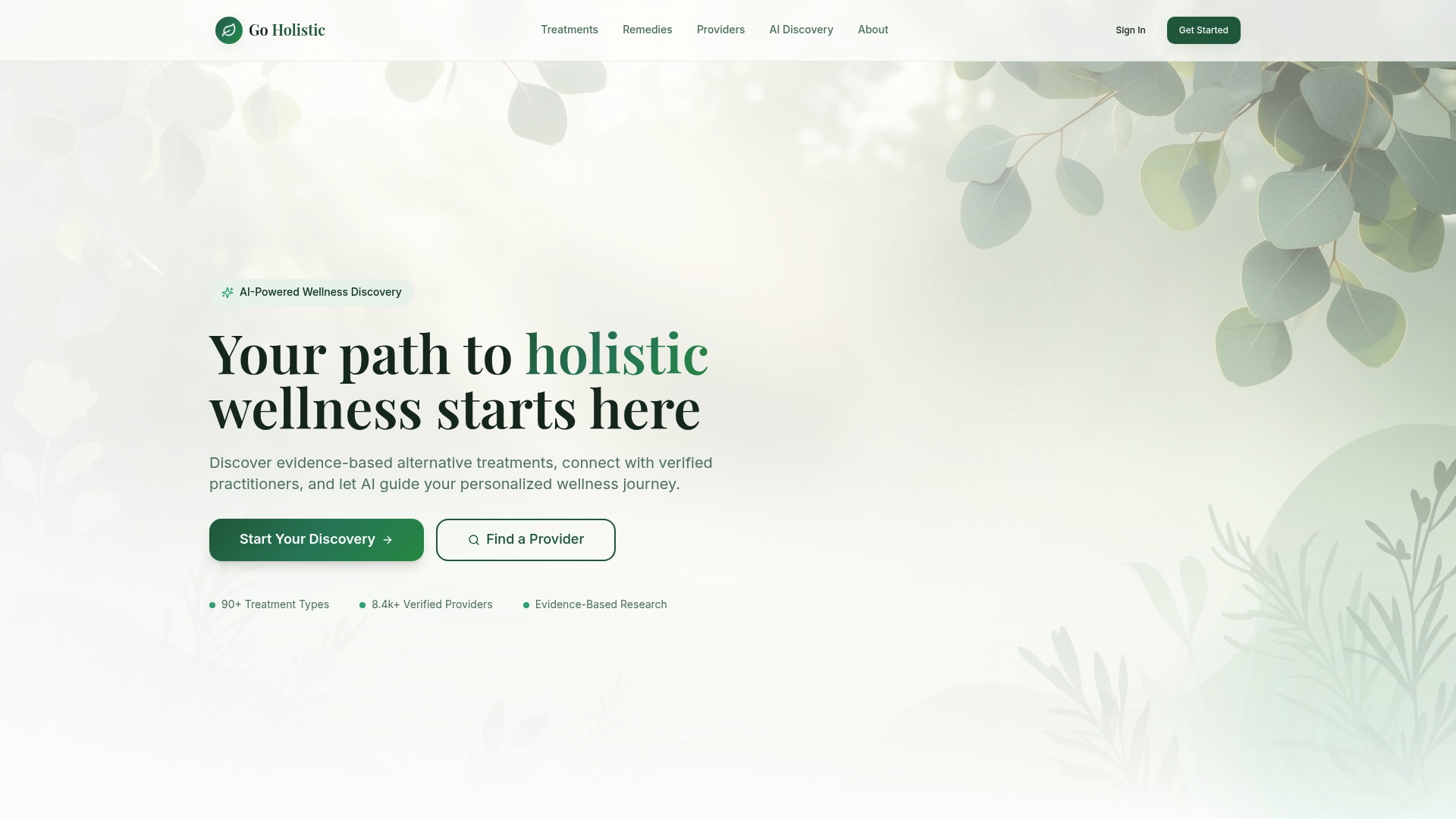
The platform connects you with verified holistic practitioners across disciplines including acupuncture, Ayurveda, and massage therapy. Every provider in the directory has been checked for licensing and credentials. Goholistic also hosts a treatment library covering over 200 therapy types, each supported by research summaries, so you can review the evidence before you book. Whether you are new to integrative health or looking to add a specific modality to your existing care plan, Goholistic gives you the tools to choose with confidence.
FAQ
Are holistic treatments scientifically proven?
Many holistic modalities, including acupuncture and mindfulness-based stress reduction, are supported by randomized controlled trials and systematic reviews. Evidence strength varies by modality and condition, so reviewing research for your specific concern is the most reliable approach.
Is it safe to take herbal supplements with prescription medications?
Not always. Supplements like St. John's wort can cause serious interactions with antidepressants, blood thinners, and other medications. Always disclose every supplement you take to your prescribing physician before starting.
How long do holistic treatments take to work?
Chronic condition management in integrative care, particularly Traditional Chinese Medicine, typically requires treatment cycles of up to 3 months. Single-session results are possible for acute symptoms but are not the norm for long-standing conditions.
How do I know if a holistic practitioner is qualified?
Check their license on the relevant state licensing board website. Licensed naturopathic doctors, acupuncturists, and massage therapists are regulated in most U.S. states. Be cautious of practitioners who cannot name an accredited institution where they trained.
Can holistic care replace my conventional medical treatment?
No. Integrative health frameworks position complementary therapies as additions to conventional care, not replacements. Any practitioner who advises you to stop prescribed medications without physician involvement is not practicing responsibly.