

TL;DR:
- Ayurveda is a 5,000-year-old health system from India that emphasizes simple, daily routines and natural lifestyle choices. Beginning with small practices like drinking warm water, tongue scraping, and herbal oils can improve overall health without overwhelming effort. Focusing on balance and consistency helps build sustainable habits that enhance digestion, energy, and well-being over time.
Ayurveda is defined as a 5,000-year-old science of life that balances the body, mind, and spirit through personalized daily habits and natural lifestyle choices. This beginner's guide to Ayurveda gives you a clear, practical starting point without overwhelming complexity. Ayurveda counts roughly 1 billion practitioners worldwide, making it one of the most widely practiced health systems on earth. You do not need to overhaul your life to benefit. Simple morning rituals called Dinacharya, a few dietary shifts, and an understanding of your personal constitution are enough to begin.
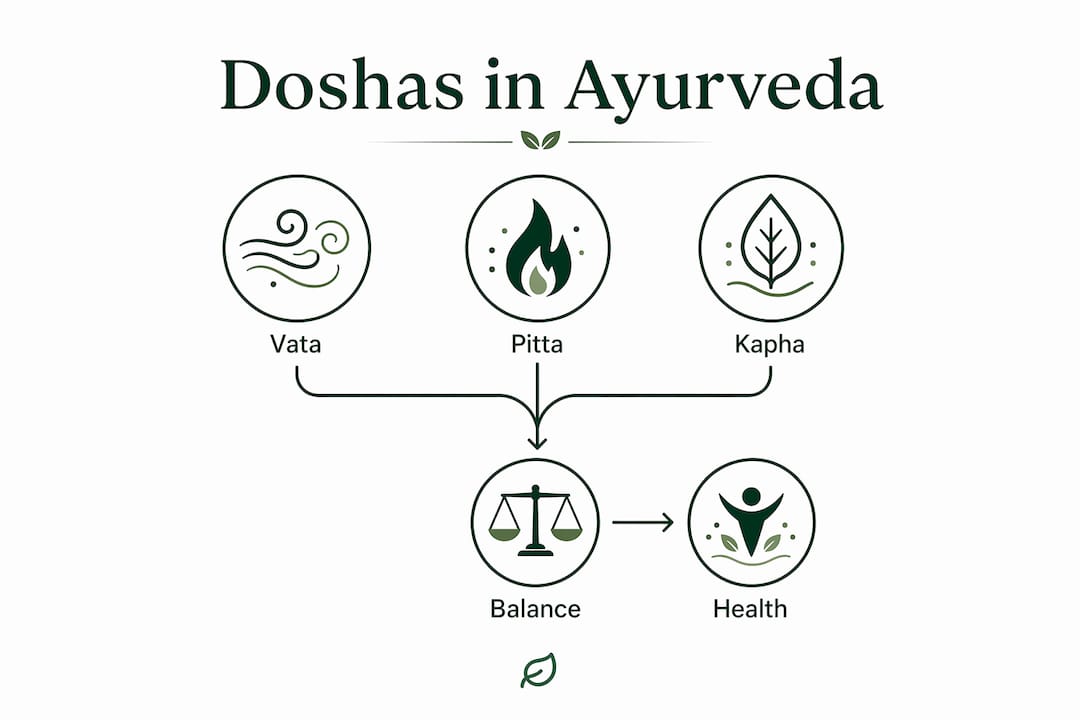
What are the core principles and doshas in Ayurveda?
Ayurveda organizes all of nature, including the human body, into three fundamental energies called doshas: Vata, Pitta, and Kapha. Dosha balance leads to health; imbalance leads to disease. Every person carries all three doshas, but in a unique ratio that defines their Prakriti, or constitutional type. Knowing your Prakriti tells you which foods, routines, and environments support your natural state.
Here is what each dosha governs:
- Vata (air and space): Controls movement, breathing, circulation, and nerve impulses. Vata types tend toward creativity and quick thinking but can become anxious or scattered when out of balance.
- Pitta (fire and water): Governs digestion, metabolism, and body temperature. Pitta types are driven and focused but can tip into irritability or inflammation when pushed too hard.
- Kapha (earth and water): Manages structure, lubrication, and immunity. Kapha types are calm and steady but may experience sluggishness or congestion when their energy stagnates.
The most common beginner misconception is that you need to eliminate one dosha entirely. Everyone has all three doshas in unique proportions. The goal is never elimination. The goal is balance. A Vata-dominant person in winter, for example, benefits from warm, grounding foods and a consistent sleep schedule because cold and irregularity aggravate Vata. A Pitta-dominant person in summer needs cooling foods and calm environments to prevent overheating. Understanding this principle shapes every practical decision in Ayurveda, from what you eat to when you sleep.
How to start with Ayurvedic daily routines (Dinacharya)
Dinacharya is the Ayurvedic term for a structured daily routine that aligns your body with natural rhythms. Dinacharya practices clear metabolic residue accumulated overnight and activate digestion for the day ahead. The word "Ama" refers to that residue, and "Agni" refers to your digestive fire. A morning routine fans Agni and clears Ama before you eat or engage with the world.
The good news for beginners: the core Dinacharya routine takes under five minutes and costs nothing. Start with these three steps:
- Drink warm water. Warm water increases gastric peristalsis more effectively than cold water, supporting elimination and waking up digestion. One cup, plain and warm, takes about 30 seconds to drink.
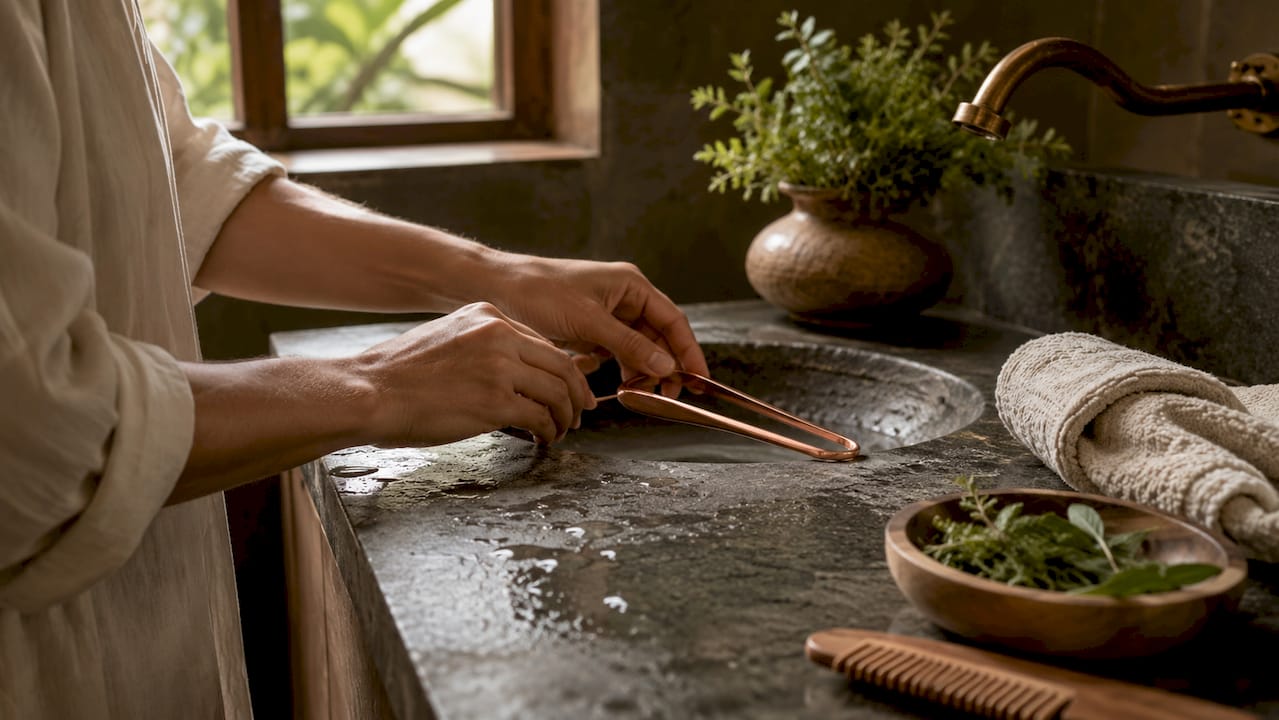
- Scrape your tongue. Use a metal or plastic tongue scraper and make 5 to 7 gentle strokes from back to front. A 30-second tongue scraping session removes bacteria and metabolic waste that accumulate on the tongue overnight.
- Apply Nasya oil. Place two drops of Nasya oil in each nostril. This protects the respiratory passages, lubricates nasal tissue, and supports mental clarity. Sesame oil works as a simple starting option.
These three steps form the minimal effective Ayurvedic morning routine. You can practice them without professional guidance or specialized knowledge. The sequence matters: warm water first to stimulate digestion, tongue scraping to clear overnight buildup, then Nasya to protect and prepare the respiratory system.
Pro Tip: Set your tongue scraper next to your toothbrush the night before. Habit stacking, attaching a new behavior to an existing one, is the fastest way to make Dinacharya stick.
For more Ayurveda-inspired daily rituals that support energy and vitality, building on these basics is a natural next step.
What dietary and lifestyle adjustments support Ayurvedic balance?
Ayurvedic nutrition is not a rigid diet plan. It is a framework built around six tastes: sweet, sour, salty, pungent, bitter, and astringent. A balanced meal includes all six tastes in proportions suited to your dosha. This approach naturally covers a wide spectrum of nutrients without calorie counting or elimination diets.
Key dietary principles for beginners:
- Eat your largest meal at midday. Ayurveda teaches that Agni, your digestive fire, peaks around noon. A substantial lunch is easier to digest than a heavy dinner, which aligns with modern research on circadian metabolism.
- Choose warm, freshly cooked food. Raw, cold, and processed foods are harder to digest and aggravate Vata. Simple cooked meals with healthy fats like ghee support gut health.
- Eat at consistent times. Syncing eating and sleeping to natural cycles maintains internal rhythm and supports hormonal balance.
- Practice mindful eating. Sit down, eat without screens, and chew thoroughly. Ayurveda treats digestion as a sacred act, not a task to rush.
For herbs, beginners have three safe starting points. Turmeric reduces inflammation and supports liver function. Ginger warms digestion and eases nausea. Amla, also called Indian gooseberry, is one of the richest natural sources of vitamin C and supports immunity. Simple culinary herbs like turmeric, ginger, and amla are effective and safe for daily use. Complex herbal formulas, particularly traditional rasa shastra preparations, may contain heavy metals and carry real risks for unsupervised use. Avoid them until you work with a qualified Ayurvedic practitioner.
Pro Tip: Add half a teaspoon of turmeric and a small slice of fresh ginger to warm water or herbal tea each morning. This two-ingredient habit supports digestion and immunity without any complex preparation.
For a broader look at evidence-based advantages of Ayurveda for whole-person wellness, the research behind these dietary principles goes deeper than tradition alone.
How to build your Ayurvedic practice without feeling overwhelmed
The most common beginner mistake is starting too big. Most beginners start with over-ambitious Ayurveda plans, and experts consistently recommend adding one habit at a time, maintaining it for two weeks before adding the next. This approach prevents burnout and lets each practice become genuinely automatic before you layer on more.
Sustainable Ayurvedic practice follows a few clear principles:
- Consistency beats comprehensiveness. Drinking warm water every morning for a month does more for your health than attempting a full Ayurvedic detox for three days. Ayurveda's strength lies in sustainable lifestyle changes, not rapid cures.
- Start with one habit. Pick the morning warm water practice first. It requires no equipment, no cost, and no expertise. Once it feels automatic, add tongue scraping.
- Avoid complex detox programs early on. Panchakarma, the traditional Ayurvedic cleansing protocol, is a supervised, multi-day process. It is not a beginner starting point.
- Adapt Ayurveda to your life. You do not need to wake at 5 a.m. or follow a rigid schedule. Adjust timing to fit your work and family commitments while keeping the core practices intact.
- Consult a practitioner when you are ready. A certified Ayurvedic practitioner can assess your Prakriti, identify current imbalances, and recommend personalized herbs and routines. Goholistic connects you with verified holistic practitioners across multiple disciplines, including Ayurveda, making that next step straightforward.
Building an Ayurvedic lifestyle is less like following a program and more like tending a garden. Small, consistent actions compound over weeks and months into real, lasting change. You will notice better digestion, steadier energy, and improved sleep long before you have mastered every principle.
Key takeaways
Ayurveda works through consistent, small daily habits aligned with your natural constitution, not through complex treatments or rapid detox programs.
| Point | Details |
|---|---|
| Doshas define your baseline | Vata, Pitta, and Kapha are present in everyone; balance them rather than eliminate any. |
| Start with Dinacharya | Warm water, tongue scraping, and Nasya oil take under five minutes and cost nothing. |
| Eat with your body clock | Your largest meal at midday supports digestion when Agni is naturally strongest. |
| Safe herbs for beginners | Turmeric, ginger, and amla are effective starting points; avoid complex herbal formulas unsupervised. |
| One habit at a time | Add a new practice every two weeks to build lasting routines without burnout. |
What I have learned from starting Ayurveda as a beginner
When I first encountered Ayurveda, I assumed it required a complete lifestyle overhaul: specific foods, elaborate rituals, and a deep knowledge of Sanskrit texts. That assumption almost stopped me before I started.
What actually changed my health was embarrassingly simple. I started drinking a cup of warm water every morning before coffee. Within two weeks, my digestion was noticeably better. I added tongue scraping. Then I shifted my biggest meal to lunchtime. Each change was small. The cumulative effect was not.
The biggest misconception I see in new learners is the belief that Ayurveda is exotic or inaccessible. Ayurveda is fundamentally about living in harmony with natural daily rhythms, not about exotic treatments. The practices that move the needle most are the ones you can do every single day without thinking. Rhythm and repetition are the real medicine here.
If you are new to this, resist the urge to read everything and do everything at once. Pick one practice. Do it for two weeks. Then add another. Trust the process, because the results are quiet and gradual until one day they are undeniable.
— Andrew
Ready to go deeper into your wellness practice?
Ayurveda is a powerful starting point, but your wellness picture is bigger than any single tradition. Goholistic brings together over 200 therapy types, from Ayurveda to acupuncture to massage therapy, all supported by evidence-based research and verified practitioners.

Whether you want to explore holistic health treatments that complement your new Ayurvedic habits or connect with a certified practitioner for personalized guidance, Goholistic makes it easy to take the next step. Browse the treatment library, filter by your health goals, and book a consultation at your own pace. Your path to balanced, natural wellness starts here.
FAQ
What is Ayurveda in simple terms?
Ayurveda is a 5,000-year-old health system from India that uses diet, daily routines, and lifestyle habits to balance the body and mind. It is one of the world's oldest and most widely practiced approaches to wellness.
How do I find out my dosha type?
Your dosha type, or Prakriti, is determined by your physical traits, digestion, sleep patterns, and emotional tendencies. A certified Ayurvedic practitioner can assess your Prakriti accurately, or you can start with a reputable online dosha quiz as a rough guide.
What is the easiest Ayurvedic practice to start with?
Drinking a cup of warm water first thing in the morning is the simplest and most accessible Ayurvedic practice. It takes 30 seconds, costs nothing, and supports digestion immediately.
Are Ayurvedic herbs safe for beginners?
Culinary herbs like turmeric, ginger, and amla are safe for most people and effective for everyday wellness. Complex herbal formulas, especially traditional rasa shastra preparations, carry risks and should only be used under professional supervision.
How long does it take to see results from Ayurveda?
Most people notice improvements in digestion and energy within two to four weeks of consistent practice. Deeper changes in sleep, mood, and immunity typically develop over several months of sustained daily habits.