

Acupuncture is safe for most people, and the side effects it causes are usually mild and short-lived, not dangerous. Soreness, a small bruise, or a wave of calm fatigue after your session is your body responding to the needles, not a warning sign. Serious complications exist, but they're rare, and they almost always trace back to an unsterile needle or an undertrained hand.
Here's what to hold onto as you read further:
- Mild reactions are common. Expect possible soreness, minor bleeding, or light dizziness for a few hours.
- Serious events are rare. Estimates put serious adverse events at roughly 1.01 per 10,000 patients.
- Know your red flags. Severe shortness of breath, high fever, or spreading redness at a needle site means you call your practitioner or seek emergency care immediately.
If you're dealing with any of those urgent symptoms right now, stop reading and contact a medical provider. Everyone else, let's walk through exactly what to expect.
Key Takeaways
Acupuncture carries a low overall risk profile when performed by a licensed practitioner using sterile, single-use needles, with mild reactions common and serious events rare.
| Point | Details |
|---|---|
| Mild reactions are expected | Soreness, minor bleeding, and fatigue affect a meaningful share of patients and typically resolve within 24 to 48 hours. |
| Serious events are rare | Estimates put serious adverse events at roughly 1.01 per 10,000 patients, usually tied to procedural errors. |
| Credentials matter most | Verify state licensure, board certification, and sterile single-use needle practices before booking. |
| Pregnancy needs coordination | Acupuncture can be safe for pregnancy-related pain, but certain points are avoided and OB/GYN input helps. |
| Vet practitioners through Goholistic | Goholistic's directory verifies practitioner credentials, making it easier to book safely vetted acupuncturists. |
Table of Contents
- What Are the Most Common Acupuncture Side Effects?
- Can Acupuncture Cause Serious Complications?
- How Common Are Acupuncture Side Effects, According to Research?
- Who Faces Higher Risk From Acupuncture?
- How Do You Choose a Safe, Qualified Acupuncturist?
- What Should You Expect in the Hours After Treatment?
- When Should You Seek Medical Attention?
- How Are Acupuncture Needles and Practitioners Regulated?
- Sources
What Are the Most Common Acupuncture Side Effects?
Most people who try acupuncture notice something in the hours afterward, and that something is almost always mild. Your body isn't malfunctioning. It's responding to fine needles placed just under the skin, and a little reaction is part of how the treatment works.
The reactions that show up most often include:
- Soreness at the needle site — a dull ache similar to a mild muscle strain, usually fading within a day.
- Minor bleeding or bruising — small red dots or light bruising where a needle passed through a tiny blood vessel.
- Transient pain — a brief pinch or ache during insertion that eases once the needle settles.
- Mild dizziness — more common after your first session or if you're sensitive to changes in blood pressure.
- Fatigue — a heavy, relaxed feeling, often described as similar to how you feel after a good massage.
- Headache — usually mild and temporary, sometimes tied to the relaxation response itself.
- Mild nausea — less common, typically resolves within an hour or two.
A systematic evidence mapping of 535 reviews found these same reactions repeatedly: pain at the needle site, bleeding, bruising, dizziness, and fatigue dominate the list of reported effects. That consistency across hundreds of studies tells you something important. These aren't rare quirks. They're the expected physiological signature of the treatment itself.
Duration matters here. Soreness and bruising typically resolve within 24 to 48 hours. Dizziness and fatigue usually clear within a few hours, often before you've even left the parking lot. Headache and nausea, when they occur, tend to be the shortest-lived of the bunch.
Pro Tip: Ice a bruised or sore spot for 10 to 15 minutes at a time, stay hydrated before and after your session, and avoid strenuous exercise for a few hours. This combination cuts down on both soreness and post-treatment fatigue.
So how often does this actually happen? Meta-analyses of prospective studies estimate that at least one adverse event occurs in roughly 9.31% of patients, with a confidence interval stretching from 5.10% to 14.62%. That range sounds wide, and it is.
Can Acupuncture Cause Serious Complications?
Yes, though they're uncommon when a trained professional is holding the needle. Serious adverse events do occur, and understanding how they happen is the best way to avoid becoming a statistic.

Infection tops the list, typically from needles that weren't properly sterilized or from skin that wasn't cleaned before insertion. This is precisely why single-use sterile needles matter so much, a standard we'll cover in more depth later. Improper technique or nonsterile equipment can also lead to more severe outcomes, including infections and punctured organs.
Pneumothorax, a collapsed lung, happens when a needle placed too deeply near the chest or upper back nicks the lung's outer lining. It's one of the more frequently cited serious complications in acupuncture safety literature, and it's almost always linked to needling depth in high-risk anatomical zones like the upper back, shoulders, or chest wall.
Nerve injury can result from a needle striking a peripheral nerve directly, causing sharp, radiating pain or lingering numbness. Most cases resolve, but the injury underscores why anatomical knowledge separates a skilled practitioner from a risky one.
Major bleeding or hematoma is more likely in people with bleeding disorders or those on blood thinners, though it can occur in anyone if a larger vessel is struck.
Case reviews documenting rare severe outcomes, including a small number of deaths, consistently point back to the same root causes: nonsterile needles, deep puncture near vital organs, or needling by someone without proper training. These aren't random misfortunes. They are procedural failures, and they are largely preventable.
Watch for these urgent warning signs after any session:
- Severe or worsening shortness of breath
- A hematoma that's rapidly expanding rather than settling
- High fever, especially with chills
- Any new numbness, weakness, or loss of sensation
None of this should scare you away from treatment. It should point you toward vetting your practitioner carefully, which matters more for your safety than almost anything else in this article.
How Common Are Acupuncture Side Effects, According to Research?
The most reliable numbers come from meta-analyses pooling data across dozens of prospective studies, and they draw a clear line between "common but minor" and "rare but serious."
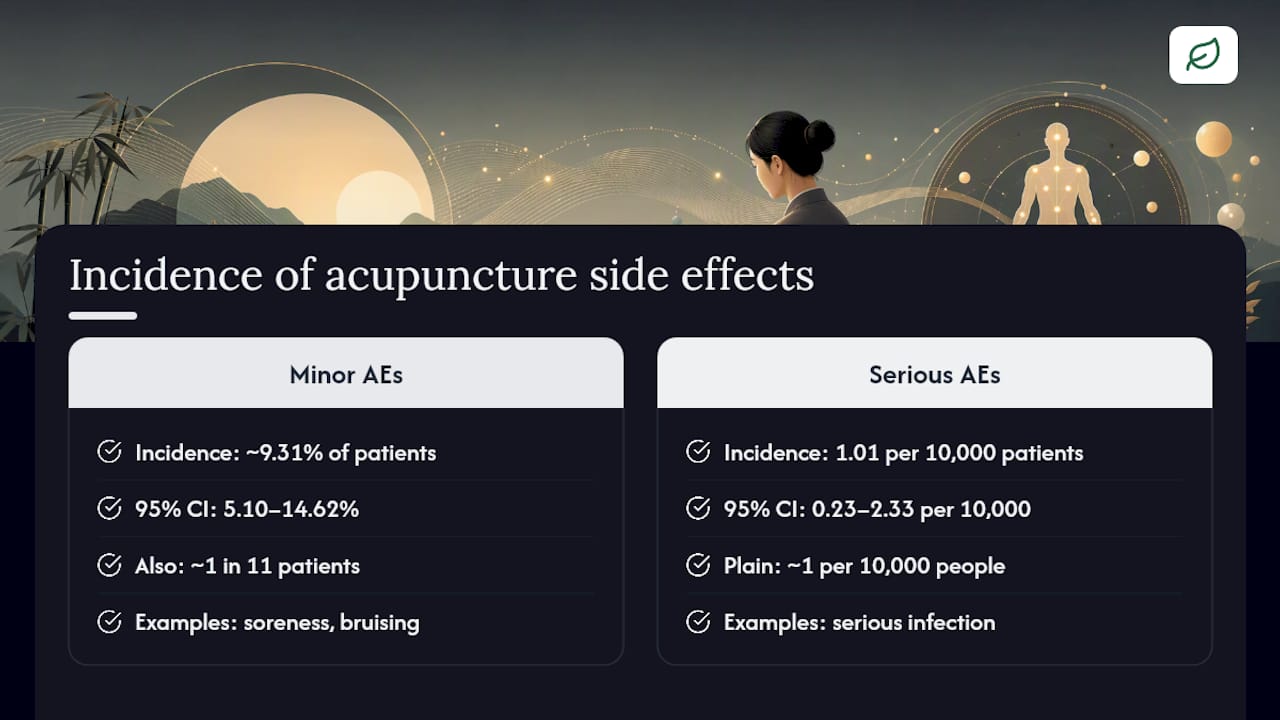
On the minor side, pooled data suggests at least one adverse event in about 9.31% of patients, with a 95% confidence interval of 5.10% to 14.62%. On the serious side, the same body of research estimates serious adverse events at approximately 1.01 per 10,000 patients, with a confidence interval of 0.23 to 2.33. Put plainly: for every 10,000 people who get acupuncture, roughly one will experience something serious. Meanwhile, roughly 1 in 11 might notice a mild reaction like soreness or bruising.
Three bodies of evidence back this up from different angles:
The pooled meta-analysis cited above draws from a wide net of prospective clinical studies, which is why its confidence intervals are wide too; this aligns with evidence-based approaches like those offered in Back Pain Care in Singapore - Zest Clinic. A systematic review focused specifically on pregnancy-related low back and pelvic pain reviewed twelve randomized controlled trials and found acupuncture provided real benefit with no serious adverse events reported across any of the included trials. Most reactions logged were the familiar mild ones: needling pain and light bleeding.
The evidence mapping of 535 systematic reviews adds breadth rather than depth, confirming that the same handful of mild reactions show up again and again across an enormous volume of published research.
Heterogeneity. Different studies define "adverse event" differently. Some count a bruise as an AE; others only count events requiring medical follow-up. Surveillance intensity varies too. A study where researchers actively ask patients about every twinge will report more AEs than one relying on spontaneous patient reports. The Merck Manual notes that standardized benchmarks are needed precisely because trials often conflate therapeutic reactions, the body's expected response to needling, with genuine complications.
Clinical researchers increasingly argue that acupuncture studies need a shared, standardized way to define and measure adverse events. Without one, a mild bruise counted as an "AE" in one trial gets lumped in with the same label a different trial would give a serious infection, which is exactly how you end up with confidence intervals this wide.
That distinction between a therapeutic reaction and a true complication is one you'll want to keep in mind for the rest of this guide.
Who Faces Higher Risk From Acupuncture?
Certain people need to think more carefully before booking, not because acupuncture is unsafe for them by default, but because their situation calls for extra communication with both their acupuncturist and their doctor.
- People on blood thinners or with bleeding disorders face a higher chance of bruising or prolonged bleeding at needle sites.
- People with uncontrolled diabetes may have slower wound healing, raising infection risk at insertion points.
- People with a suppressed immune system are more vulnerable to infection if needle hygiene isn't strict.
- People with pacemakers or other implanted electrical devices need to flag this before any session involving electroacupuncture, since electrical stimulation can potentially interfere with device function.
- Pregnant patients can often use acupuncture safely for pregnancy-related pain, but certain points are typically avoided, and coordination with an OB/GYN matters.
- Very young children and older adults may need adjusted needle depth and technique.
- People with compromised or fragile skin face elevated infection or bruising risk at insertion sites.
If you're pregnant and wondering whether acupuncture is safe during pregnancy, the research is reassuring for many common complaints. The pregnancy-focused meta-analysis mentioned earlier found real benefit for low back and pelvic pain with no serious adverse events across its included trials. Separate research indicates acupuncture can be used safely for common pregnancy-related pain without a significant increase in preterm delivery in several pooled analyses, though certain acupuncture points to avoid during pregnancy are standard practice among trained providers, and an OB/GYN conversation before starting treatment is worth having.
Pro Tip: Bring a full list of medications, any implanted devices, your pregnancy status, and your immune health to your intake appointment. A thorough practitioner will ask, but don't wait to be asked.
How Do You Choose a Safe, Qualified Acupuncturist?
The single biggest lever you have over your own safety is who you choose to hold the needle. A qualified, certified professional using sterile single-use needles makes acupuncture one of the lower-risk procedures in medicine. An undertrained provider using questionable equipment changes that equation entirely.
Before you book, run through this checklist:
- Confirm state licensure. Nearly every state requires acupuncturists to be licensed, and most maintain a searchable public database.
- Check national board certification. Look for certification through a recognized national credentialing body, which typically requires supervised clinical hours and an exam.
- Ask about training hours. Licensed acupuncturists generally complete several thousand hours of accredited education. Don't be shy about asking.
- Confirm malpractice insurance. A practitioner running a legitimate practice will carry it.
- Inspect for visible sterile-needle packaging. Needles should come from sealed, single-use packages opened in front of you.
- Ask about experience with your specific condition. Someone who treats migraines daily brings different expertise than someone focused on sports recovery.
A few direct questions can tell you a lot in your first conversation:
- "Are you licensed in this state, and can I see your certification?"
- "Do you use single-use, sterile needles from sealed packaging?"
- "What's your experience treating [your specific condition]?"
- "What's your plan if I have an unusual reaction during treatment?"
Verification doesn't have to be complicated. Most state licensing boards post searchable databases online, and national acupuncture associations maintain their own directories of certified members. If a prospective clinic's answers feel vague, treat that as useful information.
Pro Tip: Search your practitioner's license number directly on your state board's website before your first visit. It takes two minutes and confirms their credentials are current, not just claimed.
During your session, speak up. Tell your acupuncturist about any sharp pain, unusual sensation, or discomfort right away. A trained professional will adjust or remove a needle immediately if something feels wrong, no hesitation required. Afterward, a reputable practitioner will walk you through simple aftercare instructions and tell you what's normal to expect over the following hours. If you're still narrowing down where to book, a step-by-step guide to booking your first appointment walks through exactly what questions to ask and what to expect from a first visit, and a certified practitioner checklist pairs well with the steps above.
What Should You Expect in the Hours After Treatment?
Most people feel a mix of relaxation and mild soreness in the hours following a session, and that's a normal sign your body responded to the needles.
For simple self-care after treatment:
- Rest for the remainder of the day when possible.
- Drink water to support your body's natural recovery process.
- Avoid intense exercise for a few hours.
- Apply ice to any sore or bruised spot for short intervals.
Most reactions resolve on their own timeline. Soreness and light bruising typically fade within 24 to 48 hours. Dizziness and fatigue usually lift within hours, sometimes before you've left the clinic. Headache and mild nausea, when they occur, are typically the shortest-lived of the bunch.
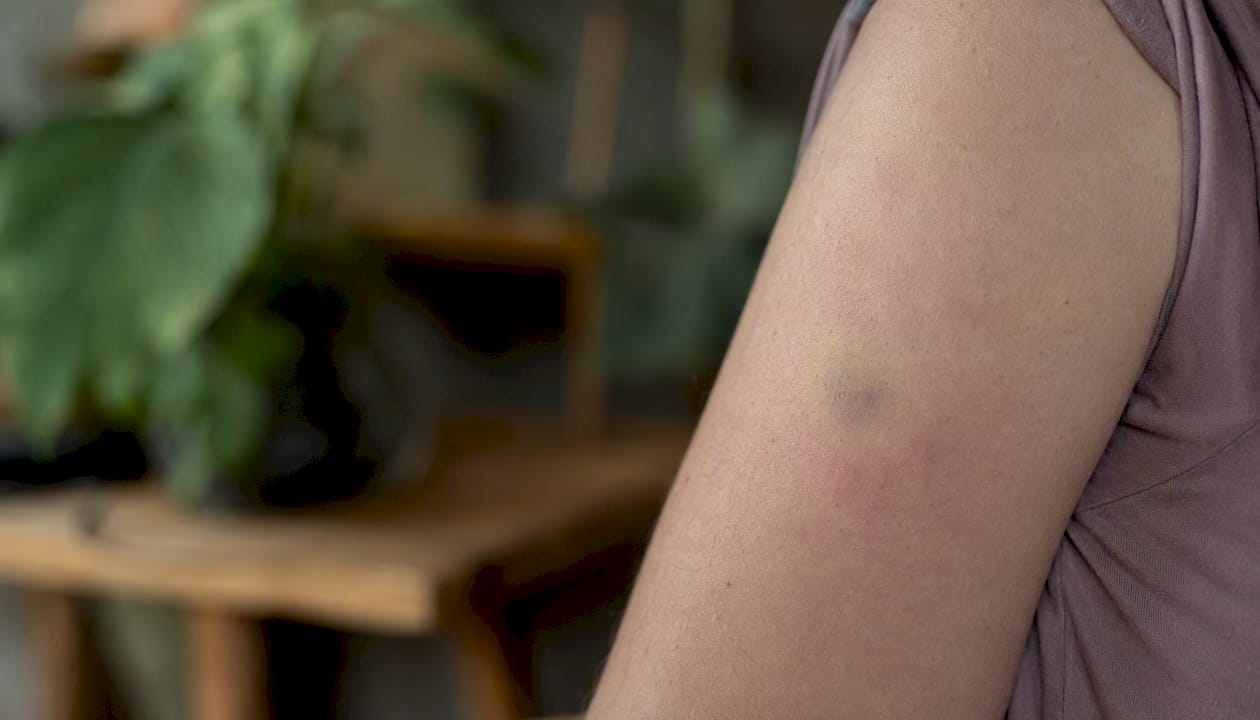
Here's a useful contrast: a small bruise that gradually fades over a couple of days is completely ordinary. Increasing pain, spreading redness, warmth, or swelling around a needle site days later is not, and it suggests possible infection that warrants a call to your practitioner or doctor. If you're weighing acupuncture against gentler alternatives for your recovery window, safe non-invasive treatment options covers complementary approaches worth knowing about.
When Should You Seek Medical Attention?
Most post-treatment reactions resolve on their own, but a few symptoms need prompt evaluation rather than a wait-and-see approach.
Contact emergency services or go to urgent care if you experience:
- Severe or worsening shortness of breath
- Chest pain
- High fever, especially with chills
- Spreading redness, warmth, or swelling around a needle site
- Heavy or uncontrolled bleeding
- New numbness, weakness, or loss of sensation
If your symptoms feel serious or are getting worse quickly, call emergency services first and your acupuncturist second. For anything milder but unusual, like ongoing dizziness or a bruise that seems to be growing rather than fading, calling your practitioner's office is the right first step. They can tell you whether it's a normal reaction or something that needs a closer look.
How Are Acupuncture Needles and Practitioners Regulated?
Acupuncture in the United States operates under a real regulatory framework, not just professional custom.
- The FDA regulates acupuncture needles as medical devices, requiring them to be sterile and labeled for single use only.
- Most states require acupuncturists to hold a state license, typically involving accredited education and a national board exam.
- Professional and international bodies publish benchmarks for safe practice, aimed at standardizing training and reducing the reporting inconsistencies that make research heterogeneity such a challenge.
- Common certification pathways run through nationally recognized acupuncture and Oriental medicine credentialing boards.
A compliant clinic will show you sealed needle packaging opened at the point of use, display a visible practitioner license, and walk you through a clear consent process before treatment begins. If you want to double-check local rules, your state's board or a national acupuncture association website is the place to look.
Balancing Benefit and Risk
Acupuncture earns its reputation as a generally safe treatment when it's delivered by someone properly trained, and the research backs that up. One review even found acupuncture slightly more effective than drugs for migraine prevention, with participants less likely to quit due to side effects, a tolerability edge that pharmaceutical alternatives often can't claim.
Where I push back on the conventional framing is this: most articles treat "side effects" as a single scary category. They're not. A sore spot and a punctured lung don't belong in the same sentence, yet plenty of content lumps them together to manufacture drama. The real decision isn't "is acupuncture risky?" It's "have I verified this specific practitioner?" Weigh your condition, consider your alternatives, and check credentials before you check anything else.
How Go Holistic Helps You Book With Confidence
Goholistic is the alternative to guessing whether a clinic's needles are sterile or its practitioner is actually licensed. Instead of cold-calling clinics and hoping their credentials check out, you get a curated directory of certified holistic practitioners, verified for licensure and training, alongside an AI-assisted tool that matches your specific health concern to practitioners experienced with it.

To be clear, this directory is a discovery tool, not a substitute for personalized medical advice from your own doctor. But if you're ready to move past research and actually book someone qualified, browse acupuncture and other holistic treatments or search vetted practitioners near you and schedule a consultation today.
Sources
For deeper detail beyond this guide, these sources informed the safety information above:
- Acupuncture - Mayo Clinic
- Acupuncture Therapy* / adverse effects
- Acupuncture: What To Know
- Acupuncture: effectiveness and safety - NCCIH
Always talk with your own doctor or licensed acupuncturist about your specific health history before starting treatment.
Is acupuncture safe for everyone? Acupuncture is safe for most people, but those on blood thinners, with bleeding disorders, pacemakers, or compromised immune systems should talk with their doctor and disclose these conditions to their acupuncturist first.
What are the most common acupuncture side effects? The most common reactions are soreness at the needle site, minor bleeding or bruising, mild dizziness, and short-term fatigue, most resolving within a day or two.
Is acupuncture safe during pregnancy? Acupuncture can be safe during pregnancy for conditions like low back and pelvic pain, though certain acupuncture points are typically avoided and OB/GYN consultation is recommended before starting.
How rare are serious acupuncture complications? Serious adverse events are estimated at approximately 1.01 per 10,000 patients, and they're almost always linked to nonsterile needles or an undertrained practitioner.
When should I seek emergency care after acupuncture? Seek emergency care for severe shortness of breath, chest pain, high fever, spreading redness at a needle site, heavy bleeding, or any new numbness or weakness.