

TL;DR:
- Verifying holistic providers' credentials and scope of practice is essential to ensure safe, personalized, and effective care.
- This self-led screening helps prevent encounters with underqualified practitioners and aligns treatment modalities with their actual training.
Filtering holistic providers means verifying a practitioner's credentials, training, and scope of practice before you commit to care. This step is the single most important thing you can do to protect yourself in a field where no universal education standard exists across many disciplines. Without screening, you risk landing with someone whose training came from a weekend course rather than an accredited program. The good news is that knowing why filter holistic providers matters puts you firmly in control of your own wellness path.
Why filter holistic providers before your first appointment
Provider screening in holistic health is not skepticism. It is the same due diligence you would apply to any licensed professional entering your life. The holistic space spans acupuncture, Ayurveda, naturopathy, massage therapy, herbal medicine, and nutrition counseling, and each discipline carries its own licensing requirements, training depth, and legal boundaries.

The core problem is that titles in this space can mislead. Someone calling themselves a "holistic health practitioner" or "wellness coach" may hold a nationally accredited certification or a certificate from a 10-hour online program. Both people can legally use similar language in many states. That gap in accountability is exactly why choosing holistic providers without a screening process carries real risk.
Filtering also protects the quality of your care. Integrative medicine focuses on whole-person treatment, combining conventional and complementary therapies tailored to the individual. When a provider lacks the training to deliver that kind of personalized care, the result is generic protocols that do not address your actual health picture. Screening for qualifications is how you find the practitioners who can genuinely deliver on that promise.
What credentials and qualifications matter when evaluating holistic practitioners
Credentials in holistic health are not one-size-fits-all. The practitioner type determines what they are legally allowed to do, what training they completed, and how accountable they are to a licensing board.
Here is a breakdown of the most common practitioner types and what to look for:
- MD or DO (Medical Doctor / Doctor of Osteopathic Medicine): Both complete accredited medical school and residency programs. DOs add training in musculoskeletal manipulation. Either can specialize in integrative or functional medicine, which combines advanced diagnostics with therapies like nutrition, sleep optimization, and stress management.
- ND (Naturopathic Doctor): Graduates of accredited four-year naturopathic medical schools. Scope of practice varies significantly by state. In some states, NDs can prescribe medications; in others, their legal authority is limited to lifestyle interventions.
- Licensed Acupuncturist (LAc): Requires a master's or doctoral degree from an accredited program, plus state licensure. Board certification through the National Certification Commission for Acupuncture and Oriental Medicine (NCCAOM) is the national standard.
- Licensed Massage Therapist (LMT): State-licensed after completing an approved program, typically 500 to 1,000 hours of training. Requirements vary by state.
- Certified Health Coach: No universal licensing requirement exists. Look for coaches certified through programs accredited by the National Board for Health and Wellness Coaching (NBHWC).
Not all holistic practitioners can prescribe medications. MDs, DOs, nurse practitioners, and physician assistants have prescriptive authority. NDs hold it in some states only. Understanding this distinction before your first visit prevents confusion about what a provider can and cannot offer you.
Pro Tip: Always verify a practitioner's license through your state's official licensing board website, not just their own marketing materials. Most state boards offer a free public lookup tool.
You can also use the certified practitioner checklist from Goholistic to work through credential verification step by step before booking.
How treatment modalities affect your provider selection
Understanding what treatments a provider offers is just as important as verifying their degree. A practitioner's modalities must match their actual training, not just their service menu.
Common holistic treatment modalities include acupuncture, herbal medicine, nutritional counseling, massage therapy, mindfulness-based stress reduction, Ayurvedic medicine, and chiropractic care. Each requires specialized training and, in most cases, state licensure or national certification. A massage therapist offering acupuncture without an LAc credential, for example, is practicing outside their legal scope. That is not a minor technicality. It is a patient safety issue.
Here is a quick comparison of modality categories and the credentials that should back them:
| Modality | Expected credential |
|---|---|
| Acupuncture | LAc, NCCAOM board certification |
| Herbal medicine | ND, LAc, or RH (AHG) registered herbalist |
| Nutrition counseling | RD (Registered Dietitian) or CNS (Certified Nutrition Specialist) |
| Massage therapy | LMT with state licensure |
| Mindfulness/meditation | Certified MBSR instructor or clinical psychologist |
| Ayurvedic medicine | NAMA-recognized practitioner credential |
Patients who receive care from practitioners with transparent pricing and a genuine focus on education achieve better outcomes and avoid over-reliance on any single protocol. This means you should also ask whether a provider's approach is personalized to your history and goals, or whether they apply the same protocol to every client. A qualified provider adapts. An underqualified one often cannot.
When you explore treatment options before your consultation, you arrive with better questions and a clearer sense of what credentials to request.
What are the real risks of skipping provider screening?
The risks of skipping provider screening range from wasted money to genuine physical harm. There is a spectrum of holistic practitioner education, from short weekend courses to four-year accredited naturopathic programs. Shorter courses may not prepare a provider to recognize contraindications, manage adverse reactions, or refer appropriately when a condition exceeds their scope.
Specific risks include:
- Misdiagnosis or missed diagnosis: A provider without clinical training may misinterpret symptoms and delay appropriate medical care.
- Unsafe treatments: Herbal supplements interact with prescription medications. A provider without pharmacological training may not screen for these interactions.
- No accountability: Unlicensed practitioners are not subject to state board oversight, meaning you have limited recourse if something goes wrong.
- Financial harm: Unverified providers sometimes sell proprietary supplement protocols at high markups with no evidence base.
- Dependency: Poor holistic care can create reliance on ineffective treatments rather than building your capacity for self-directed wellness.
Because many holistic fields lack universal standards, you function as your own auditor. That is not a burden. It is a skill worth building once so you can use it every time you seek new care.
Pro Tip: Before your first session, ask any provider directly: "What is your educational background, and are you currently licensed or certified in this state?" A qualified practitioner will answer without hesitation. Vague or defensive responses are a clear signal to keep looking.
Reading through why verifying practitioners matters before your first session gives you a concrete framework for these conversations.
Practical steps to filter and select holistic providers with confidence
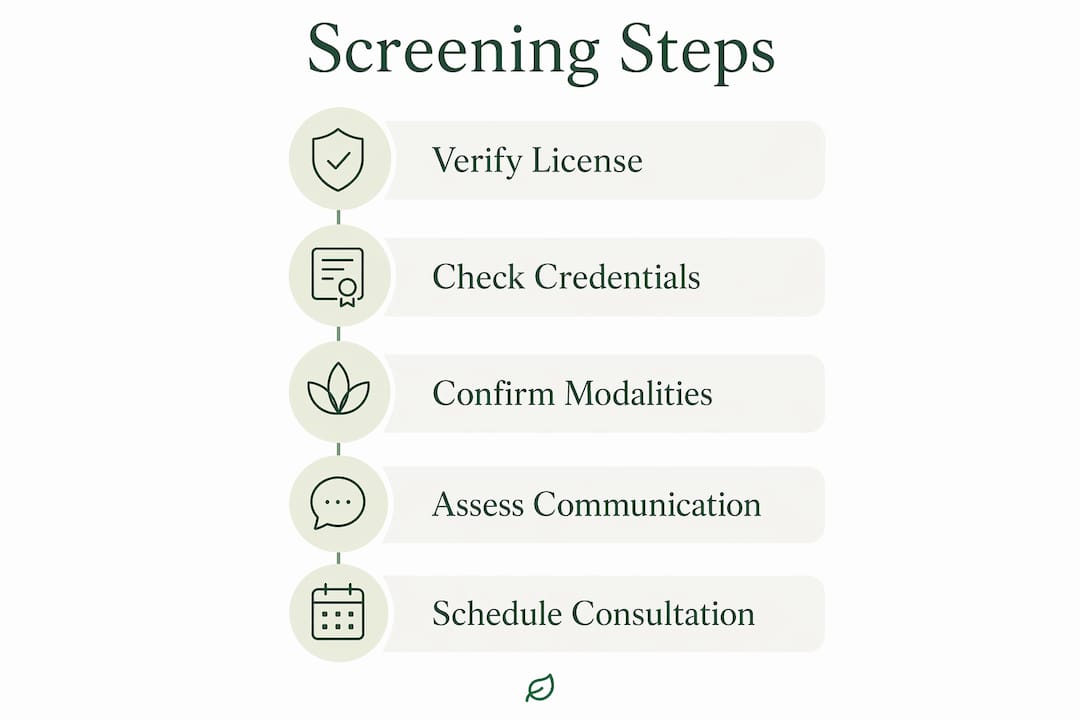
Screening a holistic provider does not require a medical background. It requires a consistent process applied before you book.
- Verify education and licensure. Confirm the practitioner holds a degree from an accredited institution and an active license or certification in your state. Use your state's licensing board lookup tool or the NCCAOM's public directory for acupuncturists.
- Clarify scope of practice. Ask specifically what treatments the provider is qualified to deliver and what falls outside their scope. A trustworthy provider will tell you clearly.
- Research the modalities they offer. Cross-reference their service list against the credential table above. If a service does not match their credential, ask for an explanation.
- Schedule a consultation before committing. Extended initial consultations, such as the 90-minute intake appointments used in integrative concierge practices, allow deep history-taking and give you time to assess whether the provider listens and adapts to your individual needs.
- Ask about pricing transparency. Request a written breakdown of session costs, supplement recommendations, and any ongoing program fees before you agree to care.
- Check reviews and ask for referrals. Patient reviews on Google, Healthgrades, or Yelp offer real-world signals. Ask the provider for references from patients with similar health concerns.
- Use a verified provider directory. Platforms that pre-screen practitioners for credentials remove a significant layer of guesswork. Goholistic's holistic provider directory lists practitioners with confirmed credentials across disciplines including acupuncture, massage therapy, and Ayurveda.
Scheduling a consultation is not just a formality. It is where you assess whether a provider communicates clearly, respects your questions, and builds a care plan around your specific history rather than a generic template.
For mental health-adjacent holistic care, the first appointment checklist from Journey Mental Health offers a strong model for the kinds of questions worth asking any integrative provider.
Key takeaways
Filtering holistic providers requires verifying credentials, confirming scope of practice, and assessing treatment modalities before committing to care.
| Point | Details |
|---|---|
| No universal standard exists | Verify every practitioner's education and licensure independently through official boards. |
| Credentials determine legal scope | Only certain practitioners can prescribe, perform specific therapies, or diagnose conditions. |
| Modalities must match training | A provider's service list should align with their actual certifications, not just their marketing. |
| Consultations reveal fit | A 90-minute intake gives you time to assess communication, personalization, and trust. |
| Verified directories reduce risk | Platforms that pre-screen providers remove the guesswork from finding qualified holistic care. |
The part most people skip, and why it matters most
I have spent years watching people approach holistic health with genuine hope and walk away disappointed, not because holistic care failed them, but because the provider did. The most common pattern I see is someone choosing a practitioner based on a polished website and a compelling story, then discovering months later that the person held no recognized credential in the modality they were paying for.
Here is what I have come to believe: the filtering process is not a barrier to holistic care. It is the foundation of it. Patients who prioritize prevention, root causes, and personalized empowerment over symptom management get the most from integrative medicine. That outcome depends entirely on finding a provider who is actually trained to deliver it.
The holistic practitioner space is growing fast, and that growth brings both extraordinary practitioners and people who should not be practicing. Marketing has outpaced regulation in many corners of this field. A beautiful Instagram presence tells you nothing about clinical competence. A title like "holistic healer" or "energy medicine specialist" carries no legal weight in most states.
What I encourage you to do is treat the screening process as an act of self-respect. You are not being difficult when you ask for credentials. You are being a thoughtful health consumer. The right provider will welcome those questions. They will see them as a sign that you are ready to engage seriously with your own care. That is the kind of patient-provider relationship where real progress happens.
— Andrew
Find verified holistic providers through Goholistic
Goholistic was built specifically to take the guesswork out of finding qualified holistic care. The platform's curated directory connects you with credential-verified practitioners across acupuncture, massage therapy, Ayurveda, nutrition counseling, and more than 200 other therapy types.
Every provider listed on Goholistic has been reviewed for licensure and certification before appearing in search results. You can browse by modality, read detailed practitioner profiles, and book consultations directly through the platform. The treatments library explains what each therapy involves and what credentials to expect from a qualified provider. If you are ready to find a practitioner who meets your standards, explore verified providers and start your search with confidence today.
FAQ
What does filtering holistic providers actually mean?
Filtering holistic providers means verifying a practitioner's education, licensure, and scope of practice before booking care. It protects you from unqualified practitioners and helps you find someone whose training matches the treatments they offer.
How do I check if a holistic practitioner is licensed?
Use your state's official licensing board website or national directories like the NCCAOM for acupuncturists or the NBHWC for health coaches. Most boards offer a free public lookup tool where you can confirm active licensure by name.
Can all holistic providers prescribe medications or supplements?
No. Only MDs, DOs, nurse practitioners, physician assistants, and naturopathic doctors in certain states hold prescriptive authority. Understanding which practitioners can prescribe or perform specific interventions is a core part of safe provider selection.
Why does practitioner education vary so much in holistic health?
Many holistic fields lack a single national licensing standard, so training ranges from accredited four-year programs to short online courses. This variation means patient-led verification is the primary safeguard against underqualified care.
Is a consultation necessary before committing to a holistic provider?
Yes. Extended initial consultations allow you to assess how a provider communicates, whether they personalize their approach, and whether their care plan reflects your actual health history rather than a generic protocol.