

TL;DR:
- Wellness navigation guides individuals to personalized health resources and supports for their specific goals.
- It offers proactive, whole-person care through sessions often provided free in community and academic settings.
Wellness navigation is defined as a personalized guidance service that connects individuals to the right health resources, practitioners, and supports for their unique wellness goals. Think of it as having a knowledgeable friend who knows the health system inside and out, someone who helps you cut through confusion, set clear goals, and find care that fits your life. Whether you are exploring acupuncture, Ayurveda, mental health support, or conventional medicine, wellness navigation gives you a clear path forward. Wellness navigation sessions typically run 30–45 minutes and are often available at no cost in academic and community health settings.
What is wellness navigation and what does it actually cover?
Wellness navigation is the structured process of guiding individuals through the full range of health and wellness options available to them. The industry also refers to this practice as "patient navigation" or "health navigation," terms used by clinical researchers and public health bodies. Both phrases describe the same core idea: a trained person or platform helps you move from confusion to clarity in your health decisions.
A wellness navigator covers far more ground than most people expect. Sessions typically address:
- Goal setting: Defining what "better health" means for you personally, whether that is reduced stress, improved sleep, or managing a chronic condition.
- Insurance and benefits clarity: Breaking down confusing coverage language so you know what care you can actually access.
- Referrals: Connecting you to vetted practitioners in acupuncture, massage therapy, nutrition, mental health, and more.
- Medication management guidance: Helping you understand your current treatments and how they interact with natural remedies.
- Fitness and nutrition support: Pointing you toward evidence-based resources that match your lifestyle and goals.
Navigators also provide non-clinical emotional support, filling the gap between what a doctor addresses in a 15-minute appointment and what you actually need to feel supported day to day. Trained laypeople and peer navigators frequently fill this role, making the service feel personal rather than clinical.
Pro Tip: Before your first navigation session, write down your top three health concerns and one goal you want to achieve in the next 90 days. Navigators work faster and more effectively when you arrive with a starting point.

What are the benefits of wellness navigation for your health?
The benefits of wellness navigation go well beyond convenience. Organizational navigation programs save over 1,300 work hours per 1,000 employees, equating to more than $400,000 in productivity gains for a 10,000-person organization. That figure reflects a deeper truth: when people can find and use the right care efficiently, they spend less time sick, stressed, and lost in the system.
For individuals, the advantages are just as real:
- Reduced anxiety: Knowing you have a guide removes the stress of figuring out complex health systems alone.
- Better health outcomes: Navigated care leads to earlier interventions and more consistent follow-through on treatment plans.
- Time savings: You spend less time researching, calling providers, and decoding insurance documents.
- Stronger self-advocacy: You learn to evaluate providers and ask the right questions, skills that serve you for life.
- Access to natural remedies: Navigators connect you to integrative options like herbal medicine, mindfulness practices, and bodywork alongside conventional care.
Digital health literacy is a critical predictor of how well people use wellness navigation tools online. Higher digital literacy reduces anxiety and improves overall well-being, which means learning to use wellness platforms confidently is itself a health intervention. Staying informed through resources like health and wellness podcasts builds that literacy over time.
How does wellness navigation differ from traditional healthcare coordination?
Traditional healthcare coordination is reactive. It schedules appointments, processes referrals, and manages paperwork after a problem has already appeared. Wellness navigation is proactive. It helps you build a health strategy before a crisis forces your hand.
"Navigation is a strategic intervention improving care quality and equity. It goes beyond administrative support to guide individuals from initial concern through diagnosis and ongoing follow-up, addressing barriers at every stage of the care pathway." — Health Policy Partnership
The people doing this work are also different. Traditional care coordinators are usually clinical professionals operating within a medical system. Wellness navigators are often trained laypeople or peers who understand both the health system and the lived experience of the people they serve. That combination of knowledge and empathy is what makes navigation feel different from a standard doctor's office interaction.
Wellness navigation also integrates natural remedies and community supports alongside clinical pathways. A navigator might connect you to an Ayurvedic practitioner for stress management while also helping you prepare for a specialist appointment. That kind of whole-person coordination simply does not exist in most conventional healthcare settings. Navigation services include coaching in self-advocacy skills, teaching you to evaluate providers and manage your care proactively rather than waiting for the system to act on your behalf.
Another key difference is the single entry point. Wellness navigation addresses the disengagement caused by confusing insurance terminology and fragmented services by acting as one clear starting place. Instead of calling five different offices, you start with one conversation.
How to use wellness navigation effectively in your health plan
Using wellness navigation well requires a little preparation and ongoing engagement. The good news is that access points are more varied than most people realize.
- Find a navigation service near you. Community health centers, university student wellness offices, and digital platforms all offer navigation support. Many are free or low cost.
- Prepare your health history summary. Bring a list of current medications, past diagnoses, and any natural remedies you already use. This helps your navigator give you relevant referrals immediately.
- Set one clear wellness goal per session. Navigators work best when the conversation has a focus. "I want to reduce my anxiety without medication" is a strong starting point.
- Build your digital health literacy. Learning to use wellness directories effectively helps you follow up on referrals and find vetted providers independently.
- Blend natural and conventional care intentionally. Ask your navigator to help you map out how an herbal supplement, a massage therapy plan, or a mindfulness practice fits alongside any clinical treatments you are receiving.
- Schedule follow-up sessions. Wellness navigation is not a one-time fix. Regular check-ins keep your goals current and your care plan aligned with how your health is actually changing.
AI-driven personalized matching on digital platforms now moves wellness navigation away from one-size-fits-all recommendations. Platforms that analyze your specific health concerns and match you to relevant practitioners make the navigation process faster and more accurate than a general internet search ever could.
Pro Tip: Ask your navigator specifically about integrative options. Many people do not realize that a navigator can connect them to acupuncture, Ayurveda, or nutritional therapy just as easily as a conventional specialist. The full range of personalized wellness options is often broader than you expect.
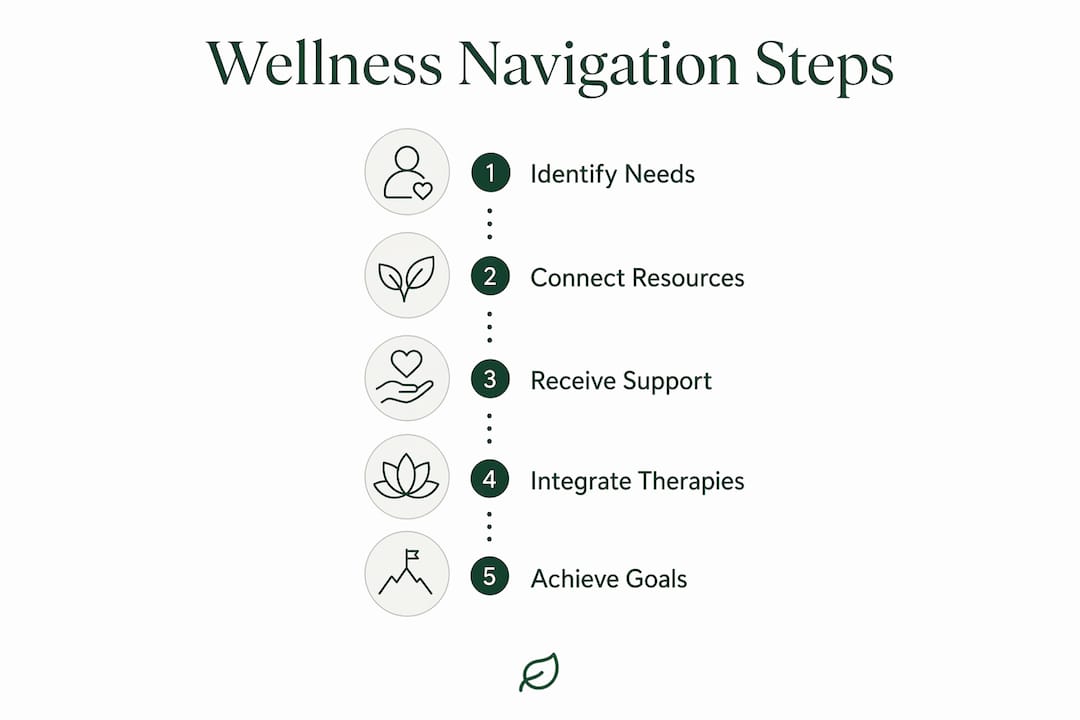
Key Takeaways
Wellness navigation is the most direct path from health confusion to a clear, personalized care plan that includes both natural and clinical options.
| Point | Details |
|---|---|
| Clear definition | Wellness navigation connects individuals to health resources, practitioners, and supports through guided, personalized sessions. |
| Sessions are accessible | Navigation sessions typically run 30–45 minutes and are often free in community and academic settings. |
| Benefits are measurable | Navigation programs save significant work hours and reduce anxiety by simplifying complex health systems. |
| Different from coordination | Navigation is proactive and whole-person focused, unlike reactive administrative healthcare coordination. |
| Digital tools amplify results | AI-driven platforms and strong digital health literacy improve the accuracy and speed of wellness navigation outcomes. |
Why wellness navigation changed how I think about health support
I used to believe that finding the right practitioner was just a matter of doing enough research. Spend a few hours online, read some reviews, and you would eventually land on someone good. What I did not account for was the coordination gap: the space between knowing a therapy exists and actually knowing whether it fits your specific situation, your insurance, your other treatments, and your life.
Wellness navigation fills that gap in a way that self-research never can. The shift I find most significant is the move from reactive to proactive care. Navigation is transforming from a support you call when something goes wrong into a continuous guide that helps you build health before a crisis appears. That reframe matters enormously for anyone interested in natural and integrative approaches, because those therapies work best as prevention, not rescue.
The emotional dimension also deserves more credit than it typically gets. Knowing that someone with real knowledge is in your corner reduces the cognitive load of managing your own health. That reduction in mental burden is itself a health outcome. I have seen people make better decisions about acupuncture, herbal medicine, and mindfulness practices simply because a navigator helped them understand what each option actually does and how it fits their goals. Evidence-based choices become far easier when you are not sorting through contradictory information alone.
My honest view is that wellness navigation will become a standard part of how people manage their health over the next decade. The combination of trained human support and AI-powered personalization is too effective to stay niche. If you are serious about integrating natural remedies into a coherent health plan, finding a navigator is one of the highest-value steps you can take right now.
— Andrew
Goholistic makes wellness navigation personal and practical
Finding the right practitioner for acupuncture, massage therapy, Ayurveda, or any of more than 200 therapy types should not require hours of searching and second-guessing. Goholistic connects you directly to certified, verified holistic practitioners through a curated provider directory built for exactly this kind of guided decision-making.
The platform uses AI to analyze your health concerns and match you with practitioners and treatments backed by research. You can browse, filter, and book consultations directly, with both free and premium access options available. Whether you are just starting to explore natural remedies or you are ready to build a full integrative care plan, find holistic practitioners who fit your goals and your life. You can also browse the full holistic treatments library to understand your options before your first session.
FAQ
What is wellness navigation in simple terms?
Wellness navigation is a guided service that helps individuals find, access, and use the right health resources for their personal wellness goals. A trained navigator or digital platform connects you to practitioners, clarifies your benefits, and supports your care decisions.
How long does a wellness navigation session last?
Wellness navigation sessions typically last 30–45 minutes and are frequently offered at no cost in community health centers and university settings.
Can wellness navigation include natural and alternative therapies?
Yes. Wellness navigation covers the full spectrum of care, including acupuncture, Ayurveda, massage therapy, nutritional guidance, and herbal medicine, alongside conventional clinical referrals.
How does digital health literacy affect wellness navigation?
Higher digital health literacy reduces anxiety and improves well-being by helping individuals find and evaluate wellness information more effectively. It makes digital navigation tools significantly more useful.
Who provides wellness navigation services?
Wellness navigators include trained laypeople, peer supporters, and AI-powered digital platforms. They are not always clinical professionals, which is part of what makes the service feel personal and accessible rather than purely medical.