

Many assume holistic health lacks scientific backing, but over half of US hospitals now integrate holistic care models into conventional treatment. This shift reflects growing evidence that addressing physical, mental, emotional, and environmental factors together produces better outcomes than isolated symptom management. This guide explores the science validating holistic approaches, their measurable benefits for chronic conditions, and how to safely integrate them into your wellness journey.
Table of Contents
- Defining holistic health and its core principles
- Why holistic health is impactful for chronic conditions
- How holistic health works: mechanisms of benefit
- Common misconceptions about holistic health
- Comparison and frameworks for holistic health integration
- How to safely integrate holistic health practices
- Real-world examples and case studies
- Explore evidence-based holistic health options
- Frequently asked questions
Key takeaways
| Point | Details |
|---|---|
| Holistic health addresses root causes | Integrates physical, mental, emotional, social, and environmental dimensions rather than isolated symptoms. |
| Evidence shows measurable improvements | Studies demonstrate 25-40% better chronic disease outcomes with holistic care versus conventional care alone. |
| Mind-body therapies reduce inflammation | Meditation reduces inflammation, a key driver of chronic illness. |
| Safe integration requires verification | Certified practitioners and evidence-based approaches ensure safety when combining holistic and conventional care. |
| Personalized care enhances success | Empowered patients achieve higher adherence and long-term wellness outcomes. |
Defining holistic health and its core principles
Holistic health integrates five interconnected dimensions: physical, mental, emotional, social, and environmental. Rather than treating isolated symptoms, this approach identifies root causes influencing overall wellness. A persistent headache might stem from stress, poor sleep, nutritional gaps, or environmental toxins. Holistic practitioners examine all factors.
This framework recognizes that social and environmental determinants profoundly shape health outcomes. Pollution exposure, social support networks, financial stress, and workplace conditions all influence physical health. Ignoring these factors limits treatment effectiveness.
Key principles include:
- Treating the whole person, not just disease presentations
- Addressing underlying causes rather than masking symptoms
- Recognizing interconnections between body systems and life circumstances
- Empowering patients as active participants in their healing
- Preventing illness through lifestyle optimization and environmental awareness
Emotional balance directly impacts immune function and inflammation levels. Social isolation increases disease risk as much as smoking. These connections explain why holistic health treatments often succeed where conventional approaches plateau.
Pro Tip: Track multiple wellness dimensions weekly using a simple journal. Note sleep quality, stress levels, social interactions, and physical symptoms to identify patterns conventional medical visits might miss.
Why holistic health is impactful for chronic conditions
Chronic diseases respond particularly well to holistic approaches because these conditions involve complex, interrelated factors. Diabetes management improves dramatically when addressing stress, sleep, nutrition, and emotional health alongside medication. Holistic approaches to chronic disease show 25-40% better patient outcomes compared to standard care alone.

The effectiveness stems from addressing lifestyle and emotional contributors that conventional medicine often overlooks. A patient managing hypertension benefits more when stress reduction and social support complement medication than with pills alone. Mental and emotional improvements create sustainable physical health gains.
Key benefits for chronic conditions:
- Reduced healthcare costs through prevention and better disease management
- Lower reliance on medications by addressing root causes
- Improved quality of life beyond symptom reduction
- Greater patient satisfaction and treatment adherence
- Sustained improvements rather than temporary symptom suppression
"Patients using integrated holistic care report feeling heard, understood, and empowered to influence their health trajectory, which alone improves outcomes significantly."
This empowerment creates a positive feedback loop. Patients who understand their condition's complexity engage more actively in treatment. They make better daily decisions supporting long-term wellness. Explore more about holistic health patient outcomes to see documented success patterns across various chronic conditions.
How holistic health works: mechanisms of benefit
The biological mechanisms behind holistic health benefits are increasingly well documented. Mind-body therapies reduce inflammation, which drives arthritis, heart disease, diabetes, and many cancers. Chronic stress elevates cortisol and inflammatory markers. Meditation, yoga, and breathwork lower these biomarkers measurably.
Three primary mechanisms explain holistic health's effectiveness:
- Stress reduction lowers cortisol and inflammatory cytokines, improving immune function and tissue repair.
- Lifestyle optimization (sleep, nutrition, movement) provides foundational support for all body systems simultaneously.
- Social and environmental modifications remove ongoing health stressors conventional medicine rarely addresses.
Research shows chronic inflammation reduction correlates strongly with improved outcomes in holistic therapy studies. The synergy matters most. Combining nutritional changes with stress management produces greater benefits than either intervention alone.
Emotional balance regulates nervous system function, directly influencing digestion, sleep, pain perception, and immune response. This explains why patients addressing emotional health alongside physical symptoms recover faster and more completely. The mind-body connection isn't metaphorical; it operates through measurable neurological and hormonal pathways.
Pro Tip: Start with one evidence-based mind-body practice like guided meditation or gentle yoga. Consistency matters more than intensity. Even 10 minutes daily produces measurable biological changes within weeks.
Understanding these mechanisms helps you evaluate which holistic therapy mechanisms match your specific health goals and conditions.
Common misconceptions about holistic health
Skepticism about holistic health often stems from misunderstandings conflating all alternative practices together. The reality is more nuanced. Many holistic approaches have robust scientific support, while others lack evidence or pose risks. Critical evaluation matters.
Misconception one: holistic health rejects science. Actually, holistic health complements conventional medicine and increasingly integrates into hospital systems. Major medical centers now offer acupuncture, meditation programs, and nutritional counseling alongside standard treatments.
Misconception two: all natural therapies are safe. Some unvalidated practices, especially extreme detoxes or unregulated supplements, carry real risks. Safe holistic care requires evidence-based approaches delivered by qualified practitioners.
Misconception three: you must choose between holistic and conventional medicine. Integration typically produces the best outcomes. Continue necessary medications while adding complementary therapies that address root causes and enhance quality of life.
Key clarifications:
- Holistic health uses scientific research to validate effectiveness
- Not all alternative practices qualify as evidence-based holistic care
- Licensed practitioners with recognized credentials ensure safety
- Integration enhances rather than replaces necessary conventional treatments
Verify practitioner credentials and treatment validity before beginning any holistic therapy. The holistic health platform overview provides resources for distinguishing credible practices from questionable ones.
Comparison and frameworks for holistic health integration
Understanding key differences between holistic and conventional approaches helps you make informed integration decisions. Both have strengths; combining them strategically maximizes benefits.
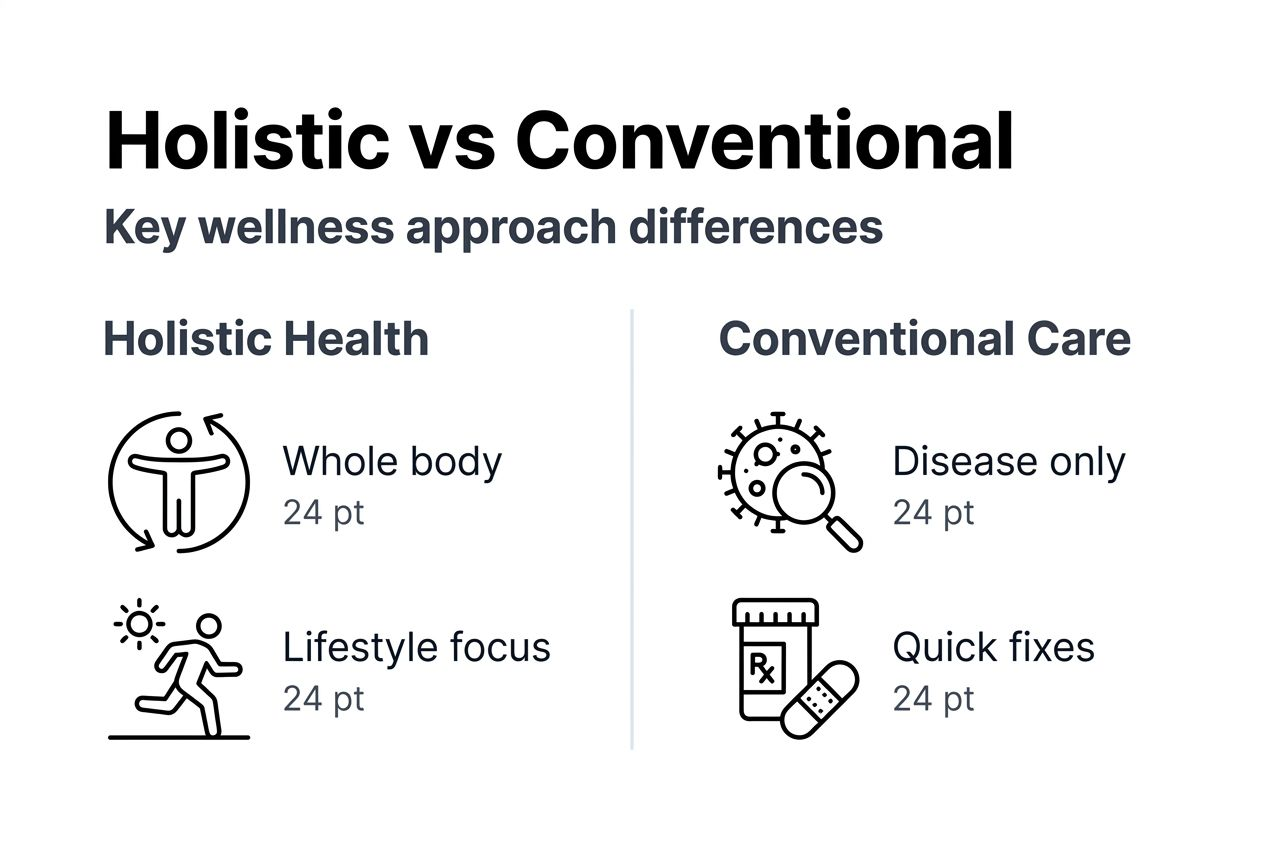
| Aspect | Holistic Health | Conventional Medicine |
|---|---|---|
| Focus | Root causes and prevention | Symptom management and acute care |
| Approach | Whole-person, interconnected systems | Specific conditions and body systems |
| Treatment | Lifestyle, mind-body, environmental | Medications, procedures, surgery |
| Timeline | Gradual, sustained improvements | Faster symptom relief |
| Patient role | Active participant and co-creator | Recipient of expert interventions |
Four evaluation criteria guide safe holistic health integration:
- Evidence base: Does research support this therapy for your condition?
- Practitioner credentials: Are they licensed and certified by recognized bodies?
- Personal preference: Does this approach align with your values and lifestyle?
- Integration potential: Can this safely complement your current treatments?
Patient empowerment in holistic models significantly improves adherence and long-term outcomes. When you understand why treatments work and actively participate in decisions, motivation increases naturally. This engagement creates better results than passive compliance alone.
Pro Tip: Create a simple decision matrix rating each potential therapy on these four criteria. This structured approach prevents impulse decisions based on testimonials while identifying truly promising options.
Use resources for choosing holistic practitioners and browse the holistic health providers directory to find qualified professionals near you.
How to safely integrate holistic health practices
Safe integration requires thoughtful planning and professional guidance. Following these steps minimizes risks while maximizing benefits.
- Consult licensed practitioners verified by recognized professional bodies. Check credentials thoroughly before beginning treatment. Unlicensed providers lack accountability and proper training.
- Inform all healthcare providers about every therapy you use. This prevents dangerous interactions between holistic treatments and medications. Open communication ensures coordinated care.
- Start gradually with one evidence-based therapy at a time. This approach lets you monitor effectiveness and identify any adverse reactions before adding complexity.
- Continue prescribed conventional treatments unless your doctor advises otherwise. Never abandon necessary medications without professional guidance, even if holistic approaches show benefits.
- Track outcomes objectively using measurable indicators. Monitor symptoms, energy levels, sleep quality, and relevant biomarkers to assess what actually helps.
Tailor therapies to your specific health needs and conditions. A holistic approach for arthritis differs significantly from one addressing anxiety or digestive issues. Personalization matters more than following generic wellness trends.
Pro Tip: Schedule a consultation with both your conventional doctor and a licensed holistic practitioner together when possible. This collaborative approach often reveals integration opportunities neither would identify alone.
Resources for finding certified holistic practitioners and comprehensive holistic health resources help you navigate options safely. External guidance on holistic wellness safety provides additional perspectives.
Real-world examples and case studies
Documented cases demonstrate holistic health's measurable impact on chronic conditions. These aren't anecdotes; they're quantified outcomes from clinical studies.
A fibromyalgia study showed 50% pain reduction in patients using multidisciplinary holistic approaches. Participants combined gentle exercise, stress management, nutritional optimization, and mind-body therapies. Quality of life scores improved 40% compared to medication-only groups.
| Condition | Holistic Approach | Outcome Improvement | Study Duration |
|---|---|---|---|
| Fibromyalgia | Multidisciplinary care | 50% pain reduction, 40% quality of life gain | 12 weeks |
| Chronic disease (general) | Integrated holistic care | 25-40% better outcomes vs standard care | 6-12 months |
| Anxiety disorders | Mind-body therapies | 35% symptom reduction | 8 weeks |
| Type 2 diabetes | Lifestyle + stress management | 30% improved glucose control | 6 months |
These results reflect comprehensive approaches addressing multiple health dimensions simultaneously. Single interventions rarely produce such dramatic improvements. The synergy between physical, mental, and lifestyle changes creates compounding benefits.
Patient satisfaction consistently rates higher with integrated holistic care. People report feeling more in control of their health and better equipped to manage symptoms long term. This psychological benefit translates into better adherence and sustained improvements.
Explore more holistic health success stories to see diverse applications across various chronic conditions and wellness goals.
Explore evidence-based holistic health options
Ready to begin your holistic wellness journey with confidence? Connecting with certified practitioners and evidence-based treatments ensures safety while maximizing potential benefits. The resources you choose shape your outcomes significantly.
Discover holistic health treatments tailored to your specific needs and backed by research. Browse the holistic health providers directory to find licensed practitioners verified for credentials and expertise. Access comprehensive resources through the holistic health platform overview to make informed decisions about integrating natural therapies into your wellness plan. Your path to lasting wellness starts with trusted, personalized guidance.
Frequently asked questions
Why is holistic health supported by scientific research?
Clinical studies consistently demonstrate improved outcomes when holistic methods address physical, mental, and lifestyle factors together. Research shows mechanisms like inflammation reduction and stress management produce measurable biological changes. Major hospitals integrate holistic approaches because evidence supports effectiveness, not just patient preference.
How can I find a qualified holistic health practitioner?
Search for licensed, certified practitioners verified by recognized professional bodies in their specialty. Use reputable directories or platforms that verify credentials before listing providers. Check professional certifications, read patient reviews, and confirm licensing status through state boards. Resources for finding holistic health practitioners simplify this verification process.
Is holistic health safe to use with conventional medicine?
Holistic therapies often complement and enhance conventional care when properly coordinated. Inform all healthcare providers about every treatment you use to prevent interactions. Never abandon prescribed treatments without professional medical advice, even if holistic approaches show benefits. Safe integration through holistic and conventional care requires open communication between all providers.
What are effective holistic therapies for chronic pain?
Mind-body therapies reduce chronic pain by lowering inflammation and improving pain perception. Meditation, gentle yoga, acupuncture, and nutritional optimization show strong evidence for various pain conditions. Multidisciplinary approaches combining several therapies typically produce better results than single interventions. Explore holistic treatments for chronic pain to find evidence-based options matching your specific condition.
Recommended
- Holistic Health Treatments | goholistic
- Go Holistic - Your Path to Holistic Wellness | Alternative Medicine Platform
- Find Holistic Health Practitioners Near You | GoHolistic
- Find Holistic Health Providers | Go Holistic
- Why Hearing Health Matters for Older Adults – Audora
- Gut health checklist for menopausal women: natural relief 2026 – Botavive