

Many people assume integrative therapy is a single technique or trendy wellness fad. In reality, it's a sophisticated approach that combines multiple evidence-based therapies tailored to your unique needs. This guide clarifies what integrative therapy actually is, how it works, and why it's transforming mental health treatment by addressing mind, body, and spirit as interconnected parts of your well-being.
Table of Contents
- What is integrative therapy and why it matters
- How integrative therapy creates a personalized, flexible treatment plan
- Benefits and real-world outcomes of integrative therapy
- Important considerations and potential challenges with integrative therapy
- Discover holistic health treatments with Go Holistic
- Frequently asked questions
Key takeaways
| Point | Details |
|---|---|
| Personalized approach | Integrative therapy blends multiple evidence-based therapies customized to your specific needs and personality. |
| Holistic framework | Treats mental, emotional, physical, and spiritual health as interconnected rather than isolated concerns. |
| Long-term resilience | Builds emotional regulation skills and stress management strategies that last beyond active treatment. |
| Improved outcomes | Higher treatment engagement, better symptom reduction, and enhanced overall quality of life compared to single-method approaches. |
What is integrative therapy and why it matters
Integrative therapy represents a fundamental shift in how mental health treatment approaches human well-being. Rather than focusing exclusively on symptoms or single problem areas, integrative therapies combine conventional psychotherapeutic techniques with complementary practices to treat you as a whole person. This means addressing mental, emotional, physical, and spiritual dimensions simultaneously.
Why does this matter? The complex and multidimensional character of mental health concerns has exposed serious limitations in relying on single-method interventions. Depression isn't just about negative thoughts. Anxiety doesn't exist only in your mind. These conditions affect your body, relationships, daily habits, and sense of purpose.
Integrative therapy acknowledges this reality by drawing from multiple therapeutic frameworks. A skilled therapist might combine cognitive behavioral therapy (CBT) techniques with mindfulness practices, somatic work, and nutritional guidance in a single treatment plan. The goal is comprehensive healing rather than temporary symptom relief.
Common modalities included in integrative approaches:
- Cognitive behavioral therapy for thought pattern restructuring
- Mindfulness and meditation for present-moment awareness
- Somatic practices addressing body-held tension and trauma
- Nutritional counseling recognizing the gut-brain connection
- Movement therapies like yoga or tai chi for physical-emotional integration
- Art or music therapy for non-verbal emotional processing
This comprehensive framework builds resilience that extends far beyond the therapy room. You're not just managing symptoms. You're developing a sustainable foundation for lifelong well-being. Explore more holistic health treatments that support this integrated approach.
How integrative therapy creates a personalized, flexible treatment plan
The personalization process begins before your first session. Integrative therapy starts with a comprehensive assessment to understand your challenges, history, previous treatment attempts, and specific goals. This isn't a one-size-fits-all questionnaire. It's a deep exploration of what makes you unique.
Your therapist then designs a treatment plan that reflects your individual needs. An integrative therapist can draw from several different theories, blending them to create a unique therapeutic approach tailored specifically to your personality, beliefs, and circumstances. Two people with similar diagnoses might receive completely different treatment plans.
Here's how the personalization process typically unfolds:
- Initial assessment identifies your primary concerns, strengths, and preferences
- Therapist selects evidence-based techniques aligned with your specific situation
- Treatment plan combines multiple modalities addressing different aspects of your well-being
- Regular check-ins evaluate progress and adjust approaches as needed
- You collaborate actively in decision-making throughout the process
Flexibility is crucial. What works in month one might need adjustment by month three. Your integrative therapist continuously adapts techniques based on your feedback and progress. If mindfulness isn't resonating, they might emphasize somatic work instead. If cognitive techniques are helping but you're still struggling physically, they'll incorporate body-based interventions.
This adaptive approach prevents the frustration of being locked into ineffective methods. You're not stuck repeating the same exercises week after week if they're not working. The treatment evolves with you.
Pro Tip: Come to your initial assessment prepared to discuss not just your struggles, but also your strengths, values, and what you've already tried. This information helps your therapist design a truly personalized plan rather than a generic protocol.
Find experienced holistic health practitioners who understand this personalized, integrative approach to mental health care.
Benefits and real-world outcomes of integrative therapy
The evidence supporting integrative therapy continues to strengthen. Research demonstrates measurable improvements across multiple dimensions of well-being, not just symptom reduction.

Integrative approaches cultivate long-term emotional regulation, equipping you with skills to manage stress and maintain stability across life challenges. This isn't about feeling better temporarily. It's about building lasting capacity to navigate difficult emotions and situations.
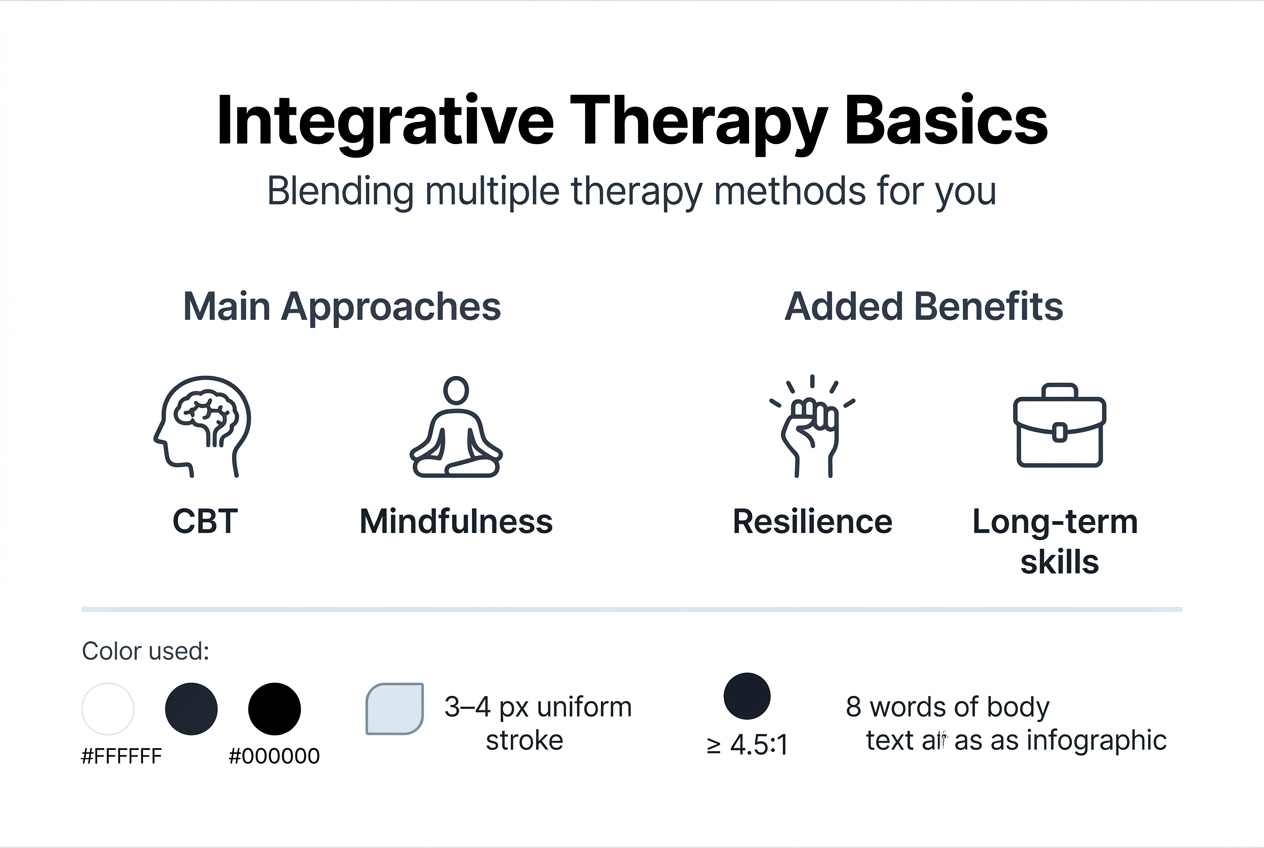
Treatment engagement tells an important story. The National Institutes of Health found that engagement and retention are better with integrated behavioral-health actions. When therapy addresses multiple aspects of your life, you're more likely to stay committed and see results.
Key benefits clients commonly experience:
- Reduced symptoms of anxiety, depression, and trauma-related disorders
- Improved ability to regulate emotions during stressful situations
- Enhanced physical health markers including sleep quality and immune function
- Stronger sense of purpose and meaning in daily life
- Better relationship skills and communication patterns
- Increased self-awareness and personal insight
The research backs up these observations. Studies show that integrative therapy can lead to improved mental health outcomes, reduced symptoms of anxiety and depression, and enhanced overall quality of life. These aren't small improvements. Many clients report transformative changes in how they experience their lives.
| Outcome Area | Improvement |
|---|---|
| Emotional regulation | Better stress management and emotional stability |
| Treatment engagement | Higher retention rates and active participation |
| Symptom reduction | Decreased anxiety, depression, and related concerns |
| Quality of life | Enhanced well-being across personal and professional domains |
| Long-term resilience | Sustained improvements beyond active treatment |
"The beauty of integrative therapy lies in its recognition that healing isn't linear or one-dimensional. By addressing the whole person, we create space for transformation that touches every aspect of life."
Explore the full range of holistic health treatments that complement integrative therapy approaches.
Important considerations and potential challenges with integrative therapy
Integrative therapy's sophistication creates both opportunities and challenges. Combining multiple therapeutic approaches requires exceptional skill and clinical judgment. Not all therapists possess this level of expertise.
Expert-level nuance involves understanding the synergistic effects of combining different therapeutic techniques and the importance of continuous evaluation and adaptation of the treatment plan. A therapist must know not just individual modalities, but how they interact when used together. Poor integration can dilute effectiveness or create conflicting messages.
Continuous monitoring matters tremendously. Your therapist should regularly assess whether combined approaches are working synergistically or creating confusion. Treatment plans need adjustment based on your feedback and observed progress. This requires attentiveness and clinical sophistication.
Critical cautions to keep in mind:
- Verify your therapist has training and experience in multiple modalities, not just theoretical knowledge
- Ensure clear communication about which techniques are being used and why
- Watch for signs that approaches might be contradicting rather than complementing each other
- Be wary of therapists who claim to integrate methods without proper training
- Maintain open dialogue about what's working and what isn't
Research has raised important concerns about therapeutic interventions generally. Studies highlight potential for therapeutic interventions to lead to unintended consequences, including the possibility of false accusations and family disruption. While this isn't specific to integrative therapy, it underscores the importance of working with qualified, ethical practitioners who prioritize your safety and well-being.
The therapeutic relationship itself deserves careful attention. You should feel heard, respected, and genuinely partnered in your treatment. If your therapist seems more invested in following a specific protocol than responding to your individual needs, that's a red flag.
Pro Tip: Ask potential therapists specific questions about their training in different modalities, how they decide which techniques to combine, and how they monitor for effectiveness. Their answers will reveal whether they truly understand integrative practice or are simply using the label.
Find qualified holistic health providers who demonstrate genuine expertise in integrative approaches.
Discover holistic health treatments with Go Holistic
Your journey toward integrated well-being doesn't end with understanding therapy approaches. It extends into daily choices, lifestyle practices, and ongoing support systems that nurture mind, body, and spirit together.

Go Holistic connects you with a comprehensive range of holistic health treatments designed to support your complete well-being. Whether you're exploring acupuncture, massage therapy, Ayurveda, or other evidence-based modalities, our platform helps you discover approaches that complement your integrative therapy journey. Find trusted holistic health providers near you who understand personalized, whole-person care. Take your next step toward wellness with the holistic wellness platform that puts your unique needs first.
Frequently asked questions
What therapies are commonly combined in integrative therapy?
Integrative therapists typically blend cognitive behavioral therapy, mindfulness practices, psychodynamic approaches, somatic techniques, and humanistic methods. The specific combination depends entirely on your individual needs, preferences, and treatment goals. Your therapist selects modalities that work synergistically for your situation.
How does integrative therapy differ from traditional therapy?
Traditional therapy often follows a single theoretical framework, like CBT or psychodynamic therapy exclusively. Integrative therapy draws from multiple frameworks simultaneously, creating a customized approach that addresses mental, emotional, physical, and spiritual dimensions together. This flexibility allows treatment to evolve with your changing needs.
Is integrative therapy suitable for all mental health issues?
Integrative therapy can address a wide range of concerns including anxiety, depression, trauma, relationship issues, and stress-related conditions. However, severe psychiatric conditions may require specialized treatment protocols. Discuss your specific situation with a qualified integrative therapist to determine if this approach fits your needs.
What should I expect during an integrative therapy session?
Sessions vary based on your personalized treatment plan. You might engage in traditional talk therapy, practice mindfulness exercises, explore somatic awareness, or work with creative expression techniques. Your therapist will explain which approaches they're using and why, ensuring you understand and feel comfortable with the process.
How do I find a qualified integrative therapist?
Look for licensed mental health professionals with specific training in multiple therapeutic modalities. Ask about their education, certifications, and experience combining different approaches. Verify they conduct thorough assessments and create personalized treatment plans rather than using one-size-fits-all protocols. Trust your instincts about whether you feel heard and respected.