

Struggling to find lasting relief when traditional medical solutions overlook the bigger picture can leave you searching for better answers. Holistic wellness matters because it recognizes that true health means nurturing the connections between mind, body, and spirit, shaped by personal values and social context. Discover how a multidimensional and dynamic approach empowers you with practical tools to manage chronic pain, improve well-being, and take control of your health with evidence-based confidence.
Table of Contents
- Defining Holistic Wellness and Common Myths
- Key Dimensions: Mind, Body, and Spirit
- Popular Holistic Wellness Therapies Explained
- Evidence-Based Benefits of Holistic Approaches
- Risks, Limitations, and Finding Safe Practitioners
Key Takeaways
| Point | Details |
|---|---|
| Holistic Wellness Encompasses Multiple Dimensions | Holistic wellness integrates physical, mental, emotional, and spiritual health for a balanced approach to well-being. |
| Complementary to Traditional Medicine | Holistic practices should be viewed as complementary to conventional medicine, enhancing overall health rather than replacing established treatments. |
| Personalized Wellness Journey | Holistic wellness emphasizes a personalized approach, adapting to individual needs, backgrounds, and health goals for effectiveness. |
| Critical Evaluation of Practitioners | When seeking holistic practitioners, ensure they have verified credentials and maintain openness to traditional medical consultations for safety. |
Defining Holistic Wellness and Common Myths
Holistic wellness represents a comprehensive approach to health that considers the intricate connections between mind, body, and spirit. Unlike traditional medical models that often focus solely on physical symptoms, holistic wellness views an individual's well-being as a complex, interconnected system requiring balanced nurturing across multiple dimensions.
At its core, holistic wellness encompasses several fundamental dimensions:
- Physical health: Nutrition, exercise, and bodily function
- Mental wellness: Emotional regulation and cognitive functioning
- Emotional balance: Psychological resilience and stress management
- Spiritual alignment: Personal meaning, purpose, and inner peace
- Social connectivity: Relationships and community engagement
Many people misunderstand holistic wellness as an alternative to conventional medicine. However, it's more accurately described as a complementary approach that works alongside traditional medical treatments. Health & Wellness Blog explores these nuanced perspectives in depth.
Here's a side-by-side look at how holistic wellness differs from traditional medical models:
| Approach | Focus | Methodology | Patient Role |
|---|---|---|---|
| Holistic Wellness | Mind, body, spirit integration | Emphasizes prevention and lifestyle balance | Active participant in care |
| Traditional Medicine | Physical symptoms and diseases | Symptom management and medical interventions | Follows clinician recommendations |
Common myths about holistic wellness often prevent individuals from experiencing its transformative potential. These misconceptions include believing that holistic practices are:
- Exclusively mystical or pseudoscientific
- Prohibitively expensive
- Time-consuming and impractical
- Ineffective compared to conventional treatments
- Limited to specific age groups or lifestyles
In reality, holistic wellness is a deeply personalized journey that adapts to individual needs, backgrounds, and health goals. It emphasizes prevention, self-awareness, and proactive health management rather than reactive treatment.
Pro tip: Start your holistic wellness journey by conducting a simple self-assessment of your current physical, mental, and emotional well-being, identifying areas that need balanced attention and nurturing.
Key Dimensions: Mind, Body, and Spirit
Holistic wellness is fundamentally about understanding the intricate interconnections between mind, body, and spirit. These dimensions are not isolated components but dynamic, interactive systems that continuously influence each other's functioning and overall well-being.

Holistic Wellness Model research demonstrates that true wellness emerges when these three fundamental dimensions are balanced and harmoniously integrated. Here's a deeper exploration of each dimension:
Mind Dimension:
- Cognitive functioning and mental clarity
- Emotional intelligence and resilience
- Psychological adaptability
- Learning and personal growth
- Stress management capabilities
Body Dimension:
- Physical health and fitness
- Nutrition and metabolic balance
- Sleep quality and recovery
- Movement and energy levels
- Physiological system optimization
Spirit Dimension:
- Personal meaning and purpose
- Inner peace and self-connection
- Values and ethical frameworks
- Sense of transcendence
- Compassion and empathy
These dimensions are not hierarchical but deeply symbiotic. A challenge in one area inevitably ripples across the others. For instance, chronic physical stress can impact mental health, while emotional turmoil can manifest as physical symptoms.
Holistic wellness is about creating synergy between mind, body, and spirit, recognizing that true health is more than the absence of disease.
By understanding these interconnected dimensions, individuals can develop more comprehensive and nuanced approaches to personal wellness that go beyond traditional medical paradigms.
Pro tip: Create a personal wellness dashboard tracking your mind, body, and spirit metrics to identify areas needing integrated attention and holistic improvement.
Popular Holistic Wellness Therapies Explained
Holistic wellness therapies represent a diverse range of healing approaches that address the interconnected nature of human health. Holistic health therapies encompass modalities designed to restore balance and promote overall well-being by treating the entire person, not just isolated symptoms.
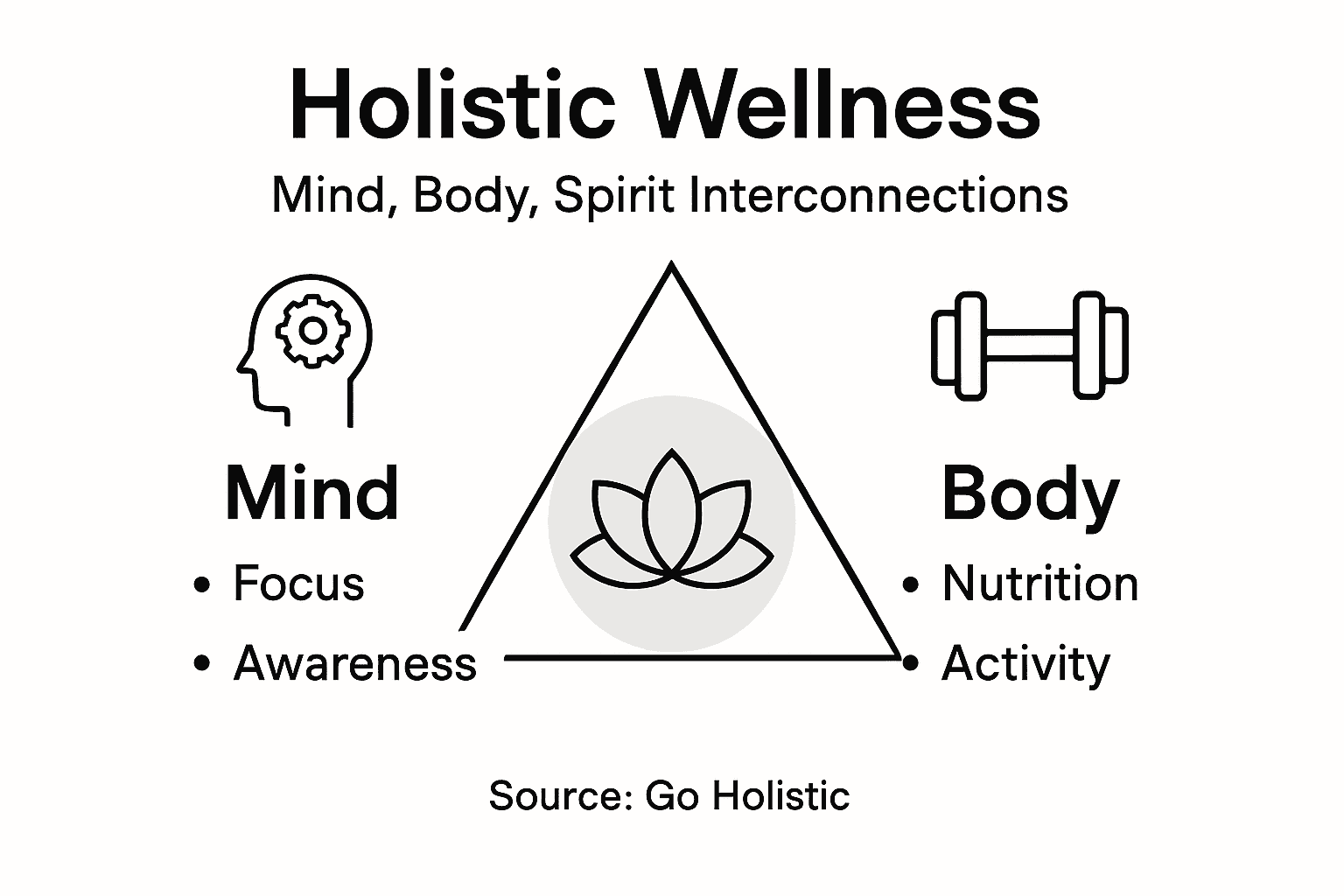
The most prominent holistic wellness therapies include:
Mind-Body Therapies:
- Meditation and mindfulness practices
- Yoga and tai chi
- Breathwork techniques
- Guided imagery
- Stress reduction programs
Energy-Based Therapies:
- Acupuncture
- Reiki
- Qigong
- Crystal healing
- Sound therapy
Physical Manipulation Therapies:
- Massage therapy
- Chiropractic care
- Reflexology
- Osteopathy
- Craniosacral therapy
Nutritional and Herbal Therapies:
- Nutritional counseling
- Herbal medicine
- Dietary supplementation
- Ayurvedic nutrition
- Traditional Chinese medicine dietary approaches
These therapies share a fundamental philosophy of treating the whole person. They recognize that physical symptoms often stem from complex interactions between mental, emotional, and spiritual dimensions.
Holistic therapies view health as a dynamic state of balance, not merely the absence of disease.
By integrating multiple therapeutic approaches, individuals can develop more comprehensive and personalized wellness strategies that address root causes rather than just managing surface-level symptoms.
Pro tip: Consult with a certified holistic practitioner to create a personalized wellness plan that combines multiple therapies tailored to your unique health needs and goals.
Evidence-Based Benefits of Holistic Approaches
Holistic wellness approaches represent more than just alternative health practices; they are increasingly supported by scientific research demonstrating significant health improvements. Evidence-based holistic interventions provide a comprehensive framework for understanding health beyond traditional medical paradigms.
The key evidence-based benefits of holistic approaches include:
Physical Health Benefits:
- Enhanced immune system functioning
- Improved chronic disease management
- Reduced inflammation markers
- Better pain management
- Accelerated recovery processes
Mental Health Advantages:
- Decreased stress and anxiety levels
- Improved emotional regulation
- Enhanced cognitive resilience
- Better sleep quality
- Increased psychological flexibility
Lifestyle and Behavioral Impacts:
- More proactive health management
- Increased self-awareness
- Better stress coping mechanisms
- Improved lifestyle choices
- Enhanced personal accountability
Research consistently demonstrates that holistic approaches do more than treat symptoms. They empower individuals to understand and actively participate in their wellness journey, creating sustainable long-term health strategies.
Holistic wellness is not just about treating illness, but about cultivating comprehensive well-being across multiple life dimensions.
By integrating multiple wellness dimensions, individuals can create personalized health strategies that address root causes and promote systemic healing, rather than focusing solely on surface-level symptoms.
Pro tip: Develop a holistic wellness journal to track your physical, mental, and emotional health indicators, helping you identify patterns and make informed wellness decisions.
Risks, Limitations, and Finding Safe Practitioners
Holistic wellness approaches, while promising, are not without potential risks and limitations. Comprehensive wellness research emphasizes the critical importance of understanding these complexities to make informed health decisions.
Key risks and limitations include:
Potential Risks:
- Lack of standardized practitioner credentials
- Potential misdiagnosis or delayed medical treatment
- Unverified treatment effectiveness
- Financial exploitation
- Cultural misappropriation of healing practices
Practitioner Qualification Red Flags:
- No verifiable professional certifications
- Claims of miraculous or instant healing
- Resistance to discussing treatment limitations
- Discouraging conventional medical consultation
- Inconsistent or vague professional background
Critical Evaluation Criteria:
- Verify professional credentials
- Check independent professional association memberships
- Research practitioner's educational background
- Request patient testimonials and references
- Confirm insurance and liability coverage
Successful holistic wellness requires a balanced approach that integrates alternative practices with evidence-based medical care. Practitioners should complement, not replace, traditional medical treatments.
The table below summarizes risks and safe practices when choosing a holistic wellness practitioner:
| Risk Area | Example | Best Practice |
|---|---|---|
| Credentials | Unverified qualifications | Check licensing and certification |
| Treatment Claims | Promises instant cures | Ask for evidence and references |
| Safety | Discourages medical visits | Ensure openness to collaboration |
Responsible holistic wellness prioritizes patient safety, transparency, and collaborative healthcare approaches.
Individuals must approach holistic therapies with critical thinking, always consulting licensed healthcare professionals and maintaining open communication about all treatment methods.
Pro tip: Create a comprehensive practitioner evaluation checklist that includes credential verification, treatment philosophy alignment, and professional network references before committing to any holistic wellness program.
Discover Your Path to Balanced Holistic Wellness
Understanding the intricate balance of mind, body, and spirit is only the first step toward achieving true well-being. If you are seeking personalized, evidence-based holistic therapies that respect this connection and address your unique health goals, there is a safe and reliable way to begin your journey. Many face the challenge of identifying trustworthy practitioners and effective treatments amid confusing claims and conflicting information. This is where a curated, transparent platform can make the difference.
Explore Go Holistic, your trusted digital wellness hub, designed to empower you with research-backed insights and access to certified holistic practitioners across disciplines like acupuncture, massage therapy, and Ayurveda. With AI-powered personalized recommendations, you gain clarity and confidence to choose therapies aligned with your mind, body, and spirit needs. Start now to invest in a natural, balanced approach to wellness that integrates safety, transparency, and proven benefits. Take control and create your personalized holistic wellness plan today at Go Holistic.
Frequently Asked Questions
What is holistic wellness?
Holistic wellness is a comprehensive approach to health that considers the interconnectedness of the mind, body, and spirit, aiming for balanced nurturing across multiple dimensions of well-being.
How does holistic wellness differ from traditional medicine?
Holistic wellness focuses on integrating mind, body, and spirit, emphasizing prevention and lifestyle balance, while traditional medicine typically concentrates on treating physical symptoms and managing diseases through medical interventions.
What are some popular holistic wellness therapies?
Popular holistic wellness therapies include mind-body practices like meditation and yoga, energy-based therapies like acupuncture and Reiki, physical manipulation therapies like massage and chiropractic care, and nutritional therapies such as herbal medicine and dietary counseling.
What are the benefits of holistic wellness?
Holistic wellness can enhance physical health, improve mental health, and promote proactive health management. Research indicates benefits like better immune functioning, reduced stress and anxiety, improved emotional regulation, and sustainable lifestyle changes.