

Choosing among energy healing modalities can feel overwhelming when you're managing chronic health conditions. Different approaches vary widely in method, time commitment, and evidence base. This guide examines five proven energy healing types, helping you select the best option to support your wellness journey. You'll learn key selection criteria and discover which modality aligns with your health needs and lifestyle.
Table of Contents
- How to choose an energy healing modality: key selection criteria
- Reiki: hands-on energy healing for pain and relaxation
- Healing Touch: gentle energy balancing for anxiety and healing
- Qi Gong: active energy practice combining movement and breath
- Therapeutic Touch: practitioner-based non-contact energy modulation
- Pranic Healing: non-touch energy cleansing and energizing
- Comparing Reiki, Healing Touch, Qi Gong, Therapeutic Touch, and Pranic Healing
- Practitioner certification, cost, and accessibility considerations
- Situational picks: choosing the best energy healing for your chronic health needs
- Find the right energy healing provider with Go Holistic
- Frequently asked questions
Key takeaways
| Point | Details |
|---|---|
| Energy healing varies by patient participation and evidence strength | Reiki and Healing Touch offer passive sessions with strong clinical data for pain and anxiety relief |
| Qi Gong requires active daily practice but delivers results | Studies show 24% reduction in chronic musculoskeletal pain with consistent engagement |
| Cost and time commitment differ significantly across modalities | Session costs range from $50 to $120, with durations from 30 to 60 minutes |
| Non-contact options exist for different preferences | Therapeutic Touch and Pranic Healing work without physical touch, ideal for specific patient needs |
| Practitioner certification ensures quality and safety | Verified credentials through platforms like Go Holistic help you find qualified energy healers |
How to choose an energy healing modality: key selection criteria
Selecting the right energy healing approach starts with evaluating evidence specific to your chronic condition. Research on pain and anxiety outcomes helps you identify which modalities show measurable benefits for your symptoms.
Practitioner credentials matter significantly for treatment quality and safety. Look for certifications from recognized organizations and verify training hours. Platforms offering holistic health treatments typically list practitioner qualifications, making credential verification straightforward.
Consider practical factors like session cost, frequency, and location accessibility. Most energy healing sessions cost between $50 and $120, with treatments requiring multiple visits for optimal results. Calculate total investment over several months when budgeting.
Decide whether you prefer active or passive participation. Some modalities like Qi Gong demand daily practice and physical movement. Others like Reiki require minimal patient effort during sessions. Match this choice to your energy levels and lifestyle constraints.
Pro Tip: Always discuss energy healing plans with your primary care provider to ensure compatibility with current medications and treatments, especially if managing multiple chronic conditions.
- Evaluate clinical evidence for your specific health concern
- Verify practitioner training hours and certification status
- Calculate total cost including multiple session requirements
- Assess your ability to commit to active versus passive treatment
- Confirm safety alongside conventional medical care
Reiki: hands-on energy healing for pain and relaxation
Reiki uses gentle hand placement techniques on or near the body to channel healing energy. Practitioners position their hands at specific points, promoting relaxation and energy flow without invasive manipulation.
Clinical trials demonstrate Reiki reduces pain and anxiety with medium effect sizes compared to control groups. Patients with chronic pain conditions report significant symptom relief after regular sessions. This evidence base makes Reiki one of the most researched energy healing modalities.
Sessions typically last 30 to 45 minutes, with average costs around $65. This shorter duration suits busy schedules while delivering measurable benefits. Most practitioners recommend starting with four to six sessions to establish baseline improvements.
Reiki works best for chronic pain management and stress reduction when time is limited. Your role remains passive, simply lying comfortably while the practitioner works. No physical movement or active participation is required, making it accessible for patients with mobility limitations.
- Non-invasive hand placement channels healing energy naturally
- Clinical evidence shows significant pain and anxiety reduction
- Shorter 30 to 45 minute sessions fit busy schedules
- Average cost around $65 makes it relatively affordable
- Ideal for passive treatment with chronic pain and stress symptoms
Explore verified Reiki practitioners through holistic health treatments to find certified providers in your area.
Healing Touch: gentle energy balancing for anxiety and healing
Healing Touch employs gentle hand techniques to work with energy fields surrounding and penetrating the body. Practitioners use specific patterns to clear, balance, and energize these fields, restoring natural flow and harmony.
Clinical data shows Healing Touch improved anxiety by 20% over four sessions in patients with stress-related conditions. This modality demonstrates particular effectiveness for anxiety reduction and stress symptom management. Research continues to expand understanding of its mechanisms and applications.
Sessions run 45 to 60 minutes with costs ranging from $75 to $100. The longer duration allows practitioners to address multiple energy centers and complete full body balancing. Plan for at least four sessions to experience meaningful benefits.
Healing Touch suits patients seeking supportive care for anxiety, stress, and wound healing support alongside conventional treatment. Your participation remains passive, though some practitioners incorporate guided breathing. Several sessions typically produce better outcomes than single treatments.
Pro Tip: Schedule Healing Touch sessions during high-stress periods or before medical procedures to maximize anxiety-reducing benefits and support your body's natural healing response.
- Gentle hand techniques restore energy field balance
- 20% anxiety reduction documented in clinical trials
- 45 to 60 minute sessions provide comprehensive treatment
- Moderate cost between $75 and $100 per session
- Best results after series of four or more treatments
Find qualified practitioners offering holistic health providers to begin your Healing Touch journey.
Qi Gong: active energy practice combining movement and breath
Qi Gong integrates slow, meditative movements with focused breathing and mental concentration. This ancient practice cultivates and balances life energy through deliberate physical sequences. Unlike passive modalities, you actively participate in every aspect of healing.

A meta-analysis found Qi Gong reduces chronic musculoskeletal pain by 24% in patients practicing regularly. Quality of life improvements accompany pain reduction, with benefits increasing over time. The evidence supports Qi Gong as an effective self-care strategy for chronic conditions.
Qi Gong requires daily practice commitments, typically 20 to 30 minutes per session. Initial learning occurs through classes or instruction, but ongoing practice costs nothing beyond that investment. Studies show approximately 70% compliance rates among committed practitioners.
This modality works best for individuals willing and able to engage actively in their healing process. You must have sufficient energy and mobility to perform gentle movements. Physical limitations may restrict your ability to practice certain forms, though chair-based variations exist.
- Combines meditative movement, breath work, and mental focus
- 24% reduction in chronic musculoskeletal pain documented
- Requires active daily practice and patient engagement
- No ongoing session costs after initial instruction
- Ideal for patients committed to active healing participation
Discover more about active healing practices through holistic health treatments for comprehensive guidance.
Therapeutic Touch: practitioner-based non-contact energy modulation
Therapeutic Touch involves practitioners moving their hands near your body without physical contact. They assess and modulate energy patterns through intentional movements in your biofield. This technique was developed by nurses and has been integrated into some healthcare settings.
A trial found Therapeutic Touch reduced pain 15% more than sham treatment in clinical settings. Evidence remains mixed compared to other modalities, with some studies showing modest benefits. The technique's effectiveness appears closely tied to practitioner experience and skill level.
Sessions typically extend longer than other modalities, often 45 to 60 minutes. Costs vary but generally fall in the mid-range at $70 to $90 per session. Multiple treatments produce better outcomes than single interventions.
Therapeutic Touch suits patients preferring completely passive treatment with no touch requirement. You simply rest while the practitioner works, making no effort or movement. This appeals to individuals uncomfortable with physical contact or those with touch-sensitive conditions.
- Practitioner works in biofield without physical contact
- Mixed evidence shows some pain and anxiety relief benefits
- Longer session durations for complete treatment
- Purely passive with zero active patient effort required
- Effectiveness depends on practitioner training and experience
Locate experienced practitioners through holistic health treatments offering verified Therapeutic Touch services.
Pranic Healing: non-touch energy cleansing and energizing
Pranic Healing uses specific hand movements and protocols to cleanse and energize the body's energy field without any physical contact. Practitioners scan for energy imbalances, remove congested energy, and project fresh energy to affected areas. The system includes detailed protocols for various health conditions.
A pilot trial reported 30% improvement in energy levels after Pranic Healing sessions in patients with chronic fatigue syndrome. Emotional wellbeing also showed measurable gains. While research remains limited compared to other modalities, preliminary data shows promise for specific applications.
Multiple sessions provide sustained benefits rather than single treatments. Most practitioners recommend weekly sessions for four to six weeks initially. Session length and cost vary by practitioner and location, typically ranging from $60 to $100.
Pranic Healing appeals to those preferring completely non-contact healing sessions with structured protocols. It addresses chronic fatigue and emotional concerns effectively. Limited but growing clinical data support its use for these specific conditions.
Pro Tip: Combine Pranic Healing with adequate sleep and nutrition for enhanced results, as the modality works best when your body has resources to support natural healing processes.
- No physical touch with specific energy cleansing protocols
- 30% improvement in fatigue documented in pilot studies
- Effective for chronic fatigue and emotional wellbeing
- Requires multiple sessions for lasting benefits
- Promising but limited clinical evidence base
Connect with verified holistic health providers offering Pranic Healing to explore this non-contact option.
Comparing Reiki, Healing Touch, Qi Gong, Therapeutic Touch, and Pranic Healing
Understanding key differences helps you select the right modality for your situation. Session duration, cost, and participation level vary significantly across these five approaches.
| Modality | Session Length | Average Cost | Patient Role | Evidence Strength | Best For |
|---|---|---|---|---|---|
| Reiki | 30-45 min | $65 | Passive | Strong for pain/anxiety | Chronic pain with limited time |
| Healing Touch | 45-60 min | $75-$100 | Passive | Strong for anxiety | Stress and anxiety symptoms |
| Qi Gong | 20-30 min daily | Free after training | Active | Strong for musculoskeletal pain | Active self-care seekers |
| Therapeutic Touch | 45-60 min | $70-$90 | Passive | Mixed evidence | No-touch preference |
| Pranic Healing | 45-60 min | $60-$100 | Passive | Emerging data | Fatigue and emotional issues |
Reiki and Healing Touch demonstrate the strongest clinical evidence for pain and anxiety relief in chronic conditions. Qi Gong requires daily practice with around 70% compliance while Therapeutic Touch needs no active participation. Cost per session ranges approximately $50 to $120 depending on location and practitioner experience.
Qi Gong stands alone as the only active modality requiring your daily engagement. All others position you as passive recipient. This fundamental difference affects long-term sustainability and results. Active participation builds self-efficacy but demands consistent commitment.
Evidence quality varies from strong randomized controlled trials for Reiki and Healing Touch to promising pilot studies for Pranic Healing. Therapeutic Touch shows more mixed results. Consider evidence strength alongside your specific symptoms when choosing.
Review comprehensive information about different holistic health treatments to understand each modality's unique characteristics and applications.
Practitioner certification, cost, and accessibility considerations
Verifying practitioner credentials protects your safety and treatment quality. Reiki practitioners typically complete three levels of training totaling 20 to 100 hours. Healing Touch certification requires extensive coursework and supervised practice hours through established programs.
Session costs average around $75 but vary significantly by geographic location and practitioner experience. Urban areas typically charge more than rural regions. Experienced practitioners with advanced certifications may set higher rates reflecting their training investment.
Insurance coverage for energy healing remains extremely limited in 2026. Most plans do not reimburse these services, requiring out-of-pocket payment. Some flexible spending accounts or health savings accounts may cover treatments if your provider submits appropriate documentation.
Accessibility factors include practitioner availability in your area, travel distance, and scheduling flexibility. Some modalities like Qi Gong can be learned and practiced at home after initial instruction. Others require ongoing practitioner appointments.
- Reiki and Healing Touch offer established certification programs
- Average session cost around $75 varies by location and experience
- Insurance rarely covers energy healing treatments currently
- Verifying credentials is essential for safety and quality
- Consider travel, frequency, and practitioner availability
Use holistic health providers to find certified practitioners, check credentials, and read verified reviews. The platform connects you with qualified holistic health practitioners across multiple modalities. Go Holistic wellness platform streamlines your search with verification tools and booking capabilities.
Situational picks: choosing the best energy healing for your chronic health needs
Your specific situation determines which modality serves you best. Consider your primary symptoms, available time, budget, and participation preference when deciding.
-
For chronic pain with limited time, choose Reiki. The shorter 30 to 45 minute sessions deliver evidence-based pain relief without demanding active participation or extensive time commitment.
-
For anxiety and stress-related symptoms, select Healing Touch. Clinical trials demonstrate 20% anxiety reduction, with the longer sessions providing comprehensive energy balancing for stress relief.
-
If you want active participation and self-empowerment, practice Qi Gong. The 24% pain reduction comes from your daily engagement, building lasting self-care skills and requiring no ongoing practitioner costs.
-
For chronic fatigue and emotional wellbeing with non-contact preference, try Pranic Healing. The 30% energy improvement shown in pilot studies addresses fatigue specifically, with completely non-touch protocols.
-
For touch-sensitive conditions requiring passive treatment, consider Therapeutic Touch. The completely non-contact approach works without physical touch while you rest comfortably.
Always combine energy healing with conventional medical care for optimal chronic health management. Energy modalities complement but never replace evidence-based treatments prescribed by your healthcare provider. Discuss any new therapies with your doctor before beginning.
Find the right energy healing provider with Go Holistic
Navigating energy healing options becomes simpler with the right resources. Go Holistic connects you with certified practitioners across all five modalities discussed in this guide.
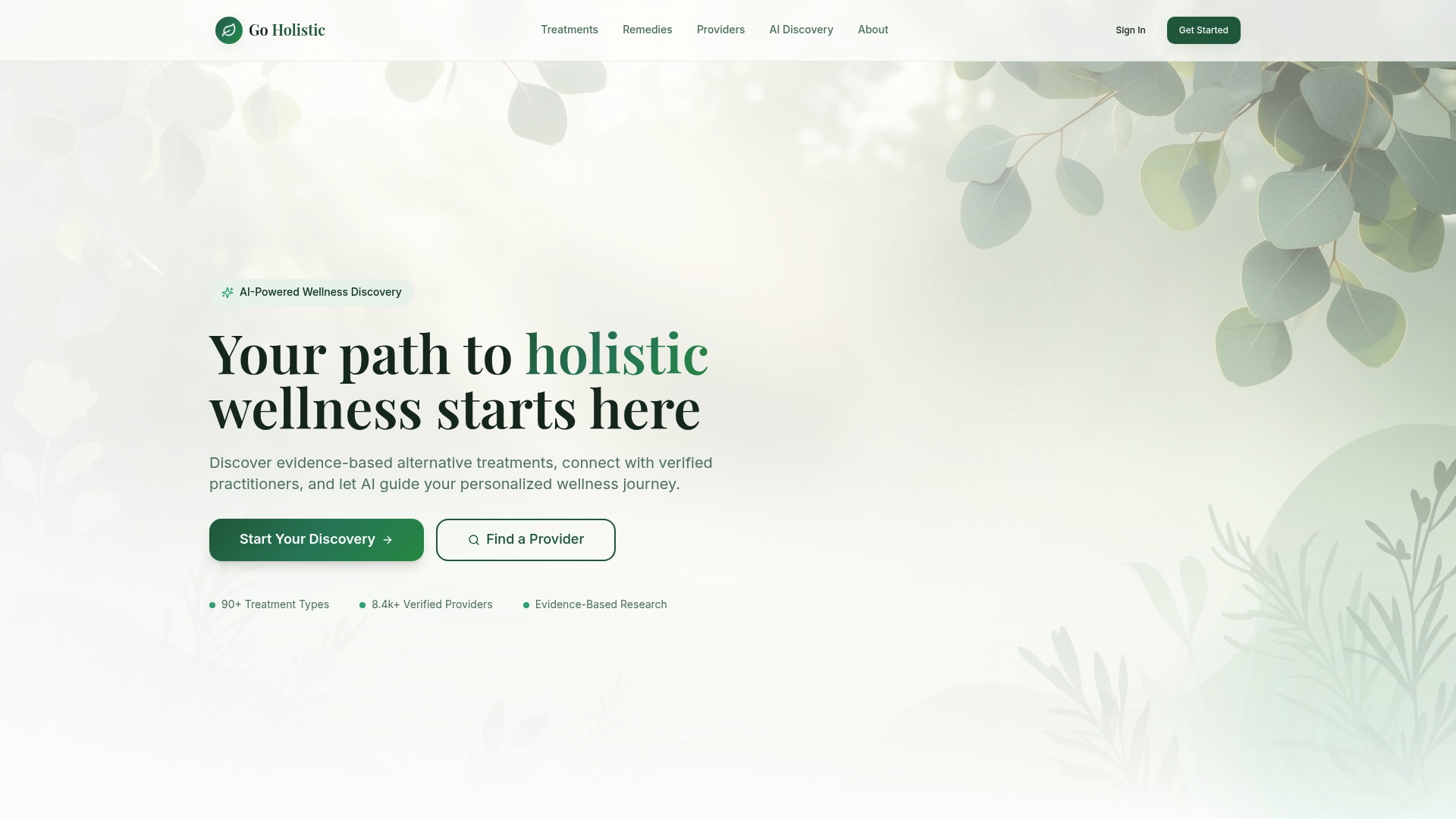
Use the platform to find holistic health providers near you with verified credentials and patient reviews. Filter by modality, location, cost, and availability to match your specific needs. The directory includes detailed practitioner profiles showing training, certifications, and specializations.
Explore holistic treatments through the comprehensive library covering over 200 therapy types with evidence-based research summaries. Compare modalities side by side to understand which approach aligns with your health goals. Access educational resources explaining what to expect during sessions.
The Go Holistic wellness platform offers AI-powered recommendations based on your specific health concerns. Input your symptoms and preferences to receive personalized treatment suggestions backed by clinical research. Book consultations directly through the platform for convenience.
Pro Tip: Check practitioner certification details and read recent patient reviews on Go Holistic before booking your first session to ensure quality care aligned with your expectations.
Frequently asked questions
What is the difference between Reiki and Healing Touch?
Reiki uses non-invasive hand placements with shorter 30 to 45 minute sessions at lower cost around $65. Healing Touch employs gentle energy balancing techniques with longer 45 to 60 minute sessions costing $75 to $100, showing particularly strong evidence for anxiety reduction.
Can energy healing replace my conventional medical treatment?
Energy healing complements but never replaces conventional medical treatment for chronic conditions. Always consult your healthcare provider before starting any energy therapy to ensure safety and compatibility with current medications and treatments.
How do I find a certified energy healing practitioner?
Look for certifications from recognized organizations like the International Association of Reiki Professionals or Healing Touch International. Use platforms like Go Holistic to find certified practitioners with verified credentials, patient reviews, and convenient booking options in your area.
How many sessions do I need to see results?
Most modalities require four to six initial sessions to establish measurable improvements in chronic symptoms. Reiki and Healing Touch typically show benefits within this timeframe, while Qi Gong demands daily practice for several weeks to achieve the documented 24% pain reduction.
Is energy healing covered by insurance?
Insurance coverage remains extremely limited for energy healing in 2026, with most plans not reimbursing these services. Some flexible spending accounts or health savings accounts may cover treatments depending on your plan details and provider documentation, so check your specific policy benefits.