

Choosing healthcare outside mainstream medicine can spark both hope and uncertainty, especially for those living with ongoing health challenges. The world of alternative therapies—ranging from acupuncture to herbal remedies—offers unique opportunities for holistic wellness, but it also brings questions about safety and effectiveness. By understanding the true meaning of alternative medicine and how it is researched, you set the foundation for making smarter, evidence-based health decisions that prioritize both results and peace of mind.
Table of Contents
- Defining Alternative Medicine and Its Research
- Types of Alternative Therapies and Evidence Standards
- Scientific Methods for Validating Alternative Treatments
- Practitioner Verification and Regulatory Oversight
- Safety Risks, Efficacy Gaps, and Integration Trends
Key Takeaways
| Point | Details |
|---|---|
| Understanding Alternative Medicine | Distinguish between alternative, complementary, and integrative therapies to make informed treatment decisions. |
| Research Importance | Scientific validation of alternative treatments is crucial to ensure safety and effectiveness before pursuing any therapy. |
| Practitioner Credentials | Always verify the credentials and licensure of alternative health practitioners to ensure quality care. |
| Integration Risks | Be aware of potential safety risks when combining alternative therapies with conventional medicine, and maintain open communication with all healthcare providers. |
Defining Alternative Medicine and Its Research
Alternative medicine refers to health care approaches used outside of conventional medical practice. These include acupuncture, herbal remedies, meditation, massage therapy, and countless other modalities that don't fit into standard medical treatment protocols. Understanding what qualifies as alternative medicine helps you navigate treatment options with clarity.
The terminology matters more than you might think. Complementary medicine works alongside conventional treatments—think yoga combined with physical therapy for back pain. Alternative medicine replaces standard care entirely, like choosing herbal supplements instead of prescribed medication. Integrative health blends both approaches, focusing on whole-person wellness rather than isolated symptoms.
The distinction isn't just semantic. It shapes how research gets conducted, how safety gets evaluated, and how you should communicate with your healthcare team. When you understand these categories, you can make more informed decisions about your treatment path.
Research in alternative medicine explores three critical dimensions:
- Safety and side effects of specific therapies and products
- Efficacy and outcomes compared to conventional treatments or placebo
- Usage patterns and patient experiences across different populations
According to the National Center for Complementary and Integrative Health, complementary and alternative medicine encompasses healthcare practices that fall outside conventional medical care. This includes everything from acupuncture to mind-body therapies to herbal supplements.
Why does research matter if these practices have been used for centuries? Because longevity doesn't equal safety or effectiveness. Traditional use tells us people found these approaches valuable, but rigorous research reveals which ones work, which ones don't, and which ones carry hidden risks when combined with other medications.
The research landscape is expanding rapidly. Universities, government agencies, and private institutions now fund controlled trials examining alternative therapies. This shift means more evidence becomes available to help you choose treatments backed by solid science rather than marketing claims.
Research transforms traditional wisdom into trusted knowledge, allowing you to embrace natural approaches with confidence rather than blind faith.
You're likely managing a chronic condition or seeking preventative care. Knowing the difference between marketing hype and research-backed claims empowers you to partner with practitioners who prioritize your safety. This foundation helps you evaluate recommendations critically.
Pro tip: When exploring any alternative therapy, ask your chosen practitioner whether their recommended approach has undergone clinical research and what the findings show—this simple question immediately reveals how evidence-focused they truly are.
Types of Alternative Therapies and Evidence Standards
Alternative therapies span a wide range of practices, each with different levels of scientific backing. Understanding these categories helps you identify which approaches have solid research support and which still need more study.
The National Center for Complementary and Integrative Health organizes therapies into five main categories:
Here's how key types of alternative therapies differ in their approach and typical research support:
| Therapy Type | Main Focus | Common Applications | Strength of Research Evidence |
|---|---|---|---|
| Mind-body Practices | Mental-physical connection | Stress, anxiety, pain | Moderate for specific conditions |
| Natural Products | Botanical/mineral supplements | Immunity, digestion | Mixed, often needs more studies |
| Manipulative Methods | Body structure/manipulation | Back pain, mobility | Moderate in musculoskeletal cases |
| Energy Therapies | Unmeasured energy fields | Well-being, relaxation | Limited, lacks strong data |
| Whole Medical Systems | Comprehensive unique philosophy | Chronic disease, prevention | Varies, some components studied |
- Mind-body practices like meditation, yoga, and tai chi that connect mental and physical health
- Natural products including herbal supplements, vitamins, and mineral-based remedies
- Manipulative and body-based methods such as massage, chiropractic care, and osteopathy
- Energy therapies claiming to work through energy fields in the body
- Whole medical systems like Ayurveda and Traditional Chinese Medicine with their own foundational philosophies
Not all therapies have equal evidence. Acupuncture and massage therapy have moderate research support showing benefits for specific conditions like chronic pain and muscle tension. Other practices lack strong scientific backing and require more rigorous investigation.

Evidence standards matter when evaluating claims. Researchers rely on randomized controlled trials where participants randomly receive either the therapy or a placebo, with neither knowing which they got. Systematic reviews pool data from multiple studies to identify patterns across research. These methods help separate genuine effects from wishful thinking.
Your chronic pain or health condition deserves treatments backed by solid science. Some therapies might work through placebo effect—which isn't necessarily bad for wellbeing—but you should understand what you're actually paying for and what realistic outcomes look like.
Strong evidence requires rigorous testing, not just popularity or tradition, ensuring the therapies you choose actually deliver the benefits practitioners promise.
The research landscape continues evolving. Universities and medical centers now investigate therapies that were once dismissed. This doesn't mean all alternative approaches will eventually gain approval, but it does mean genuine science is examining which ones work and why.
When evaluating any therapy, ask whether clinical trials support its use for your specific condition. Not every treatment works equally well for every person. What helps one individual's arthritis might not touch another's migraine.
Pro tip: Request your practitioner's published research or clinical trial data before committing to treatment—practitioners confident in their methods can readily point you toward peer-reviewed studies demonstrating efficacy for your particular health concern.
Scientific Methods for Validating Alternative Treatments
Validating alternative treatments requires rigorous scientific methods that go beyond tradition or anecdotal reports. These methods ensure therapies are both safe and effective before you invest your time and money.
Scientific validation rests on three core pillars: reproducibility, predictivity, and defined contexts of use. Reproducibility means other researchers can repeat the study and get similar results. Predictivity confirms the results translate to real human outcomes. Context defines which conditions and populations the therapy actually helps.
Researchers use multiple approaches to validate treatments without relying solely on human trials:
- In vitro studies test therapies on human cell cultures in laboratory conditions
- In chemico methods use chemical reactions to simulate biological responses
- In silico approaches employ computational modeling to predict treatment effects
- Microphysiological systems recreate human tissue environments for testing
- Randomized controlled trials compare therapy outcomes against placebo in human populations
The FDA and other regulatory agencies promote advancing alternative methods to ensure safety and effectiveness while reducing unnecessary animal testing. This collaborative approach integrates emerging scientific techniques across global regulatory standards.
Systematic assessment matters when evaluating any therapy's reliability. Scientists examine accuracy (does it measure what it claims?), reliability (are results consistent?), and human relevance (do lab results apply to actual patients?). Without these checks, impressive-sounding claims collapse under scrutiny.
You might wonder why some popular therapies lack strong scientific backing. The answer is simple: they haven't undergone rigorous validation yet, not that they're necessarily ineffective. Time and funding determine which therapies get studied thoroughly.
Valid science protects you from wasting resources on unproven treatments while opening doors to therapies that genuinely work.
When a therapy claims scientific support, ask what evidence exists. Has it passed randomized controlled trials? Do multiple studies confirm the findings? Can researchers explain why it works, not just that it does?
Go Holistic connects you with certified holistic practitioners whose recommendations should align with available research evidence. The best practitioners understand both tradition and science, balancing ancestral wisdom with modern validation.
Pro tip: Request specific clinical trial names and publication dates from your practitioner—legitimate research is published in peer-reviewed journals with clear outcomes, making verification straightforward and transparent.
Practitioner Verification and Regulatory Oversight
Not all practitioners calling themselves holistic healers have legitimate credentials. Verification and regulatory oversight protect you from unqualified individuals and unsafe practices that could harm your health.
Practitioner verification involves checking credentials, licensure, and ongoing compliance with professional standards. Regulatory affairs professionals ensure medical products and treatments meet health authority requirements globally. They verify scientific data, review clinical trial protocols, and confirm practitioners hold appropriate certifications before they treat patients.
Different jurisdictions regulate alternative practitioners differently. Some therapies—like acupuncture—require state licensure in many U.S. states. Others, like certain herbal consultations, may have minimal oversight. Understanding your location's specific requirements matters when choosing practitioners.
Key verification steps include:
- Confirming licensure through your state's medical or professional licensing board
- Verifying training from accredited schools in their specific discipline
- Checking disciplinary history and malpractice claims
- Reviewing continuing education compliance requirements
- Ensuring liability insurance coverage for patient protection
Regulatory affairs professionals ensure medical products comply with health authority standards while maintaining patient safety through credential verification and clinical trial oversight. Training in regulatory science has expanded significantly as alternative medicine oversight grows more complex.
Reputable practitioners welcome verification questions. If someone gets defensive about credentials or refuses to provide licensing information, that's a red flag. Transparency builds trust.
Go Holistic prioritizes verified practitioners. Our platform screens practitioners for proper licensing, credentials, and insurance—removing the detective work from your search. You can book with confidence knowing background checks are complete.
Your safety depends on practitioners who understand regulations, maintain current certifications, and welcome scrutiny of their qualifications.
Beyond initial verification, ongoing oversight matters. Regulatory agencies monitor practitioners for complaints, adverse events, and continuing education compliance. This continuous oversight catches problems early before they affect more patients.
When chronic pain or serious conditions drive your treatment choices, practitioner verification becomes non-negotiable. Your health is too important for unqualified experimenters.
Pro tip: Before booking any practitioner, visit your state's licensing board website and search their name—this 5-minute verification confirms active licensure and reveals any disciplinary actions or complaints filed against them.
Safety Risks, Efficacy Gaps, and Integration Trends
As alternative medicine integrates into mainstream healthcare, real safety concerns emerge alongside genuine opportunities. Understanding these risks helps you make informed decisions about blending conventional and complementary therapies.
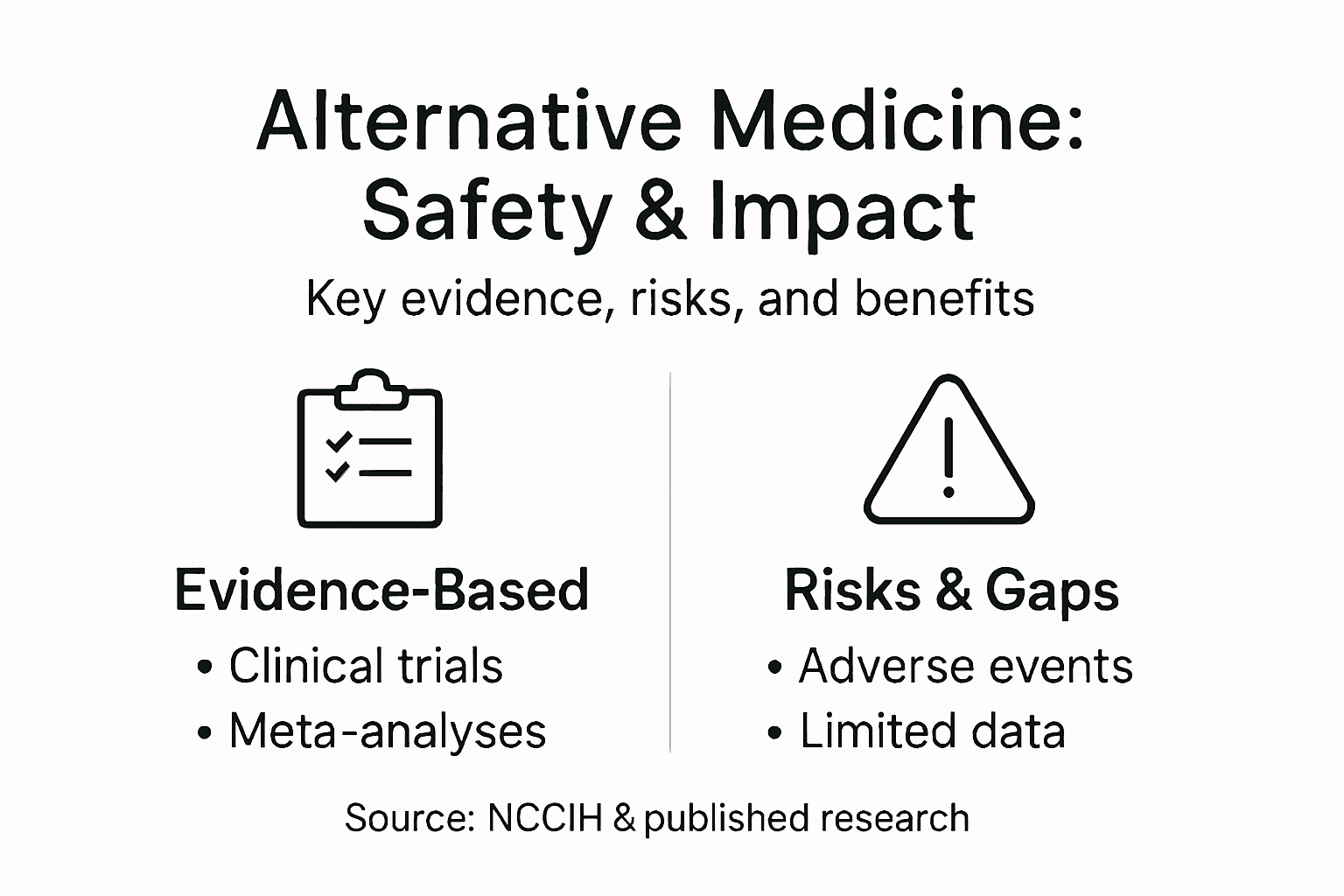
Safety risks increase when alternative and digital health systems merge without proper oversight. Inaccurate information from unvetted online sources can guide you toward ineffective treatments. System failures in integrated platforms may cause missed diagnoses or drug interactions. Improper use occurs when practitioners lack training in technology or miss warning signs that demand immediate conventional care.
Healthcare integration of alternative medicine introduces new risks including information errors, technological failures, and safety hazards related to incorrect application. Efficacy gaps exist because evidence quality varies dramatically across different therapies and providers.
Key safety concerns to watch:
This table summarizes the primary safety risks when integrating alternative therapies with standard care:
| Risk Category | Example Hazard | Prevention Strategy |
|---|---|---|
| Drug Interactions | Herbal mixes with prescriptions | Share medication lists with all providers |
| Practitioner Training | Missed serious diagnoses | Verify credentials and specialized skills |
| Product Quality | Contaminated supplements | Use verified brands, seek lab testing |
| Technology Problems | Data errors in records | Confirm data accuracy with practitioners |
| Delayed Treatment | Postponed needed diagnosis | Maintain open communication with teams |
- Drug interactions between herbal supplements and prescription medications
- Delayed diagnosis when alternative treatment postpones conventional testing
- Practitioner skill gaps in recognizing serious conditions
- Contamination risks in poorly regulated natural products
- Over-reliance on unproven therapies for serious illnesses
Despite these risks, integration trends are accelerating. Hospitals now offer acupuncture alongside pain management. Medical schools teach students about herbal medicine interactions. Insurance companies cover certain complementary therapies when research supports them.
This convergence creates opportunity. When evidence-based complementary therapies integrate with conventional medicine, outcomes improve for many chronic conditions. The key word is evidence-based—therapies must pass rigorous testing before integration.
Integration works best when both systems communicate openly, share patient information transparently, and maintain safety as the absolute priority.
Efficacy gaps remain real. Some popular therapies lack sufficient research. Others show promise but only for specific conditions or populations. You deserve clarity about what's proven, what's promising, and what's still speculative.
Your role in safe integration means asking hard questions. Tell all your practitioners—both conventional and alternative—exactly what treatments you're using. Don't assume they'll communicate with each other. You're the bridge between your medical team.
Pro tip: Maintain a complete treatment log listing all medications, supplements, herbal remedies, and alternative therapies you use, then share it with every practitioner you see to prevent dangerous interactions and ensure coordinated care.
Empower Your Health Decisions with Trusted Research and Verified Holistic Care
Navigating alternative medicine can feel overwhelming when safety, efficacy, and practitioner credibility are in question. This article highlights the critical need for research-backed treatments and verified practitioners to protect your wellbeing and maximize healing potential. If you want to move beyond guesswork and marketing claims, it is essential to bridge traditional wisdom with solid science and reliable care.
Discover how Go Holistic empowers you to explore evidence-based therapies with confidence. Our platform connects you to certified, thoroughly vetted holistic practitioners in acupuncture, massage therapy, Ayurveda, and many other modalities. Through AI-driven personalized recommendations and a curated provider directory, you can find safe, effective treatments backed by research. Take control of your health now by visiting Go Holistic to browse trusted practitioners and access our comprehensive treatment library covering over 200 therapy types. Your journey toward informed, natural healing starts here.
Frequently Asked Questions
What is the difference between alternative medicine and complementary medicine?
Alternative medicine completely replaces standard medical treatments, while complementary medicine works alongside them. For example, using herbal supplements instead of prescribed medications is alternative medicine, whereas using yoga in conjunction with physical therapy is complementary medicine.
How is the safety of alternative therapies evaluated?
The safety of alternative therapies is evaluated through rigorous research, including randomized controlled trials, systematic reviews, and observational studies. This research assesses potential side effects, drug interactions, and the overall safety profile of specific treatments.
What are some common types of alternative therapies with researched efficacy?
Common types of alternative therapies with varying levels of research backing include mind-body practices (like meditation and yoga), natural products (herbal supplements), and manipulative methods (like chiropractic care). Acupuncture and massage therapy have moderate evidence supporting their benefits for certain conditions, such as chronic pain.
Why is clinical research important for alternative medicine?
Clinical research is essential for validating the safety and effectiveness of alternative treatments. It helps distinguish genuine benefits from anecdotal claims, ensuring that patients have access to therapies backed by solid scientific evidence rather than mere tradition.
Recommended
- Go Holistic - Your Path to Holistic Wellness | Alternative Medicine Platform
- Research Hub - Coming Soon | Go Holistic
- Go Holistic - Your Path to Holistic Wellness
- Health & Wellness Blog | GoHolistic
- Medicinal Mushrooms: Boosting Immunity and Wellness – LongevityBotanicals
- Our Research and development - TMRG Solutions
- Herbal Supplements: Natural Relief for Joint Pain – Asli Nutrition