

Managing chronic health conditions through conventional medicine alone often leaves you feeling stuck. You follow prescriptions, attend appointments, yet symptoms persist and quality of life remains compromised. Integrative care improves adherence by combining evidence-based natural therapies with standard treatment. This guide provides actionable steps to personalize holistic health treatments and connect with holistic health providers who understand your unique needs, empowering you to take control of your health journey.
Table of Contents
- Introduction to Personalized Holistic Care
- Prerequisites: What You Need Before Starting
- Step 1: Understand Patient Context Including Social Determinants
- Step 2: Conduct Comprehensive Holistic Health Assessments
- Step 3: Integrate Evidence-Based Conventional and Holistic Therapies
- Step 4: Tailor Natural Therapies and Lifestyle Interventions
- Common Mistakes and How to Avoid Them
- Expected Results and Outcomes
- Explore Personalized Holistic Care Solutions
- Frequently Asked Questions about Personalizing Holistic Care
Key Takeaways
| Point | Details |
|---|---|
| Personalized holistic care integrates conventional and natural therapies tailored to individual chronic condition needs. | This approach addresses physical, mental, social, and spiritual health domains for comprehensive management. |
| Understanding social determinants of health is essential for effective personalization. | Factors like housing, nutrition access, and stress account for 30 to 55% of health outcomes. |
| Comprehensive assessments across four health domains guide treatment selection. | Standardized tools evaluate physical, psychological, social, and spiritual well-being to create tailored plans. |
| Evidence-based integration improves adherence by 2.57 times compared to conventional care alone. | Combining therapies reduces polypharmacy risks and empowers patients to manage symptoms actively. |
| Measurable improvements typically appear within 8 to 12 weeks of consistent adherence. | Expected outcomes include symptom reduction, enhanced quality of life, and fewer hospitalizations. |
Introduction to Personalized Holistic Care
Personalized holistic care means designing treatment plans that address your whole person, not just isolated symptoms. It combines conventional medical approaches with natural therapies like acupuncture, nutrition counseling, and mind-body practices, all customized to your specific chronic condition, lifestyle, and preferences. This integration acknowledges that your health is shaped by biological, psychological, social, and spiritual factors working together.
Why does this matter? Chronic conditions like diabetes, autoimmune disorders, and chronic pain require ongoing management that standard protocols alone often fail to optimize. Integrative care models improve adherence because they empower you as an active participant rather than a passive recipient. When your care plan reflects your values and circumstances, you're 2.57 times more likely to stick with it.
Core principles of personalized holistic care include:
- Whole-person assessment: Evaluating physical, mental, social, and spiritual health domains simultaneously
- Patient-centered decision making: Involving you in treatment choices based on your goals and preferences
- Evidence-based integration: Combining proven conventional and natural therapies safely and effectively
- Continuous monitoring: Adjusting interventions based on your progress and changing needs
- Collaborative care teams: Coordinating between conventional doctors and holistic health providers to ensure seamless communication
The Go Holistic platform connects you with certified practitioners who specialize in these integrative approaches. By exploring holistic health treatments tailored to your condition, you can build a personalized care plan that addresses root causes rather than just managing symptoms. This foundation prepares you for the specific steps needed to implement truly personalized holistic care.
Prerequisites: What You Need Before Starting
Before personalizing your holistic care plan, gather essential information and resources to ensure safe, effective treatment.
Start with a comprehensive health assessment that documents your medical history, current medications, diagnoses, symptoms, and previous treatments. This baseline helps practitioners understand your starting point and identify potential interactions between conventional and natural therapies. Keep detailed records of symptom patterns, triggers, and what has or hasn't worked in the past.

Access to qualified practitioners is crucial. You need both conventional healthcare providers who understand integrative approaches and certified holistic practitioners trained in evidence-based natural therapies. The directory of certified holistic healthcare providers offers verified professionals across disciplines like acupuncture, naturopathy, and functional medicine.
Understanding holistic patient assessments means recognizing that effective personalization requires evaluating four health domains:
- Physical health: Current diagnoses, medications, lab results, and symptom severity
- Psychological health: Mental health conditions, stress levels, coping mechanisms, and emotional well-being
- Social health: Living situation, support systems, financial resources, and access to healthy food and safe environments
- Spiritual health: Values, beliefs, purpose, and practices that provide meaning and resilience
Each prerequisite enables safer integration of therapies. Without understanding your social determinants, for example, recommending expensive supplements or time-intensive practices sets you up for failure. Without coordinating between providers, you risk dangerous interactions or duplicate treatments.
Pro tip: Maintain a health journal that tracks daily symptoms, treatments, diet, sleep, stress levels, and mood. This creates invaluable data for personalizing your care plan and measuring progress. Share this journal with your multidisciplinary care team to facilitate informed, coordinated decisions.
Step 1: Understand Patient Context Including Social Determinants
Your health outcomes depend on far more than medical treatments. Social determinants of health include the conditions where you live, work, learn, and play. These environmental and social factors account for 30 to 55% of your health outcomes, often outweighing genetic predispositions and healthcare access.
Social determinants impact on health significantly, particularly for chronic disease management. When care plans ignore these realities, they fail. For example, prescribing an anti-inflammatory diet means nothing if you lack access to fresh produce or safe cooking facilities. Recommending daily yoga practice is futile if you work three jobs and have no childcare support.
To assess your social determinants, practitioners should explore:
- Economic stability: Employment status, income level, food security, housing stability
- Education access: Health literacy, ability to understand treatment instructions, access to wellness information
- Healthcare access: Insurance coverage, transportation to appointments, proximity to practitioners
- Social and community context: Support networks, isolation, discrimination, stress from relationships
- Neighborhood environment: Safety, pollution, access to parks and healthy food retailers
Consider this example: A patient with diabetes struggled with blood sugar control despite medication adherence. Assessment revealed she lived in a food desert with limited grocery access, worked night shifts disrupting sleep, and faced chronic stress from financial insecurity. Her personalized plan included partnering with a community food program, adjusting medication timing for her schedule, and connecting her with financial counseling. Within three months, her HbA1c dropped significantly.
In-home, patient-directed holistic care programs that address social determinants of health reduce hospital admissions by approximately 20% and significantly improve quality of life in patients managing multiple chronic conditions. Revolutionizing the Standard of Care and Patient Experience
Understanding your context enables realistic, achievable care plans. Discuss social factors openly with your practitioners. Explore resources on holistic health social determinants to identify support services that address barriers to wellness.
Step 2: Conduct Comprehensive Holistic Health Assessments
Effective personalization requires systematic evaluation across all four health domains. Holistic assessment tools provide standardized frameworks to capture your complete health picture, ensuring nothing critical gets overlooked.
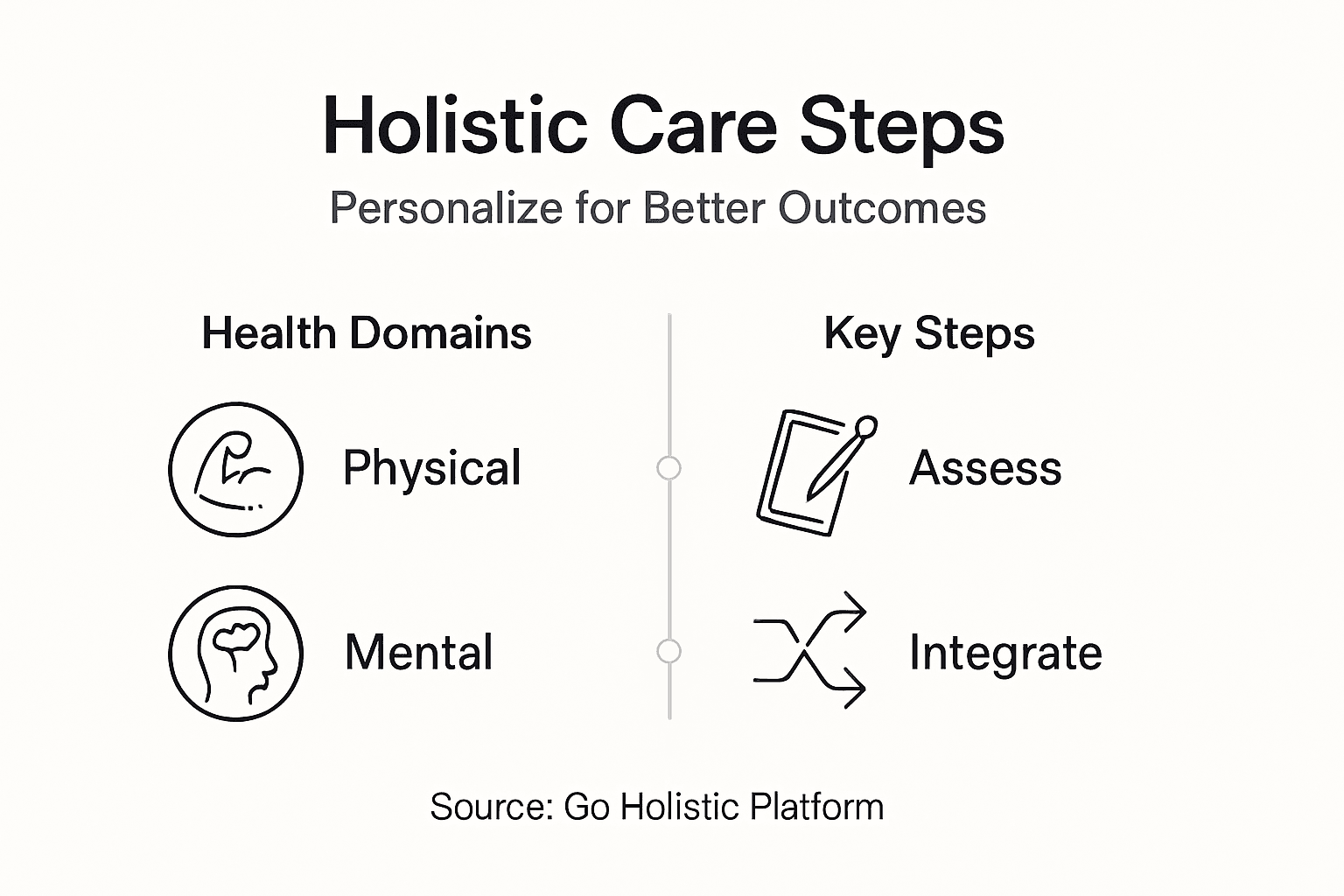
Each domain requires specific assessment approaches:
| Health Domain | Assessment Tools | Purpose |
|---|---|---|
| Physical | Medical history, lab tests, symptom scales, functional assessments | Evaluate disease severity, physical limitations, medication effects |
| Psychological | Depression/anxiety screenings, stress assessments, cognitive evaluations | Identify mental health needs impacting chronic condition management |
| Social | Social support inventories, resource assessments, caregiver burden scales | Understand relationships, isolation, practical support availability |
| Spiritual | Meaning/purpose questionnaires, spiritual well-being scales, values clarification | Assess sources of resilience, coping, and motivation for health changes |
To conduct comprehensive assessments:
- Schedule dedicated assessment time: Holistic evaluations take longer than standard medical appointments. Allocate 60 to 90 minutes for initial assessments.
- Complete standardized questionnaires: Use validated tools for each domain to ensure consistent, measurable data collection.
- Engage in collaborative dialogue: Discuss results with your practitioner, clarifying priorities and concerns.
- Identify strengths and resources: Assessment isn't just about problems. Recognize existing assets supporting your health.
- Set personalized goals: Based on findings, establish specific, measurable objectives across domains.
- Document baseline measurements: Record quantifiable data like pain levels, symptom frequency, and quality of life scores for tracking progress.
Effectiveness of holistic assessment-based interventions demonstrates that personalized plans derived from comprehensive assessments significantly improve health outcomes in adults managing multiple chronic conditions. The key is customization based on your unique profile.
Pro tip: Complete self-assessment questionnaires before your appointment and bring them with you. This preparation maximizes appointment efficiency and ensures you've reflected thoughtfully on each domain. Many holistic health assessment tools are available online to help you prepare.
Step 3: Integrate Evidence-Based Conventional and Holistic Therapies
Safe, effective chronic condition management often requires combining the best of conventional medicine with proven natural therapies. This integration isn't about choosing one approach over another but strategically using both to optimize outcomes while minimizing risks.
Evidence-based holistic therapies for chronic conditions include:
- Acupuncture: Reduces chronic pain, nausea, and inflammation through nervous system modulation
- Mind-body practices: Yoga, meditation, and tai chi decrease stress hormones and improve symptom management
- Clinical nutrition: Anti-inflammatory, whole-food diets address disease mechanisms in diabetes, autoimmune disorders, and cardiovascular conditions
- Physical therapy and movement: Customized exercise programs improve function, reduce pain, and enhance metabolic health
- Herbal medicine: Specific botanicals support immune function, reduce inflammation, and manage symptoms when properly prescribed
| Approach | Primary Focus | Key Benefits | Potential Limitations |
|---|---|---|---|
| Conventional Medicine Alone | Disease management through pharmaceuticals and procedures | Rapid symptom control, life-saving interventions, standardized protocols | Side effects, polypharmacy risks, doesn't address root causes or lifestyle factors |
| Holistic Care Alone | Natural therapies addressing whole-person wellness | Fewer side effects, empowers self-care, addresses root causes | Slower symptom relief, requires significant lifestyle changes, less research for acute conditions |
| Integrative Personalized Care | Strategic combination of both approaches tailored to individual needs | 2.57x better adherence, reduced medication burden, comprehensive root cause and symptom management | Requires care coordination, finding qualified practitioners, may involve higher initial time investment |
To integrate safely:
- Inform all providers: Every practitioner on your team must know about all treatments you're receiving, conventional and holistic
- Monitor for interactions: Some herbs and supplements interact with medications. Coordinate timing and dosing carefully
- Start one therapy at a time: This allows you to identify what's working and catch adverse effects early
- Prioritize evidence: Choose holistic therapies with research support for your specific condition
- Set clear roles: Define which provider manages which aspect of your care to avoid confusion
Integrative care models improve adherence by 2.57 times because patients feel empowered and see better results. How Primary Care Utilizes Holistic Approaches demonstrates this statistic clearly, showing that patients engaged in personalized integrative plans stick with treatment far more consistently.
By reducing polypharmacy risks, integrative approaches decrease medication-related side effects. For example, combining acupuncture and physical therapy for chronic pain often allows reduction in opioid or NSAID use, lowering risks of addiction and gastrointestinal damage.
Step 4: Tailor Natural Therapies and Lifestyle Interventions
Once you've established a foundation of integrated care, refine natural therapies and lifestyle changes to match your specific needs, preferences, and circumstances. Personalization at this level dramatically improves adherence and outcomes.
Personalized nutrition plans focusing on anti-inflammatory, whole-food approaches significantly improve disease markers. For diabetes, this might mean a low-glycemic Mediterranean diet. For autoimmune conditions, eliminating inflammatory triggers like gluten or dairy may reduce flares. Your practitioner should customize recommendations based on your lab results, symptoms, cultural food preferences, and cooking abilities.
Mind-body practices offer flexible options for stress reduction and symptom management:
- Meditation and mindfulness: Reduces inflammation markers and pain perception through nervous system regulation
- Yoga: Combines movement, breathwork, and meditation; adaptable for various mobility levels
- Tai chi and qigong: Gentle movement practices improving balance, reducing fall risk, and lowering stress
- Biofeedback: Teaches conscious control over physiological processes like heart rate and muscle tension
Mind-body practices benefits become apparent within 8 to 12 weeks of consistent practice. These interventions reduce stress hormones, lower inflammation, and improve sleep quality, all of which directly impact chronic condition symptoms.
To customize effectively:
- Assess your starting point: Evaluate current diet quality, activity level, stress management skills, and available time.
- Set realistic goals: Begin with one or two manageable changes rather than overhauling your entire lifestyle at once.
- Match therapies to preferences: If you hate group classes, choose home-based practices. If you need social support, seek community programs.
- Consider cultural relevance: Choose foods and practices that align with your cultural background and values for better adherence.
- Monitor and adjust: Track how interventions affect your symptoms and quality of life, modifying approaches that aren't working.
- Build gradually: As initial changes become habits, layer in additional therapies to deepen benefits.
Practical integration tips include scheduling practices at consistent times, pairing new habits with existing routines, and using apps or reminders to support adherence. Explore personalized natural therapies for condition-specific guidance and success stories that illustrate effective customization.
Common Mistakes and How to Avoid Them
Even with good intentions, several pitfalls can derail personalized holistic care efforts. Awareness helps you navigate these challenges successfully.
Common mistakes include:
- Ignoring social determinants: Designing care plans without considering practical barriers like transportation, finances, or food access sets you up for failure. Solution: Complete thorough social assessments and connect with community resources addressing these barriers.
- Poor provider communication: When your conventional doctor doesn't know about your acupuncture treatments or your naturopath isn't aware of new prescriptions, dangerous interactions or duplicated efforts can occur. Solution: Establish integrated care teams using shared electronic records or regular care coordination meetings.
- Overlooking patient preferences: Practitioners who prescribe treatments without considering your values, lifestyle, or goals create plans you won't follow. Solution: Actively voice your preferences and priorities. Choose practitioners who practice shared decision-making.
- Trying too much too fast: Starting five new therapies simultaneously makes it impossible to identify what's helping and what's causing side effects. Solution: Implement changes sequentially, giving each intervention 4 to 6 weeks before adding another.
- Lack of measurement: Without tracking symptoms, functional status, and quality of life, you can't tell if your personalized plan is working. Solution: Use validated questionnaires and symptom diaries to quantify progress objectively.
Common mistakes in holistic care lead to fragmented care, poor adherence, and suboptimal outcomes. Research shows these errors are preventable with proper care coordination and patient engagement.
Pro tip: Use digital health platforms and patient portals to facilitate communication between providers. Schedule regular check-ins with your care team to review progress, address concerns, and adjust your plan collaboratively. Many holistic care mistakes can be avoided through proactive communication and realistic goal-setting.
Expected Results and Outcomes
When you implement personalized holistic care consistently, measurable improvements typically emerge within specific timeframes. Understanding realistic expectations helps maintain motivation through the initial adjustment period.
Expected outcomes include:
- Symptom reduction: Pain levels, fatigue, inflammation markers, and disease-specific symptoms generally improve within 8 to 12 weeks of adherence.
- Enhanced quality of life: Physical function, emotional well-being, social engagement, and ability to perform daily activities show measurable gains.
- Reduced hospitalizations: Patients managing chronic conditions through personalized holistic care experience fewer emergency visits and hospital admissions.
- Improved adherence: When care plans reflect your values and circumstances, you're far more likely to stick with treatments long term.
- Lower medication burden: Many patients successfully reduce pharmaceutical doses or eliminate certain medications under medical supervision as natural therapies take effect.
- Greater empowerment: You develop skills and knowledge to actively manage your health rather than feeling helpless.
Personalized holistic care plans show measurable improvements within 8 to 12 weeks of consistent adherence. Holistic care outcomes timeline research confirms this timeframe across various chronic conditions including diabetes, autoimmune disorders, chronic pain, and cardiovascular disease.
Patience is essential. Natural therapies often work more gradually than pharmaceuticals, addressing root causes rather than just suppressing symptoms. This means sustainable, long-term improvements rather than temporary relief followed by rebound effects.
Consistent engagement with your care plan determines success. Sporadic implementation yields sporadic results. Track your progress using the same assessment tools from your baseline evaluation, documenting changes in symptoms, function, and quality of life. Review holistic care outcomes for inspiration and realistic benchmarks as you navigate your personalized health journey.
Explore Personalized Holistic Care Solutions
Ready to implement these personalized strategies for your chronic condition? The Go Holistic platform simplifies finding evidence-based holistic health treatments and connecting with certified holistic health providers who specialize in integrative chronic disease management. Our AI-powered recommendation system analyzes your specific health concerns, matching you with therapies backed by research and practitioners verified for credentials and expertise. Whether you're seeking acupuncture for pain management, nutrition counseling for autoimmune conditions, or mind-body practices for stress reduction, our comprehensive directory and treatment library empower your personalized wellness journey with transparency and safety.
Frequently Asked Questions about Personalizing Holistic Care
Is it safe to combine natural therapies with my prescription medications?
Yes, when done under professional supervision with full disclosure to all providers. Some herbs and supplements can interact with medications, so coordination is essential. Always inform your conventional doctor about natural therapies and your holistic practitioner about prescriptions to ensure safe integration and appropriate monitoring.
How do I find certified holistic practitioners who understand chronic condition management?
Look for practitioners with relevant licensure and specialized training in integrative or functional medicine approaches. The certified holistic healthcare providers directory verifies credentials and allows filtering by specialty, location, and chronic conditions treated. Check for board certifications, continuing education in integrative care, and experience with your specific health challenges.
How long before I see improvements from personalized holistic care?
Most patients notice initial improvements within 4 to 6 weeks, with more significant changes by 8 to 12 weeks of consistent adherence. Some benefits like reduced stress appear quickly, while others like improved metabolic markers take longer. Track progress with objective measures and be patient as natural therapies address root causes for sustainable results.
What if my initial personalized plan doesn't improve my symptoms?
Adjustment is normal and expected. Review your plan with your care team after 6 to 8 weeks if you're not seeing progress. Modifications might include changing therapy dosing, trying different modalities, addressing overlooked social determinants, or improving adherence strategies. Personalization is iterative, requiring ongoing refinement based on your response.
How much input should I have in designing my personalized care plan?
You should be an equal partner in all decisions. Effective personalization requires shared decision-making where practitioners offer evidence-based options and you choose based on your values, preferences, and circumstances. Discuss your priorities openly, ask questions about treatment rationale, and voice concerns about feasibility to create a plan you'll actually follow.
Can personalized holistic care replace my conventional medical treatment?
Not typically, especially for serious chronic conditions requiring pharmaceutical management. The goal is strategic integration, using natural therapies to enhance conventional treatment effectiveness, reduce medication burden, and address aspects conventional medicine doesn't target. Always work with qualified practitioners and never discontinue prescribed medications without medical supervision. Visit holistic care FAQs for more guidance on safe integration.