

Many people struggle to use natural remedies safely and effectively without clear guidance. A structured workflow helps integrate evidence-based holistic therapies like acupuncture, Ayurveda, and massage into your health management plan. This guide provides step-by-step insights to optimize your natural remedies journey, covering assessment, treatment execution, troubleshooting common mistakes, and monitoring outcomes. You'll learn how to personalize therapies based on diagnostic patterns, avoid pitfalls that reduce efficacy, and verify success through data-driven monitoring strategies.
Table of Contents
- Key Takeaways
- Understanding the natural remedies workflow: what you need first
- Step-by-step execution: conducting effective natural remedies treatments
- Troubleshooting and avoiding common natural remedies workflow mistakes
- Verifying success: expected results and ongoing monitoring in natural remedies
- Explore holistic health treatments with GoHolistic
- Frequently asked questions
Key Takeaways
| Point | Details |
|---|---|
| Structured workflows boost safety | A systematic, evidence based approach helps integrate acupuncture, Ayurveda, and massage into personalized care. |
| Diagnostics guide personalization | Personalization relies on constitutional typing and symptom patterns to select herbs, acupuncture points, or massage techniques. |
| Combine modalities for outcomes | Evidence shows that using acupuncture, Ayurveda, and massage together improves prevention and treatment results. |
| Early assessment and monitoring | Thorough evaluation before treatment and ongoing data driven monitoring are essential to adjust protocols and track progress. |
Understanding the natural remedies workflow: what you need first
Before starting any natural remedy treatment, you need thorough assessment and diagnostics. Natural remedies workflows begin with evaluation in acupuncture, Ayurveda, and massage therapy to ensure safe, personalized care. Each modality uses distinct diagnostic methods that guide treatment selection and dosage.
In acupuncture, practitioners identify diagnostic patterns through pulse examination, tongue analysis, and symptom mapping. These patterns determine which meridian points to stimulate and how frequently to schedule sessions. Ayurveda takes a different approach, using Prakriti assessment and Ashtavidha Pariksha to determine your constitutional type and current imbalance. This eight-fold examination includes pulse, urine, stool, tongue, sound, touch, eyes, and overall appearance. Massage therapy begins with gentle physical evaluation to identify areas of tension, restricted movement, and pain triggers.
Diagnostic accuracy is critical because incorrect assessment can worsen your condition. Ayurveda's Upashaya-Anupashaya method tests how your body responds to specific substances or therapies, confirming or refining the initial diagnosis. This prevents scenarios where treatment aggravates rather than alleviates symptoms. For example, applying a warming therapy to a condition caused by excess heat would intensify discomfort rather than provide relief.
Personalization based on constitutional typing and symptom patterns guides every decision in your treatment plan. Your unique body constitution determines which herbs, acupuncture points, or massage techniques will work best. Two people with the same symptom may require completely different approaches based on their underlying patterns. This is why cookie-cutter protocols often fail in holistic therapies.
Prepare your environment, physical state, and mindset before therapy sessions:
- Clear your schedule to avoid rushing before or after appointments
- Wear comfortable, loose clothing that allows easy access to treatment areas
- Avoid heavy meals within two hours of acupuncture or massage sessions
- Communicate openly with your practitioner about current medications and health changes
- Set realistic expectations based on your condition's severity and chronicity
Pro Tip: Keep a symptom journal starting two weeks before your first session. Track pain levels, energy fluctuations, sleep quality, and digestive patterns. This baseline data helps your practitioner fine-tune your treatment protocol and measure progress accurately.
The holistic wellness approach emphasizes that preparation determines half your success. Rushing into treatment without proper assessment wastes time and money while potentially causing harm. Invest in thorough diagnostics upfront to build a solid foundation for your healing journey.
Step-by-step execution: conducting effective natural remedies treatments
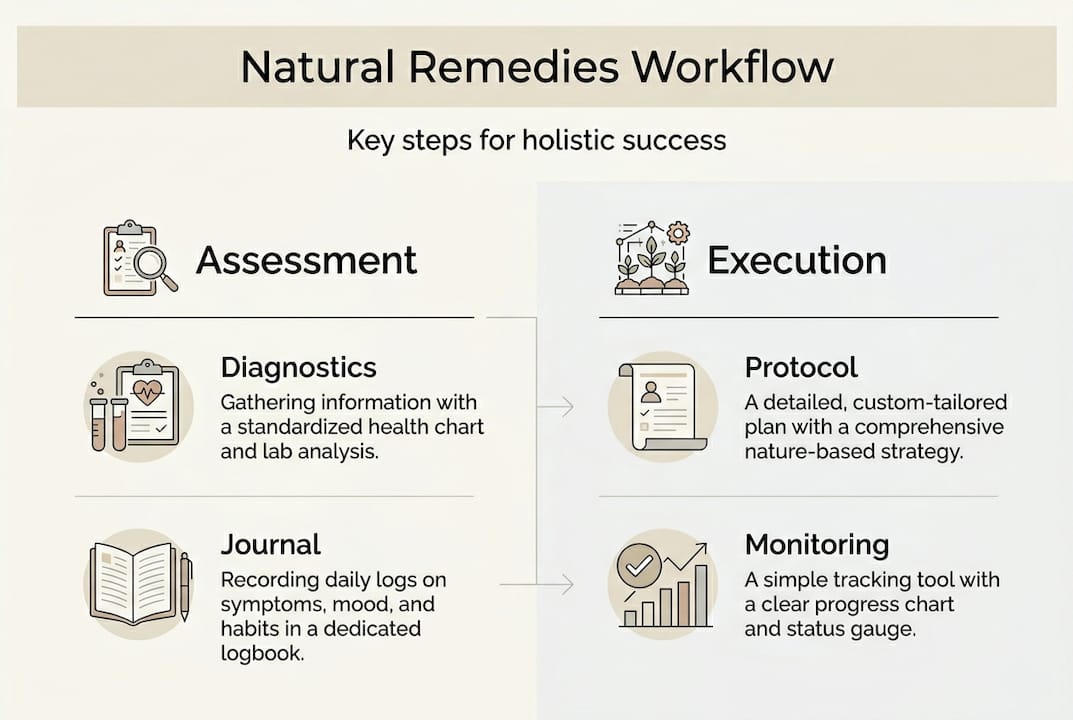
Once assessment is complete, you move into structured treatment execution. Each therapy follows evidence-based protocols that specify point selection, dosing, duration, and frequency. Understanding these stages helps you stay committed through the full treatment course and recognize when adjustments are needed.
Acupuncture involves 6-12 sessions with point selection guided by clinical practice guidelines. The IDEAL-Acu workflow outlines six stages from initial idea through long-term follow-up. Sessions typically occur once or twice weekly for eight weeks, with each session lasting 20 to 30 minutes. Your practitioner inserts fine needles at specific meridian points, often combining local points near the pain area with distal points on limbs to balance energy flow.

Ayurvedic polyherbal therapies are tailored per Sat Kriya Kala disease stages, which describe six phases of disease development. Early stage treatments focus on prevention and gentle detoxification, while advanced stages require more intensive interventions. Herbal formulations combine multiple plants to create synergistic effects, with dosages adjusted based on your body weight, digestive strength, and disease severity. Treatment duration ranges from several weeks for acute conditions to several months for chronic imbalances.
Massage therapy protocols for chronic pain involve a progressive 12-week myofascial release program. Efficacy depends heavily on duration, with minimum five weeks required to see measurable benefits. Sessions typically last 60 minutes and focus on releasing fascial restrictions, improving circulation, and reducing muscle tension. Therapists gradually increase pressure and expand treatment areas as your body adapts.
Follow this numbered sequence for optimal treatment execution:
- Confirm your diagnosis and treatment plan with your practitioner before starting
- Schedule your full course of sessions in advance to ensure consistency
- Arrive on time and in a relaxed state for each appointment
- Communicate any changes in symptoms or new discomforts immediately
- Follow post-treatment instructions, including rest periods and activity modifications
- Track your response using the symptom journal you started during assessment
- Complete the minimum recommended treatment duration before evaluating overall effectiveness
| Therapy | Typical Duration | Session Frequency | Key Protocol Elements |
|---|---|---|---|
| Acupuncture | 8 weeks | 1-2 times per week | Point selection per meridian patterns, needle retention 20-30 minutes |
| Ayurveda | 6-12 weeks | Daily herb intake, weekly consultations | Constitutional balancing, stage-specific formulations |
| Massage | 12 weeks | Once per week | Progressive myofascial release, gradually increasing intensity |
Monitor symptoms progressively to adjust treatment. Some people respond quickly, while others need extended protocols. Your practitioner may modify point selection, herbal formulas, or massage techniques based on your feedback. This adaptive approach maximizes benefits while minimizing any adverse reactions.
Pro Tip: Schedule sessions at the same time each week to create a healing rhythm. Your body responds better to consistent timing, and you're less likely to skip appointments when they're part of your routine. Morning sessions often work best for acupuncture and Ayurveda, while evening massage helps with sleep quality.
Explore comprehensive holistic health treatments to understand how different modalities can be combined for enhanced results. Many practitioners now integrate multiple approaches, such as acupuncture with herbal medicine or massage with Ayurvedic oil treatments, to address complex conditions more effectively.
Troubleshooting and avoiding common natural remedies workflow mistakes
Even with proper assessment and execution, mistakes can undermine your treatment outcomes. Recognizing common pitfalls helps you maintain safe, effective care throughout your healing journey. Many errors stem from impatience, miscommunication, or unrealistic expectations about natural remedies.
Misdiagnosis can worsen patient outcomes, particularly when therapies are mismatched to underlying patterns. Prevent aggravation by confirming diagnoses, such as avoiding Brimhana therapy in Kapha-blocked Vata cases in Ayurveda. Brimhana therapies nourish and build tissue, but when Kapha obstructs Vata's movement, you need to clear the blockage first. Applying nourishing treatment before clearing creates further stagnation and discomfort.
Therapy duration is critical, with less than five weeks of massage often proving ineffective for chronic pain. Many people quit after two or three sessions when they don't see dramatic improvement, missing the cumulative benefits that emerge around week six. Natural remedies work through gradual physiological changes, not instant fixes. Your body needs time to rebalance, repair tissue, and establish new patterns.
Insufficient treatment duration undermines benefits across all modalities. Stopping acupuncture after four sessions when the protocol calls for ten leaves meridian patterns partially corrected. Discontinuing Ayurvedic herbs after two weeks when the condition requires eight weeks prevents deeper healing. This premature termination wastes your investment and leaves you disappointed with results that never had a chance to fully develop.
Avoid these common workflow mistakes:
- Skipping follow-up appointments when you feel better, which allows conditions to relapse
- Mixing multiple new therapies simultaneously, making it impossible to identify what works
- Ignoring practitioner advice about diet, rest, or activity modifications between sessions
- Expecting natural remedies to work as quickly as pharmaceutical interventions
- Failing to disclose all medications and supplements, which can create dangerous interactions
- Choosing practitioners based solely on price rather than qualifications and experience
Monitor for adverse effects and adapt workflows as needed. While natural remedies are generally safe, individual reactions vary. Mild detox symptoms like temporary fatigue or digestive changes are normal in Ayurveda, but severe reactions require immediate protocol adjustment. Some acupuncture points may cause brief discomfort if you're particularly sensitive. Communicate everything to your practitioner rather than suffering silently or quitting treatment.
"The greatest mistake in natural remedies is assuming they can replace conventional therapies without proper guidance. Use holistic approaches as complementary measures within an integrated health strategy, not as isolated alternatives that ignore serious medical conditions."
This balanced perspective keeps you safe while maximizing natural remedies' benefits. Work with qualified holistic health practitioners who understand both alternative and conventional medicine. They can guide you on when natural remedies suffice and when you need additional medical intervention.
Verifying success: expected results and ongoing monitoring in natural remedies
Understanding realistic treatment outcomes helps you evaluate progress accurately and maintain motivation through the full protocol. Empirical data provides benchmarks for what to expect, though individual results vary based on condition severity, overall health, and treatment adherence.
Acupuncture reduces pain by about 11 mm on the Visual Analog Scale, while massage offers 35-50% pain and anxiety relief. These numbers represent averages from clinical studies of chronic musculoskeletal conditions. Some people experience more dramatic improvement, while others see modest gains. The key is consistent measurement using the same assessment tools throughout treatment.
Pain reduction varies per therapy but shows moderate to strong efficacy in chronic conditions. Acupuncture excels for headaches, back pain, and osteoarthritis. Ayurveda demonstrates particular strength in digestive disorders, inflammatory conditions, and metabolic imbalances. Massage therapy provides significant benefits for muscle tension, fibromyalgia, and stress-related pain. Matching your condition to the therapy with the strongest evidence base increases your likelihood of success.
Regular monitoring ensures therapies remain aligned with evolving symptoms and prevents relapse. Use your symptom journal to track weekly changes in pain intensity, frequency, and interference with daily activities. Note improvements in sleep quality, energy levels, mood, and digestive function. These secondary benefits often emerge before primary symptoms resolve, providing early evidence that treatment is working.
| Monitoring Method | Frequency | What to Track | Why It Matters |
|---|---|---|---|
| Symptom journal | Daily | Pain levels, energy, sleep, digestion | Identifies patterns and treatment response |
| Practitioner assessment | Weekly or biweekly | Physical findings, pulse, tongue | Guides protocol adjustments |
| Functional measures | Every 2-4 weeks | Range of motion, strength, endurance | Quantifies real-world improvement |
| Quality of life scales | Monthly | Overall wellbeing, activity participation | Captures broader health impacts |
Use data-driven methods including AI tools to enhance precision and standardization in treatments. AI tools improve standardization of herbal therapies with 95% accuracy in identifying plant species and predicting therapeutic effects. These technologies help practitioners select optimal formulations and dosages based on large datasets of treatment outcomes. While human expertise remains essential, AI augmentation reduces variability and improves consistency.
Combining multiple modalities may yield superior preventive and therapeutic benefits. Research suggests that integrated approaches addressing multiple body systems simultaneously produce better outcomes than single-modality treatment. For example, pairing acupuncture's nervous system regulation with Ayurvedic digestive support and massage's circulatory benefits creates synergistic effects. Discuss multi-modal strategies with your practitioner to design comprehensive protocols.
Long-term follow-up helps sustain gains and guides adjustments:
- Schedule maintenance sessions every 4-6 weeks after completing intensive treatment
- Continue beneficial lifestyle modifications like dietary changes or stress management practices
- Monitor for early warning signs of relapse and intervene promptly
- Adjust protocols seasonally, as some conditions fluctuate with weather and activity changes
- Celebrate improvements and use them as motivation for continued self-care
Pro Tip: Take photos or videos of functional activities at baseline and throughout treatment. Visual documentation of increased range of motion, improved posture, or enhanced movement quality provides powerful evidence of progress that numbers alone can't capture. These records also help you appreciate gradual improvements that might otherwise go unnoticed.
Connect with experienced holistic health providers who offer comprehensive monitoring and personalized protocol adjustments. The best practitioners combine traditional wisdom with modern assessment tools, creating treatment plans that evolve with your changing needs. They view healing as a journey requiring ongoing partnership rather than a quick fix.
Explore holistic health treatments with GoHolistic
You've learned the complete natural remedies workflow from assessment through outcome verification. Now you need trusted resources to implement this knowledge safely and effectively. GoHolistic connects you with vetted practitioners and evidence-based treatments across acupuncture, Ayurveda, massage, and over 200 other holistic modalities.
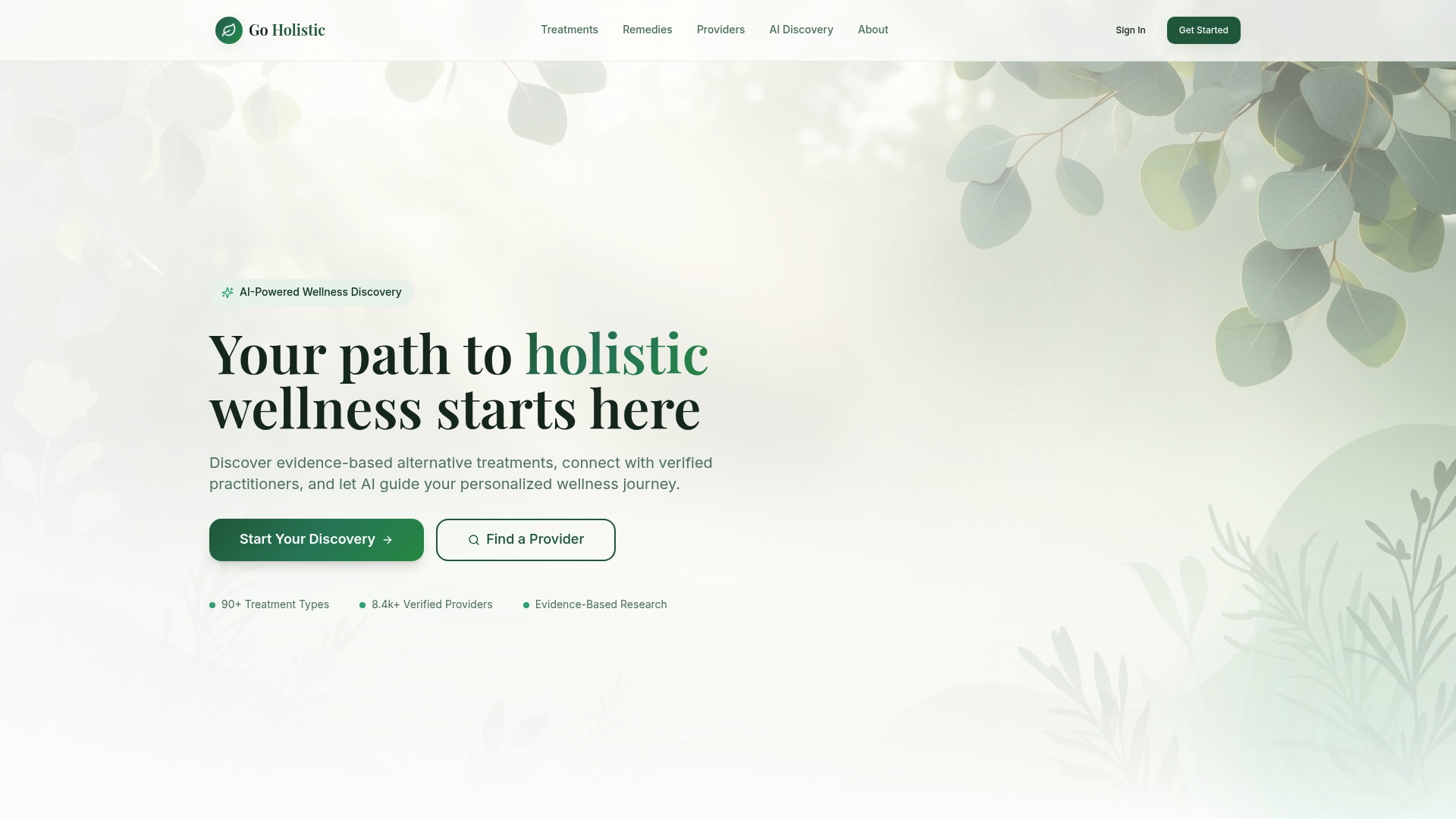
The platform uses AI technology to analyze your health concerns and provide personalized treatment recommendations backed by research summaries. Browse the extensive holistic health treatments library to understand which therapies match your specific condition and goals. Filter by location, specialty, and practitioner credentials to find qualified holistic health providers in your area. Book consultations directly through the platform and access ongoing support throughout your healing journey. Whether you're starting your first natural remedies protocol or optimizing an existing treatment plan, Go Holistic provides the tools and connections you need for holistic health success.
Frequently asked questions
What is a natural remedies workflow?
A natural remedies workflow is a structured, step-by-step process for safely and effectively using holistic therapies to manage health conditions. It includes initial assessment and diagnostics, personalized treatment selection, protocol execution with appropriate duration and frequency, ongoing monitoring, and outcome verification. The workflow ensures therapies like acupuncture, Ayurveda, and massage are applied systematically rather than haphazardly, maximizing benefits while minimizing risks.
How long does a typical acupuncture treatment workflow last?
A typical acupuncture regimen involves 6-12 sessions over eight weeks, with treatments occurring once or twice weekly. Each session lasts 20-30 minutes with needles retained at specific meridian points. Treatment length may extend for chronic or complex conditions, with some protocols continuing for three to six months. Your practitioner adjusts duration based on symptom response and condition severity.
Can Ayurveda aggravate some health conditions?
Yes, incorrect Ayurvedic therapy can worsen conditions, particularly when treatment mismatches the underlying imbalance. For example, applying nourishing Brimhana therapy to Kapha-blocked Vata conditions increases stagnation rather than relieving it. Proper diagnostics using Ashtavidha Pariksha and Upashaya-Anupashaya testing prevent such errors by confirming constitutional type and verifying treatment response before committing to full protocols.
How effective are massage therapies for chronic pain?
Massage therapy demonstrates moderate certainty evidence for 35-50% reduction in pain and anxiety after 12 weeks of consistent treatment. Studies show that protocols shorter than five weeks provide negligible benefits, as the body needs time to release deep fascial restrictions and establish new movement patterns. Effectiveness increases with progressive myofascial release techniques that gradually address multiple layers of tissue dysfunction.
Should I use natural remedies instead of conventional medicine?
Natural remedies work best as complementary measures within an integrated health strategy, not as complete replacements for conventional medicine. Use holistic therapies to enhance overall wellness, manage chronic conditions, and reduce reliance on medications when appropriate. Always consult qualified practitioners who understand both alternative and conventional approaches to ensure safe, comprehensive care that addresses serious medical conditions appropriately.