
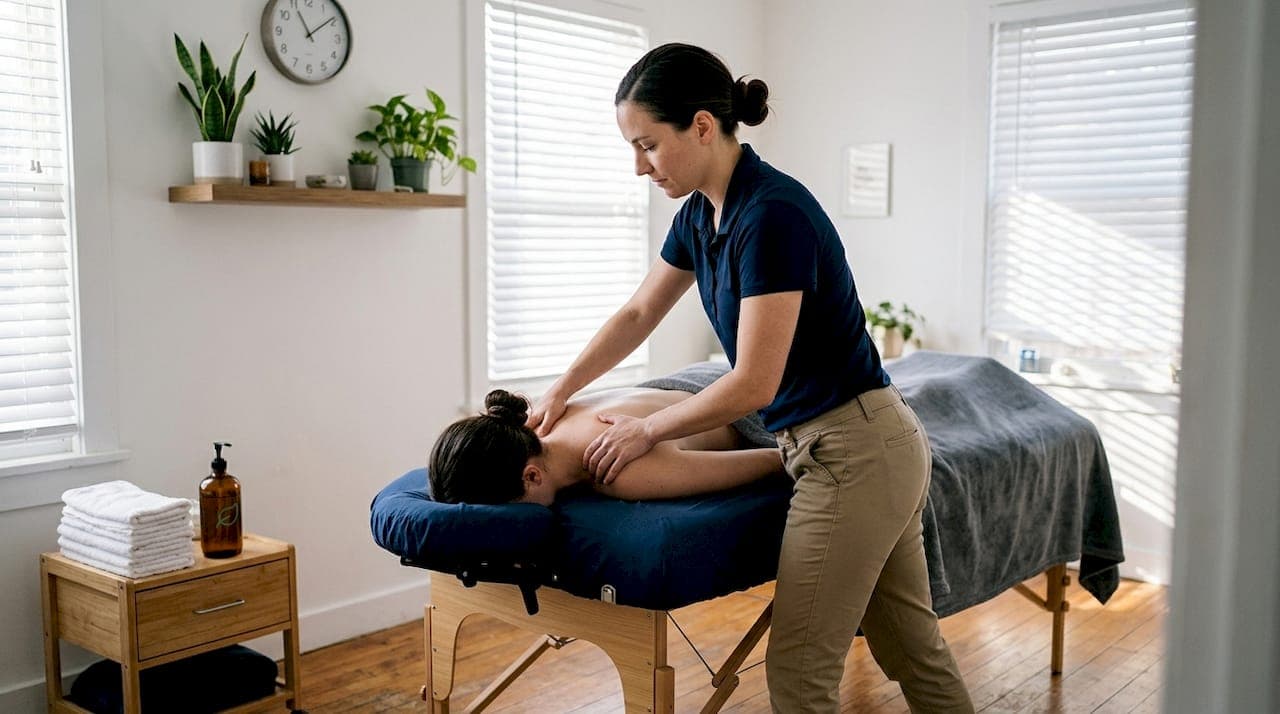
Many people think of massage as a luxury, something you treat yourself to after a stressful week. But research tells a different story. Moderate certainty evidence now supports massage therapy as a meaningful tool for managing chronic low back pain, fibromyalgia, myofascial pain, and neck pain, with real improvements in pain levels, physical function, and quality of life. If you are living with persistent pain or chronic stress and wondering whether massage could genuinely help, this guide breaks down the science, the best-supported conditions, the most effective techniques, and how to use massage safely as part of a broader wellness plan.
Table of Contents
- What is massage therapy really doing?
- Evidence: Who benefits most from massage therapy?
- Comparing massage techniques: What's best for your needs?
- Integrating massage therapy into holistic wellness
- Safety, contraindications, and what to discuss with your provider
- Get started on your holistic wellness journey with massage
- Frequently asked questions
Key Takeaways
| Point | Details |
|---|---|
| Best for chronic pain | Massage therapy is proven to help most in chronic low back pain and fibromyalgia management. |
| Not all techniques equal | Certain approaches like myofascial release and Shiatsu outperform others for pain and stress relief. |
| Integrative wellness is key | Massage works best when combined with exercise, nutrition, and mindful stress strategies. |
| Know safety limits | Massage is generally safe but requires modifications or avoidance in some health conditions. |
What is massage therapy really doing?
Massage is not just about feeling good in the moment. It creates measurable changes across several body systems at once. Understanding those changes helps you make smarter choices about when and how to use it.
Here is what happens inside your body during a massage session:
- Circulation improves, helping oxygen and nutrients reach tissues more efficiently
- Inflammation decreases, as massage reduces cytokines and other inflammatory markers
- Pain signals are interrupted through gate-control modulation, a process where touch signals compete with pain signals in the nervous system
- Cortisol drops while endorphins rise, shifting your body toward recovery
- The parasympathetic nervous system activates, which is the "rest and digest" mode that counters chronic stress
Massage also lowers cortisol and raises serotonin and dopamine, which explains why regular sessions can improve sleep quality and reduce anxiety across a wide range of populations. These are not small or incidental effects. They represent a genuine shift in how your body regulates stress and pain.
"Massage therapy works on multiple levels simultaneously, affecting your hormones, nervous system, and soft tissue all at once. That is what makes it more than just relaxation."
That said, not every claimed benefit is equally supported by research. The strongest evidence centers on pain and stress reduction. Claims about detoxification or immune boosting are far less certain. Sticking to what the science actually supports helps you get the most from holistic health treatments without unrealistic expectations.
Evidence: Who benefits most from massage therapy?
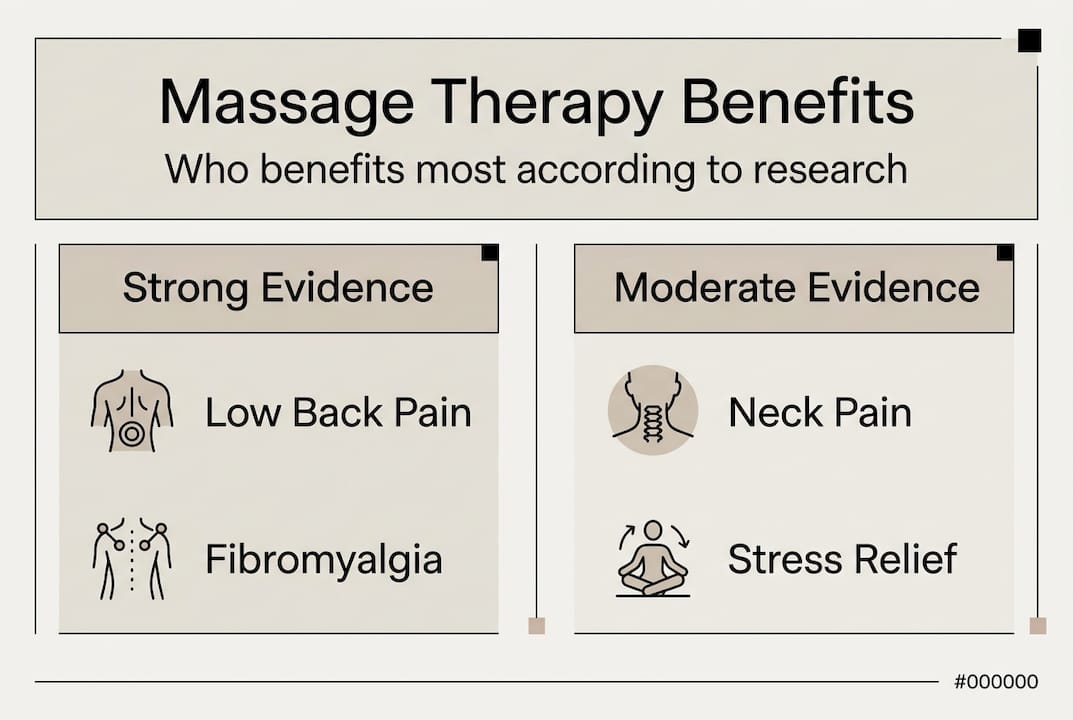
Not all pain conditions respond equally to massage. The research is clearest for a handful of specific conditions, and knowing where the evidence is strong versus limited helps you set realistic goals.
| Condition | Evidence strength | Key outcomes |
|---|---|---|
| Chronic low back pain | Moderate | Pain reduction, improved function |
| Fibromyalgia | Moderate | Pain, anxiety, sleep, quality of life |
| Myofascial pain | Moderate | Pain relief, range of motion |
| Chronic neck pain | Low to moderate | Small to no difference vs. placebo |
Moderate certainty evidence supports massage for chronic low back pain and fibromyalgia, with meaningful improvements in pain, function, and quality of life. Effect sizes range from small to large depending on the technique used and the condition being treated.
Statistic to know: For fibromyalgia specifically, myofascial release produces some of the largest effect sizes seen in massage research, outperforming Swedish massage by a significant margin.
The picture for neck pain is more nuanced. For subacute and chronic neck pain, massage shows little to no difference compared to placebo in some high-quality reviews. That does not mean massage is useless for neck pain, but it does mean you should combine it with other strategies rather than relying on it alone.
If you are managing chronic pain therapies and wondering where to start, low back pain and fibromyalgia are the conditions where massage is most likely to move the needle. For neck pain, think of massage as one piece of a larger puzzle.
Comparing massage techniques: What's best for your needs?
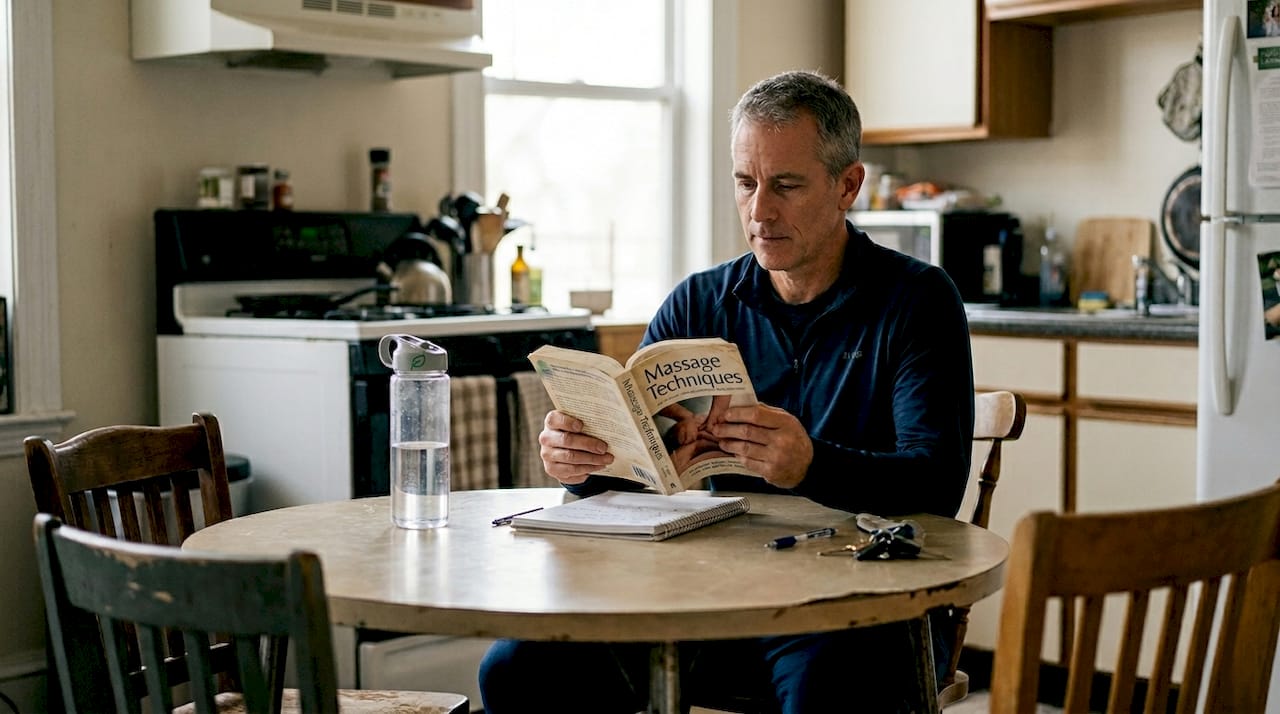
Choosing the right technique matters as much as choosing massage at all. Different approaches target different problems, and matching the method to your goal makes a real difference in outcomes.
| Technique | Best for | Intensity |
|---|---|---|
| Swedish massage | Stress, relaxation, general wellness | Gentle |
| Deep tissue massage | Chronic muscle tension, postural issues | Firm |
| Myofascial release | Fibromyalgia, chronic pain, fascia restrictions | Moderate |
| Shiatsu | Fatigue, sleep issues, pain management | Moderate |
Here is a quick breakdown of what each approach actually does:
- Swedish massage uses effleurage and petrissage, meaning gliding and kneading strokes, to improve circulation and promote relaxation. It is the gentlest option and a good starting point.
- Deep tissue massage applies sustained pressure to reach deeper muscle layers, making it effective for chronic tension and postural problems.
- Myofascial release targets the connective tissue surrounding muscles. Research shows it produces large effects on pain and medium effects on anxiety and depression in fibromyalgia patients.
- Shiatsu uses finger pressure along energy pathways and has been shown to improve pain, fatigue, and sleep quality.
Swedish massage, while widely popular, shows more limited effects for fibromyalgia specifically compared to myofascial release. For general stress and relaxation, though, it remains a solid choice.
For additional ideas on managing discomfort without medication, non-medical pain relief tips can complement what you learn from exploring different massage techniques.
Pro Tip: Do not lock yourself into one technique. Many people find that rotating between Swedish and myofascial release, or combining Shiatsu with deep tissue work, produces better results than sticking to a single approach.
Integrating massage therapy into holistic wellness
Massage works best when it is part of a bigger picture. Treating it as your only strategy limits its potential. When you layer it alongside other healthy habits, the benefits multiply.
Evidence supports massage as an adjunct therapy, meaning it works best alongside exercise and other interventions rather than as a standalone solution. Here is how to build it into your routine effectively:
- Start with a clear goal. Are you targeting pain reduction, stress management, or sleep improvement? Your goal shapes which technique and frequency make sense.
- Pair massage with movement. Gentle exercise like walking, yoga, or swimming amplifies the circulation and anti-inflammatory benefits of massage.
- Support recovery with nutrition. Anti-inflammatory foods, adequate protein, and proper hydration help your body respond better to manual therapy.
- Add mindfulness or breathwork. Practices like meditation or deep breathing extend the parasympathetic activation that massage initiates.
- Schedule consistently. Sporadic sessions produce limited results. Aim for a regular cadence that fits your life and budget.
Here are a few practical habits that support your massage sessions between appointments:
- Gentle stretching after sessions to maintain tissue mobility
- Staying hydrated to support circulation and tissue recovery
- Limiting high-stress activities immediately after a session to let the nervous system settle
- Journaling about pain levels and mood to track progress over time
Pro Tip: Keep a simple weekly log of your pain level (on a scale of 1 to 10), mood, and sleep quality. After six to eight sessions, patterns will emerge that help you and your practitioner fine-tune your approach.
Safety, contraindications, and what to discuss with your provider
Massage is generally very safe, but it is not right for every situation. Knowing when to pause, modify, or avoid treatment protects you and helps you get the most from each session.
Absolute contraindications, meaning situations where massage should not happen at all, include:
- Fever or acute infection, where massage can spread illness or worsen inflammation
- Deep vein thrombosis (DVT), where pressure could dislodge a clot
- Recent stroke, where circulatory changes pose serious risks
- Open wounds or active skin infections in the treatment area
Relative contraindications, where massage may be modified rather than avoided entirely, include:
- High-risk pregnancy, where certain positions and pressure points require adjustment
- Osteoporosis, where deep pressure needs to be reduced significantly
- Anticoagulant medications, which increase bruising risk and require a gentler approach
Serious adverse events are rare in pain-focused massage research, which is reassuring. But rare does not mean impossible. Always tell your practitioner about recent illnesses, injuries, medications, and any diagnosed conditions before your first session.
Important: A qualified practitioner will always ask about your health history. If they do not, that is a signal to find someone more thorough.
Listening to your body during and after sessions matters too. Mild soreness for a day or two is normal, especially after deep tissue work. Sharp pain, numbness, or prolonged discomfort are signals to communicate with your provider right away.
Get started on your holistic wellness journey with massage
You now have a clear, evidence-grounded picture of what massage therapy can and cannot do. The next step is putting that knowledge into action with the right support around you.
At Go Holistic, we make it easy to move from curiosity to care. You can find wellness practitioners who specialize in massage and other manual therapies, all verified and ready to work with your specific needs. Our platform lets you explore holistic treatments across more than 200 therapy types, with research summaries to help you understand your options before you book. When you are ready to connect, browse our directory of holistic health providers and filter by specialty, location, and availability. Whether you are just starting out or looking to deepen an existing wellness practice, we are here to support every step of your journey.
Frequently asked questions
Does massage therapy work for all types of chronic pain?
Massage therapy shows the strongest benefit for chronic low back pain and fibromyalgia, with moderate certainty evidence supporting improvements in pain and function. For chronic neck pain, research shows little to no difference compared to placebo, so it works best as part of a broader treatment plan.
Which massage technique is best for stress relief?
Swedish massage and Shiatsu are the most supported options for relaxation and sleep improvement, with Swedish being the gentler starting point. Shiatsu has shown benefits for pain, fatigue, and sleep quality, making it a strong choice if stress is affecting your rest.
Is massage therapy safe if I have a medical condition?
Massage is generally safe but must be modified or avoided in certain situations. Absolute contraindications include fever, deep vein thrombosis, acute infections, and recent stroke, while conditions like high-risk pregnancy and osteoporosis require a modified approach.
How often should I get massage therapy for chronic pain?
Higher-frequency treatment produces better outcomes, with eight or more sessions generally outperforming shorter courses. Talk with your practitioner to build a schedule that fits your condition, goals, and lifestyle.
Recommended
- Holistic Health Treatments | goholistic
- Go Holistic - Your Path to Holistic Wellness
- Go Holistic - Your Path to Holistic Wellness
- Go Holistic - Your Path to Holistic Wellness
- Therapeutic modalities explained: 35% better outcomes in 2026 - ReviveHealthTherapy
- Discover how Pilates therapy aids musculoskeletal recovery