

Feeling tired day after day can make even simple routines seem difficult, especially when you are searching for practical solutions that really work. Chronic fatigue is rarely about just one thing and understanding its true cause requires a close look at every area of your life. By focusing on a holistic approach to wellness and connecting with trusted practitioners, you can create a plan tailored to your unique needs and finally start feeling like yourself again.
Table of Contents
- Step 1: Assess Your Current Wellness Needs
- Step 2: Research Evidence-Based Therapies
- Step 3: Connect With Verified Practitioners
- Step 4: Monitor Progress and Adjust Plan
Quick Summary
| Key Insight | Explanation |
|---|---|
| 1. Assess Your Wellness Areas | Evaluate key life domains to identify your wellness gaps. |
| 2. Research Effective Therapies | Focus on evidence-based therapies relevant to your needs. |
| 3. Connect with Qualified Practitioners | Choose verified holistic practitioners based on credentials. |
| 4. Track Progress Consistently | Monitor specific indicators to measure treatment effectiveness. |
| 5. Adapt Your Wellness Plan | Be flexible and adjust your plan based on observed results. |
Step 1: Assess Your Current Wellness Needs
Before you can move forward with your natural health journey, you need to understand where you stand right now. This isn't about judgment or comparison to others. It's about getting honest with yourself so you can create a personalized path forward.
Start by evaluating the major areas of your life that affect your overall well-being. Most wellness models recognize that health spans multiple interconnected domains, not just physical fitness or nutrition. You'll want to honestly assess:
- Physical health: Your energy levels, sleep quality, and any chronic symptoms like fatigue
- Emotional well-being: How you handle stress, anxiety, and everyday emotional challenges
- Social connections: The quality of your relationships and sense of community
- Mental clarity: Your ability to focus, learn, and feel mentally sharp
- Spiritual alignment: Whether your life feels purposeful and connected to your values
- Financial stability: Stress related to money and access to wellness resources
- Work satisfaction: How your job or daily responsibilities affect your energy
- Environmental factors: Your physical surroundings and their impact on your mood
The wellness wheel assessment provides a structured framework for evaluating these eight key dimensions together. Rather than viewing wellness in isolation, this approach helps you see how everything connects. Your chronic fatigue, for example, might stem from poor sleep, high stress, or lack of social support rather than just physical causes.
Understanding your unique wellness profile across all life areas is the foundation for choosing the right natural therapies and practitioners to address your specific needs.
Grab a journal or open a note on your phone. Rate each area on a scale of one to ten, with one being completely neglected and ten being optimized. Don't overthink it. Your gut feeling matters here. Which areas scored lowest? These are likely where your energy drain originates.
Notice patterns as you reflect. Did your lowest scores cluster around stress-related areas? Are they primarily physical concerns? Understanding the interconnected nature of wellness domains reveals whether your fatigue is truly a physical issue or a symptom of imbalance elsewhere in your life.

Here's a quick reference for understanding each wellness domain and how it can impact chronic fatigue:
| Wellness Domain | Typical Impact on Fatigue | Early Improvement Sign |
|---|---|---|
| Physical Health | Low energy and poor sleep | Fewer aches, better sleep |
| Emotional Well-Being | Persistent stress drains energy | Less anxiety, more calm |
| Social Connections | Isolation increases exhaustion | More social engagement |
| Mental Clarity | Brain fog and forgetfulness | Better focus, clearer mind |
| Spiritual Alignment | Lack of purpose can weigh down | Feeling more fulfilled |
| Financial Stability | Money stress reduces energy | Reduced financial worry |
| Work Satisfaction | Job strain increases fatigue | More motivation, less dread |
| Environmental Factors | Messy spaces undermine energy | Improved mood at home |
Pro tip: Write down your three lowest-scoring areas and one specific symptom or challenge for each. This becomes your baseline for tracking progress and helps you explain your needs clearly when meeting with holistic practitioners.
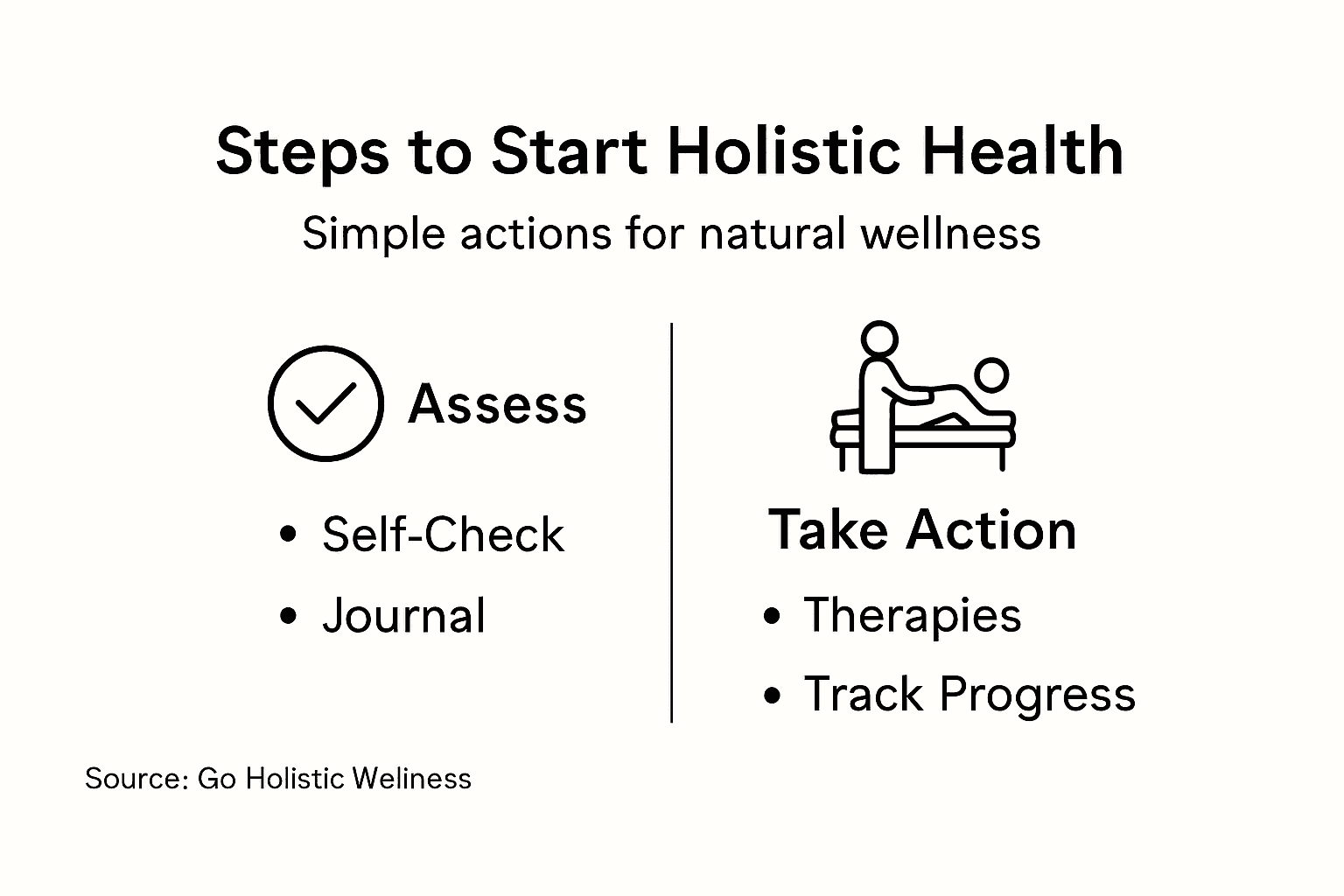
Step 2: Research Evidence-Based Therapies
Now that you understand your wellness gaps, it's time to explore which natural therapies actually work. The key word here is "evidence-based." Not all alternative treatments have solid research behind them, and separating fact from marketing matters when addressing chronic fatigue.
Start by identifying therapies that align with your lowest wellness scores. If stress emerged as a major factor, mind-body therapies like meditation or acupuncture might help. If physical symptoms dominate, massage therapy or herbal remedies could be worth exploring. The goal is matching your specific needs with proven treatments.
When evaluating any therapy, look for these markers of legitimacy:
- Research published in peer-reviewed journals
- Support from medical organizations or institutions
- Practitioner credentials and licensing requirements
- Clear explanations of how and why the treatment works
- Honest discussion of limitations and what it cannot treat
The National Center for Complementary and Integrative Health offers comprehensive, unbiased research on everything from acupuncture to herbal supplements. They fund rigorous studies and synthesize findings so you don't have to wade through conflicting information. This is a trusted starting point for anyone serious about evidence-based natural medicine.
Real evidence-based therapy means finding treatments with proven results, not just popularity or tradition alone.
Look beyond general wellness sites. Many condition-specific organizations publish evidence-based practice guidelines developed by medical experts. These recommendations carry weight because they're peer-reviewed and updated as new research emerges.
Create a simple spreadsheet or list documenting each therapy you're considering. Write down what research supports it, what practitioners say it treats, and whether it addresses your specific symptoms. This becomes invaluable when you eventually meet with holistic practitioners.
Avoid therapies with red flags like exaggerated claims of curing serious diseases, practitioners who discourage conventional medicine entirely, or treatments with no research at all. Healthy skepticism protects you.
Pro tip: When researching therapies, check the publication dates of studies. Research from the last five years is more valuable than older findings, as our understanding of holistic treatments continues to evolve.
Use this summary table to compare different evidence-based therapy types for chronic fatigue:
| Therapy Type | Best For | Key Evidence Source |
|---|---|---|
| Meditation | Stress and emotional slump | Clinical trials, NCCIH |
| Acupuncture | Chronic fatigue syndromes | Meta-analyses, NCCIH |
| Massage Therapy | Physical tension/pain | Randomized studies, JAMA |
| Herbal Remedies | Energy and sleep issues | Peer-reviewed journals |
| Mindfulness CBT | Mental focus and mood | Medical organization reviews |
Step 3: Connect With Verified Practitioners
Finding the right holistic practitioner is one of the most important decisions in your wellness journey. The wrong fit wastes your time and money. The right one can transform how you feel. This step is about identifying qualified, verified professionals who match your needs.
Start by filtering for credentials and verification. Not all holistic practitioners are created equal. Legitimate practitioners typically display certifications from recognized accreditation bodies, maintain licenses in their state or country, and follow ethical codes of conduct. Ask yourself: Does this person have verifiable training? Can I confirm their credentials independently?
Here's what to look for when evaluating a practitioner:
- Active membership in professional organizations
- Published credentials and years of experience
- Clear communication about their approach and limitations
- Willingness to work alongside your conventional doctor if needed
- Fair pricing with transparent fee structures
- Good reviews from actual clients
Organizations like the American Holistic Health Association maintain directories of verified practitioners committed to whole-person care. These directories help you find qualified professionals in your area who've already been vetted for ethical standards and competency.
Verified practitioners are willing to discuss their training, answer your questions, and explain why they recommend specific treatments for your situation.
When you identify potential practitioners, reach out with specificity. Tell them about your chronic fatigue and which wellness areas you're working to improve. Ask how they would approach your situation and what results you might realistically expect. A good practitioner will listen more than they talk in your first conversation.
Don't settle for the first practitioner you find. Schedule consultations with two or three candidates before committing. You need to feel heard, respected, and confident in their approach. Trust your instinct. If something feels off, it probably is.
Consider scheduling an initial consultation before fully booking treatment. This low-pressure meeting lets you assess whether the practitioner understands your needs and whether you'd be comfortable working together long-term.
Pro tip: Ask potential practitioners about their experience specifically with chronic fatigue and the wellness areas you identified as lowest in your assessment. Practitioners who've worked extensively with your particular challenges will deliver better results.
Step 4: Monitor Progress and Adjust Plan
Starting a holistic health plan is one thing. Sticking with it and actually seeing results is another. This step teaches you how to track what's working and make changes when something isn't.
Begin by establishing clear, measurable markers of progress. Don't just say "I want more energy." Instead, track specific indicators like how many hours you sleep, your energy level at different times of day, or how many days per week you feel fatigued. Write these baseline numbers down right now.
Set up a simple tracking system that works for your lifestyle. This could be a journal, a spreadsheet, or even a notes app on your phone. Record data weekly at minimum, ideally twice weekly. Consistency matters more than complexity.
Here's what to monitor:
- Energy levels throughout the day
- Sleep quality and duration
- Physical symptoms related to your fatigue
- Mood and emotional well-being
- How specific treatments make you feel
- Any side effects or unexpected changes
After four to six weeks of treatment, review your data honestly. Are you seeing improvement in the areas where you started treatment? A systematic approach to monitoring health interventions involves tracking outcome measures, process measures, and balancing measures to determine if your plan is actually working.
Progress isn't always linear. Some weeks you'll feel dramatically better. Other weeks you'll plateau. What matters is the overall direction of change over time.
If you're seeing positive movement, stay the course but remain flexible. Your body's needs evolve. What worked beautifully in month one might need adjustment in month three. Schedule regular check-ins with your holistic practitioner to review your progress together.
If progress stalls after six weeks, it's time to adjust. This might mean increasing treatment frequency, trying a different therapy, or combining multiple approaches. Don't assume the treatment failed. Sometimes your body needs time, or you might need a different dosage or modality.
Remember that continuous evaluation and adaptation based on real data ensures your wellness plan stays responsive to your actual needs, not theoretical expectations.
Pro tip: Track not just physical symptoms but also how treatments affect your daily life. Can you work longer without exhaustion? Do you need less caffeine? Are you sleeping better? These quality-of-life improvements often matter more than clinical measurements.
Take the First Step Toward Your Personalized Holistic Health Journey
Starting a natural wellness path can feel overwhelming when faced with so many choices and unknowns. You have already identified key wellness areas that need balance whether it is reducing stress, improving sleep, or finding verified holistic practitioners who truly understand your symptoms. At Go Holistic, we specialize in transforming this challenge into clarity with our evidence-based approach and personalized treatment recommendations that match your unique wellness profile.

Discover how our AI-driven platform connects you directly with certified professionals across acupuncture, massage therapy, Ayurveda, and other trusted modalities. Explore a carefully curated treatment library that empowers you to make informed decisions grounded in research. Do not wait to reclaim your energy and peace of mind. Visit Go Holistic now to start your tailored health journey with confidence and support.
Learn more about how proven natural therapies can address your needs at Go Holistic's wellness platform and find your perfect match among verified holistic practitioners. Your path to sustainable wellness begins today.
Frequently Asked Questions
How can I assess my current wellness needs?
Start by evaluating key areas like physical health, emotional well-being, and social connections. Rate each domain on a scale of one to ten, focusing on your gut feeling. This helps you identify where to focus your energy for improvement.
What are evidence-based therapies for chronic fatigue?
Explore natural therapies supported by solid research, such as meditation, acupuncture, and massage therapy. Selecting therapies that align with your wellness gaps can be effective; for instance, if stress is an issue, consider practicing meditation daily for 10 minutes.
How do I find a qualified holistic practitioner?
Look for practitioners with verifiable credentials and active memberships in professional organizations. Schedule initial consultations with at least two practitioners to discuss your concerns and assess their approach before committing to treatment.
How should I track my progress in a holistic health journey?
Establish clear markers of progress, such as the number of hours you sleep and your energy levels at different times. Track this data weekly to see improvements, and ensure you’re adapting your plan based on what you observe to maintain steady progress.
What should I do if I don't see improvement after starting treatment?
If you’re not experiencing progress after four to six weeks, reassess your approach. Consider discussing treatment frequency or trying a different therapy with your practitioner to find a method that better suits your needs.