

Chronic stress can make everyday life feel draining, even for those committed to healthy routines. Addressing the root causes means more than just quick fixes, especially for health-conscious people seeking lasting change. A comprehensive wellness assessment helps you understand where support is needed most, setting the foundation for a holistic, evidence-based journey toward well-being. You will find guidance on practical steps that blend personalized evaluation, trusted therapies, and continuous progress tracking for real improvement.
Table of Contents
- Step 1: Assess Your Wellness Needs
- Step 2: Research Evidence-Based Holistic Modalities
- Step 3: Select Verified Holistic Practitioners
- Step 4: Personalize Your Integration Plan
- Step 5: Monitor Progress and Adjust Therapies
Quick Summary
| Key Point | Explanation |
|---|---|
| 1. Assess Your Wellness Needs | Conduct a self-evaluation to identify your physical, emotional, and mental health areas requiring attention. |
| 2. Research Evidence-Based Modalities | Investigate scientifically validated holistic therapies to make informed decisions regarding your health. |
| 3. Select Verified Practitioners | Choose practitioners based on credentials, experience, and patient feedback to ensure quality care. |
| 4. Personalize Your Integration Plan | Create a tailored wellness plan that addresses your unique health needs and integrates various therapies. |
| 5. Monitor Progress and Adjust | Regularly track your wellness journey and make necessary adjustments based on your treatment responses. |
Step 1: Assess Your Wellness Needs
A comprehensive wellness assessment is your roadmap to understanding your holistic health landscape. This critical first step helps you identify physical, mental, and emotional areas needing attention, enabling you to develop a personalized approach to natural healing.
To effectively assess your wellness needs, start by conducting a thorough self-evaluation across multiple dimensions. Holistic assessment interventions consider interconnected factors including physical health, psychological state, social environment, and spiritual well-being. Your evaluation should include:
- Physical health indicators
- Emotional and mental wellness patterns
- Stress levels and resilience
- Current lifestyle habits
- Sleep quality and energy levels
- Nutritional intake and dietary patterns
Documenting these aspects provides a comprehensive snapshot of your current wellness state. Consider tracking information through detailed journaling, completing standardized wellness questionnaires, or consulting with a holistic health practitioner who can offer professional insights into your overall health profile.
Wellness is not just the absence of illness, but a dynamic process of growth and self-discovery.
Research suggests that sustained lifelong wellness practices dramatically improve individual health outcomes by creating personalized, adaptive strategies tailored to your unique needs.
Pro tip: Schedule a quarterly wellness review to track your progress and adjust your holistic health strategies as your body and lifestyle evolve.
Step 2: Research Evidence-Based Holistic Modalities
Researching evidence-based holistic therapies empowers you to make informed decisions about your natural wellness journey. This crucial step transforms your understanding from intuitive curiosity to a scientifically grounded approach toward healing and personal health optimization.
Traditional complementary medicine modalities offer therapeutic benefits that can complement conventional medical treatments. When conducting your research, focus on exploring scientifically validated approaches by:
- Consulting peer-reviewed medical journals
- Reviewing systematic research studies
- Checking academic databases
- Examining clinical trial results
- Investigating professional healthcare associations' recommendations
- Evaluating practitioner credentials and certifications
The goal is to identify holistic therapies with documented effectiveness and understand their potential interactions with your existing health conditions. A comprehensive review highlights that combining modern and alternative therapies can lead to improved patient outcomes and reduced side effects.

Here's a summary of popular holistic therapy approaches and their key focus areas:
| Therapy Type | Main Focus | Common Benefits |
|---|---|---|
| Mind-Body Practices | Mental and emotional | Stress reduction, clarity |
| Nutritional Interventions | Diet and digestion | Energy, digestive health |
| Manual Therapies | Musculoskeletal | Pain relief, improved mobility |
| Energy-Based Modalities | Spiritual and energetic | Balance, enhanced well-being |
| Movement Therapies | Physical activity | Flexibility, vitality |
Evidence-based research transforms alternative therapies from speculation to scientifically credible wellness strategies.
Remember that while many holistic modalities show promising results, individual experiences may vary. Always consult healthcare professionals to understand how specific therapies might interact with your personal health profile.
Pro tip: Create a spreadsheet tracking the research sources, therapy details, and potential benefits to organize your holistic wellness investigation systematically.
Step 3: Select Verified Holistic Practitioners
Selecting the right holistic practitioner is a critical step in your wellness journey, requiring careful research and strategic evaluation. Your goal is to find a qualified professional who can provide personalized, evidence-based care tailored to your unique health needs.
Navigate your practitioner selection process by focusing on these key verification criteria:
- Professional licensing and credentials
- Years of specialized experience
- Advanced training in specific holistic modalities
- Patient testimonials and success rates
- Ongoing professional education
- Insurance and professional association memberships
When searching for holistic wellness experts, prioritize practitioners who demonstrate transparent professional backgrounds and maintain current certifications. Look for professionals who are willing to discuss their approach, share their philosophical perspective on healing, and provide clear information about their treatment methodologies.
A verified holistic practitioner is not just a service provider, but a collaborative partner in your wellness journey.
Carefully review potential practitioners' backgrounds, ask detailed questions during initial consultations, and trust your intuition about their approach and communication style. Effective holistic practitioners should make you feel heard, respected, and empowered in your health decisions.
To help compare holistic practitioner qualifications, see this overview:
| Verification Criteria | Why It Matters | What to Look For |
|---|---|---|
| Licensing & Credentials | Confirms professional standards | State-issued licenses, certificates |
| Years of Experience | Indicates depth of knowledge | Minimum 5 years specialty practice |
| Advanced Training | Shows continued skill development | Evidence of additional education |
| Patient Testimonials | Provides insight on effectiveness | Positive, diverse client feedback |
| Professional Memberships | Signals credibility and commitment | Current association memberships |
Pro tip: Request detailed consultations with at least three practitioners to compare their approaches and find the most aligned wellness professional for your specific health goals.
Step 4: Personalize Your Integration Plan
Creating a personalized holistic wellness integration plan transforms your approach from generic treatment to a tailored, dynamic health strategy. Your plan will serve as a comprehensive roadmap that addresses your unique physical, mental, and emotional wellness needs.
Personalized integration strategies require careful consideration of multiple health dimensions. Develop your plan by systematically mapping out the following key components:
- Current health status and medical history
- Specific wellness goals
- Existing treatment protocols
- Potential holistic therapy interventions
- Personal lifestyle and environmental factors
- Potential interactions between treatments
Ensure your plan incorporates holistic health approaches that complement your existing medical treatments. This means looking beyond symptom management to address root causes and promote overall well-being. Consider how different therapies might work synergistically to support your health objectives.
A truly personalized integration plan views your health as a dynamic, interconnected system rather than a collection of isolated symptoms.
Regularly review and adjust your plan with input from both conventional healthcare providers and holistic practitioners. The integrative care approach emphasizes continuous communication and collaborative decision-making to optimize your wellness journey.
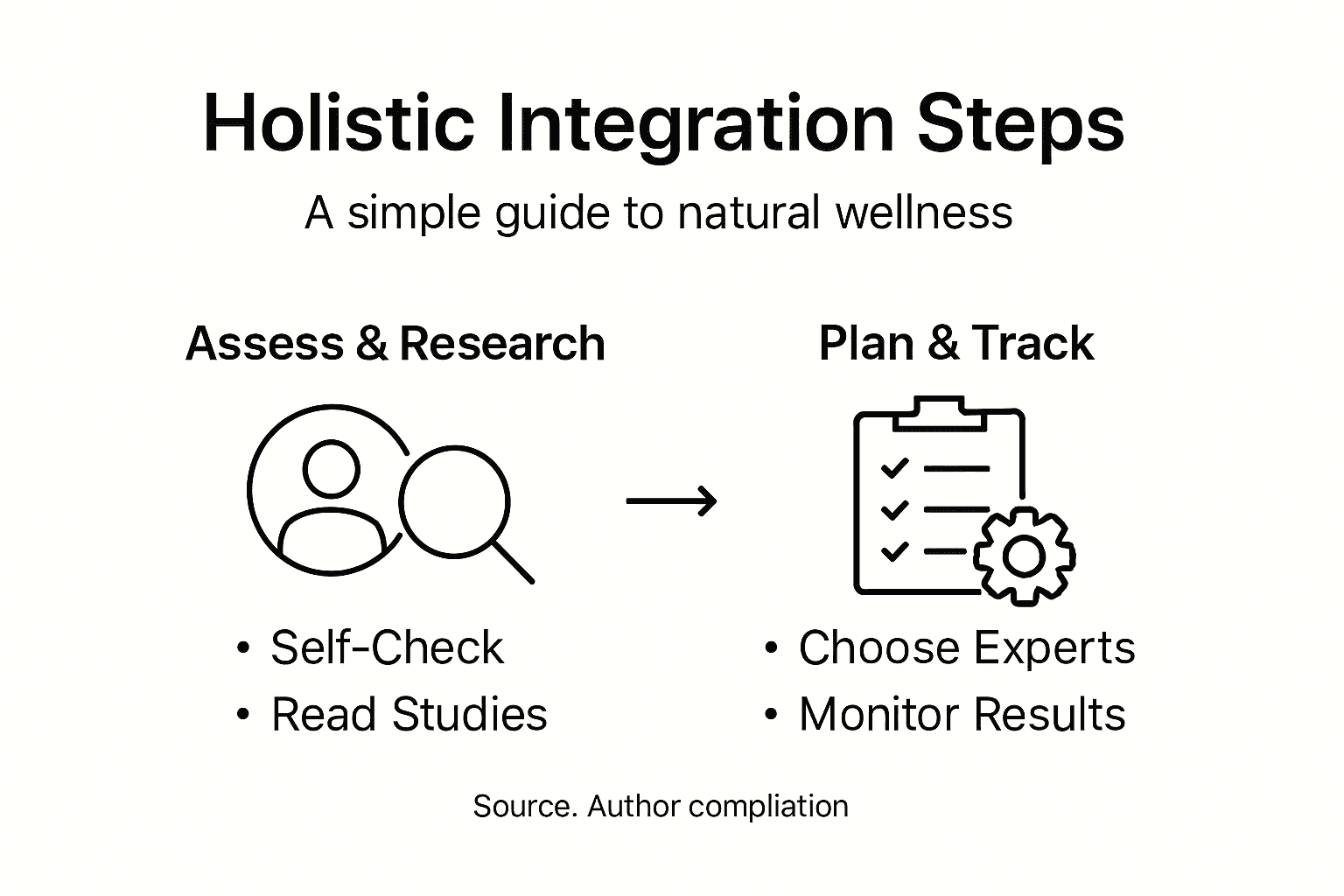
Pro tip: Create a flexible wellness tracking system that allows you to document progress, note treatment responses, and make data-driven adjustments to your holistic health strategy.
Step 5: Monitor Progress and Adjust Therapies
Tracking your holistic wellness journey requires consistent, intentional progress monitoring to ensure your integration plan remains effective and responsive to your evolving health needs. This critical step transforms your approach from static treatment to a dynamic, personalized healing strategy.
Standardized feedback tools help you systematically evaluate your wellness progress. Develop a comprehensive tracking system that captures multiple dimensions of your health:
- Physical symptom changes
- Energy levels and vitality
- Emotional and mental well-being
- Treatment response metrics
- Quality of sleep
- Stress management effectiveness
Implement regular assessment intervals to capture meaningful data about your holistic therapy outcomes. Tracking treatment progression allows you to identify what's working, what needs adjustment, and when to consult your healthcare providers for potential modifications.
Progress is not linear. Your wellness journey will have peaks, plateaus, and occasional setbacks - all of which provide valuable insights.
Scientific research demonstrates that timely treatment adjustments can significantly improve overall health outcomes by ensuring therapies remain aligned with your current needs and prevent potential treatment stagnation.
Pro tip: Create a digital or physical wellness journal to document your health metrics, treatment responses, and personal observations, providing a comprehensive narrative of your holistic health transformation.
Take Control of Your Natural Wellness Journey Today
Navigating the complex world of holistic therapies can feel overwhelming, especially when trying to personalize an effective integration plan that addresses your unique physical, mental, and emotional wellness needs. This article highlights the challenges of assessing your health, researching evidence-based modalities, and selecting verified practitioners all critical steps to ensuring your holistic wellness journey is safe, transparent, and scientifically grounded. Many wellness seekers struggle with finding trustworthy information and qualified professionals to guide this transformation.
Go Holistic is designed to solve precisely these challenges by connecting you to certified holistic practitioners across multiple disciplines through an AI-powered platform. Whether you want to explore acupuncture, massage therapy, Ayurvedic treatments, or other natural therapies, our curated directory and personalized treatment recommendations backed by research summaries help you make informed decisions.
Explore our comprehensive wellness discovery hub at Go Holistic to start your personalized integration plan with confidence. Benefit from verified expert guidance, research-driven insights, and flexible subscription options that empower you to monitor progress and adjust therapies as your wellness evolves. Begin your natural healing journey now and transform your health with access to trusted professionals and evidence-based holistic care.
Frequently Asked Questions
How can I assess my wellness needs effectively?
To assess your wellness needs, conduct a thorough self-evaluation that includes physical health indicators, emotional and mental wellness patterns, and lifestyle habits. Document your findings using detailed journaling or standardized wellness questionnaires to create a comprehensive snapshot of your current health state.
What are evidence-based holistic therapies, and how do I find them?
Evidence-based holistic therapies are treatments supported by scientific research and documented effectiveness. To find them, consult peer-reviewed medical journals, review systematic research studies, and evaluate the credentials of practitioners offering these therapies.
How do I select a qualified holistic practitioner?
Select a qualified holistic practitioner by researching their professional licensing, credentials, years of experience, and patient testimonials. Schedule initial consultations to ask detailed questions about their approach to ensure they align with your wellness goals.
What should I include in my personalized wellness integration plan?
Your personalized wellness integration plan should include your current health status, specific wellness goals, existing treatment protocols, and potential holistic therapy interventions. Ensure that you consider how these approaches will work together to support your overall well-being.
How can I monitor progress when integrating holistic therapies?
Monitor your progress by developing a tracking system that captures changes in physical symptoms, energy levels, emotional well-being, and treatment responses. Implement regular assessment intervals, such as weekly or monthly, to allow for timely adjustments to your holistic strategies as needed.
How often should I review my wellness integration plan?
You should review your wellness integration plan regularly, ideally at least every three months, to assess your progress and make necessary adjustments. This ongoing evaluation will help ensure that your strategies remain aligned with your evolving health needs.