

AI's role in holistic health extends far beyond simple chatbots and symptom checkers. In 2026, advanced AI frameworks integrate causal reasoning, quantum-inspired optimization, and physics-informed models to deliver personalized wellness interventions that certified practitioners can trust and validate. This guide clarifies how these technologies work, what evidence supports them, the challenges they face, and how you can benefit from AI-enhanced holistic care right now.
Table of Contents
- Understanding AI's foundation in holistic health
- AI enhancing personalization and explainability in holistic medicine
- Integrating AI with wearables and personalized health monitoring
- AI bridging ancient holistic wisdom and modern precision medicine
- Explore holistic health solutions enriched by AI
- Frequently asked questions about AI in holistic health
Key takeaways
| Point | Details |
|---|---|
| AI enhances holistic health through personalized, evidence-based interventions | Advanced frameworks combine predictive analytics, causal reasoning, and quantum-inspired optimization for tailored wellness plans |
| Explainable AI models improve clinician trust and patient outcomes | xHAIM improves diagnostic accuracy from 79.9% to 91.3% across multiple health tasks |
| Wearable data integration boosts personalized sleep and fitness guidance | AI models analyzing wearable sensors outperform human experts in sleep medicine and fitness assessments |
| AI bridges ancient wisdom with modern precision medicine | Traditional holistic principles like TCM integrate with multi-omics data for enhanced treatment precision |
Understanding AI's foundation in holistic health
AI frameworks enabling holistic health transformation integrate multiple sophisticated technologies working in concert. These systems combine predictive AI, causal reasoning, physics-informed modeling, deterministic constraint enforcement, quantum-inspired representations, hybrid classical-quantum optimization, and agentic orchestration specifically designed for healthcare applications.
The Unified Agentic-Quantum-Physics-Causal AI Framework represents this integration, providing healthcare and life sciences with tools that go beyond simple pattern recognition. Causal AI provides reasoning that aligns with biological feasibility and safety requirements, ensuring recommendations respect how your body actually functions. This matters because holistic health requires understanding root causes, not just treating surface symptoms.
Hybrid classical-quantum computing optimizes wellness plans under real-world constraints like your schedule, budget, and existing health conditions. These advanced systems support the evidence-based, personalized care that defines modern holistic health treatments.
Key capabilities these AI frameworks bring to holistic wellness include:
- Analyzing complex biological interactions across multiple body systems simultaneously
- Identifying causal relationships between lifestyle factors and health outcomes
- Optimizing treatment combinations while respecting safety constraints and contraindications
- Adapting recommendations as your health data and circumstances evolve over time
Pro Tip: When evaluating AI-powered health tools, ask whether they use causal reasoning or just correlation-based predictions. Causal models better align with how certified holistic practitioners think about your wellness.
AI enhancing personalization and explainability in holistic medicine
Explainable AI systems clarify the specific factors driving each health recommendation, building trust with both practitioners and patients. This transparency addresses a critical limitation: traditional AI black-box systems make predictions without revealing their reasoning, leaving clinicians and wellness seekers uncertain about whether to trust the guidance.
The xHAIM system demonstrates this breakthrough by improving average diagnostic accuracy from 79.9% to 91.3% across chest pathology and operative tasks. More importantly, it shows practitioners exactly which patient data points influenced each prediction, allowing them to verify the AI's logic against their clinical judgment.

This explainability helps clinicians trace AI predictions directly to specific aspects of your health profile, reducing errors and enabling more informed collaborative decisions. Two key factors previously limiting AI deployment were inadequate predictive performance and lack of explainability. Modern systems address both simultaneously.
For holistic health applications, explainability becomes even more crucial because practitioners integrate multiple data sources:
- Your symptom patterns and health history
- Diagnostic test results and biometric measurements
- Lifestyle factors including diet, sleep, stress, and activity levels
- Traditional assessment methods specific to modalities like acupuncture or Ayurveda
- Treatment responses and outcome tracking over time
Pro Tip: When consulting with holistic practitioners using AI tools, ask them to explain which specific aspects of your health profile drove the AI's recommendations. Reputable systems and practitioners will transparently share this reasoning.
Explore more insights on AI integration at our health and wellness blog, where certified practitioners share their experiences with these emerging technologies.
Integrating AI with wearables and personalized health monitoring
Large language models now analyze continuous wearable sensor data to provide personalized insights for sleep optimization, fitness programming, and preventive interventions. This real-time monitoring enables proactive wellness adjustments based on your body's actual responses, not generic population averages.
The PH-LLM model achieved 79% accuracy in sleep medicine and 88% in fitness assessments, outperforming human experts in these specialized domains. The system successfully predicted self-reported sleep quality by analyzing multimodal wearable data patterns that humans struggle to interpret.
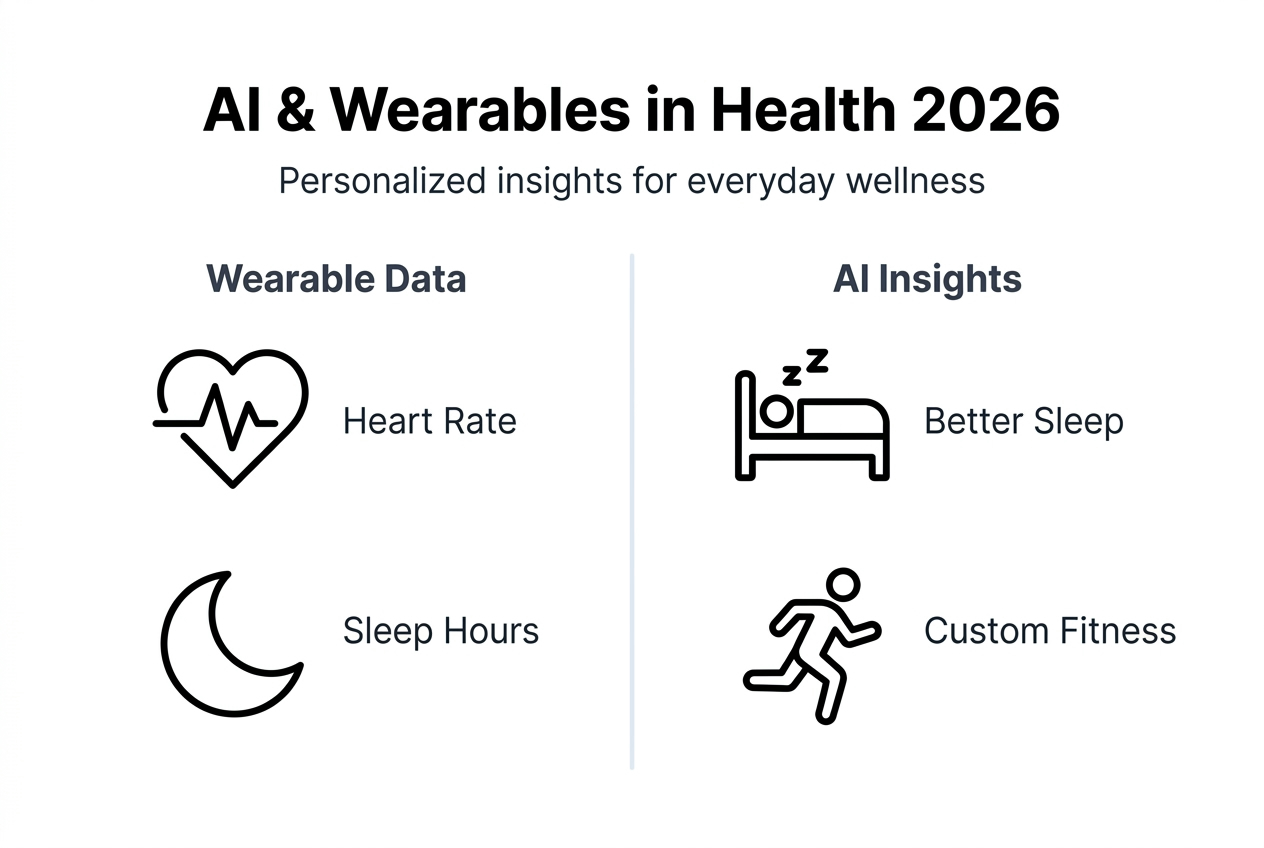
Wearables combined with AI enable your holistic health practitioner to spot subtle patterns indicating stress, inflammation, or recovery issues before they manifest as obvious symptoms. This early detection supports the preventive philosophy central to holistic medicine.
Practical applications transforming personalized wellness monitoring include:
- Sleep stage analysis revealing how lifestyle changes affect restorative rest quality
- Heart rate variability tracking identifying stress patterns and optimal recovery windows
- Activity pattern recognition suggesting ideal exercise timing based on your circadian rhythm
- Nutrition response monitoring showing how specific foods affect your energy and inflammation markers
User acceptance remains high for AI-driven personalized health plans because the recommendations feel tailored to individual circumstances rather than generic advice. When you find holistic health practitioners experienced with these tools, they can interpret your wearable data within the broader context of your wellness journey.
Pro Tip: Start with one wearable metric like sleep or activity levels rather than trying to optimize everything simultaneously. Master interpreting that data stream with your practitioner before adding complexity.
AI bridging ancient holistic wisdom and modern precision medicine
Traditional holistic principles can now be quantitatively modeled with AI and multi-omics data, creating unprecedented synergy between ancient wisdom and contemporary science. This integration doesn't replace traditional knowledge but rather provides new tools for applying timeless principles with modern precision.
The AI and multi-omics framework aligns with "Three Causes Tailored Treatment" from Traditional Chinese Medicine, demonstrating how AI can formalize and enhance approaches holistic practitioners have used for centuries. AI facilitates precise data analysis and clinical decision-making in TCM contexts, supporting symptom differentiation, target discovery, and personalized prescription formulation.
This technological enhancement helps practitioners identify which traditional approaches best match your unique constitution and current health patterns. The comparison below illustrates how AI augments rather than replaces traditional holistic assessment:
| Aspect | Traditional Approach | AI-Enhanced Approach |
|---|---|---|
| Assessment method | Practitioner observation, pulse diagnosis, tongue examination | Same traditional methods plus quantified biomarker analysis and pattern recognition across larger datasets |
| Personalization basis | Individual constitution and presenting symptoms | Constitution plus genetic markers, microbiome data, and real-time physiological monitoring |
| Treatment selection | Experience-based pattern matching | Pattern matching validated against outcomes data from thousands of similar cases |
| Progress tracking | Subjective symptom reporting and periodic reassessment | Continuous objective metrics combined with subjective experience |
The synergy fosters innovation while preserving the holistic philosophy that the whole person matters more than isolated symptoms. Connect with experienced holistic health providers who integrate these approaches thoughtfully, respecting both ancient wisdom and modern validation.
Explore holistic health solutions enriched by AI
Your wellness journey deserves both timeless holistic wisdom and cutting-edge AI personalization. Go Holistic connects you with certified practitioners who thoughtfully integrate these approaches, providing evidence-based care tailored to your unique needs.
Discover holistic health treatments spanning acupuncture, massage therapy, Ayurveda, and over 200 other modalities, all supported by research summaries and AI-powered recommendations. Connect with verified holistic health providers experienced in delivering personalized, technology-enhanced care that respects your individual health journey. Start exploring how AI and holistic wellness work together at Go Holistic today.
Frequently asked questions about AI in holistic health
What practical benefits does AI bring to holistic health?
AI provides personalized treatment recommendations based on your specific health data, lifestyle patterns, and biological responses rather than generic population averages. It helps practitioners identify subtle patterns in your wellness journey that humans might miss, enabling earlier interventions and more precise care adjustments.
Is AI health data tracking safe and private?
Reputable platforms use encryption and comply with healthcare privacy regulations to protect your sensitive health information. Always verify that any AI health tool you use clearly explains its data security practices and gives you control over what information gets shared and with whom.
How can I start using AI tools for my wellness journey?
Begin by working with certified holistic health practitioners who integrate AI thoughtfully into their practice rather than trying to self-diagnose using consumer AI tools. Professional guidance ensures AI insights get interpreted within the full context of your health history and wellness goals.
Can AI replace a holistic health practitioner?
No, AI serves as a powerful tool that enhances practitioner capabilities but cannot replace the clinical judgment, empathy, and hands-on skills that certified holistic health professionals provide. The most effective approach combines AI's pattern recognition with human expertise and compassionate care.
What should I look for in AI-powered holistic health services?
Seek services using explainable AI models that show how recommendations connect to your specific health data, work with certified and verified practitioners, provide evidence-based treatment information, and give you control over your health data privacy and sharing preferences.
Recommended
- Go Holistic - Your Path to Holistic Wellness | Alternative Medicine Platform
- Holistic Health Treatments | goholistic
- Find Holistic Health Practitioners Near You | GoHolistic
- Find Holistic Health Providers | Go Holistic
- Role of AI in Hearing Diagnosis: Advancing UK Hearing Health – Audora
- Master efficient brushing for oral health in 2026 – Y-Brush USA