

Stress, fatigue, and emotional imbalance drain your energy and leave you disconnected from your true self. Modern life demands constant output while offering little time for genuine restoration. A holistic self-care routine addresses your mind, body, and soul simultaneously, creating sustainable wellness rather than temporary relief. This guide teaches you how to build and maintain a personalized self-care practice that reduces stress, strengthens resilience, and restores balance. You'll discover practical strategies, evidence-based techniques, and actionable steps to transform your daily life into a foundation for lasting vitality and well-being.
Table of Contents
- Understanding holistic self-care: what it is and why it matters
- Preparing your holistic self-care toolkit: essential elements and mindset
- Executing your holistic self-care routine: practical steps and strategies
- Verifying your progress and adjusting your holistic self-care routine
- Explore holistic health resources and support
- Frequently asked questions
Key takeaways
| Point | Details |
|---|---|
| Holistic self-care reduces stress | Consistent practices lower cortisol and improve overall well-being across physical, mental, and emotional dimensions. |
| Five pillars create foundation | Nervous system regulation, emotional processing, boundaries, joy, and agency form the core structure for sustainable self-care routines. |
| Daily integration builds resilience | Small, consistent practices across mind, body, and soul dimensions strengthen your capacity to handle life's challenges effectively. |
| Personalization ensures sustainability | Tailoring practices to your unique needs, schedule, and preferences creates routines you'll actually maintain long term. |
| Progress tracking guides adjustments | Regular evaluation of stress levels, energy, and emotional balance helps you refine your routine for maximum benefit. |
Understanding holistic self-care: what it is and why it matters
Holistic self-care extends far beyond bubble baths and spa days. It represents essential maintenance for emotional balance, mental clarity, and sustained energy across all life domains. This comprehensive approach addresses your mind through cognitive practices, your body through physical wellness, and your soul through meaningful connection and purpose. Many people mistakenly view self-care as indulgence or reward, something earned after completing tasks. This misconception creates cycles where you neglect your needs until crisis forces intervention.
Three common myths undermine effective self-care practices. First, the belief that meaningful self-care requires extensive time commitments prevents people from starting. Second, the assumption that self-care equals relaxation ignores vital components like emotional regulation and boundary setting. Third, treating self-care as optional luxury rather than fundamental necessity leads to inconsistent practice and minimal results.
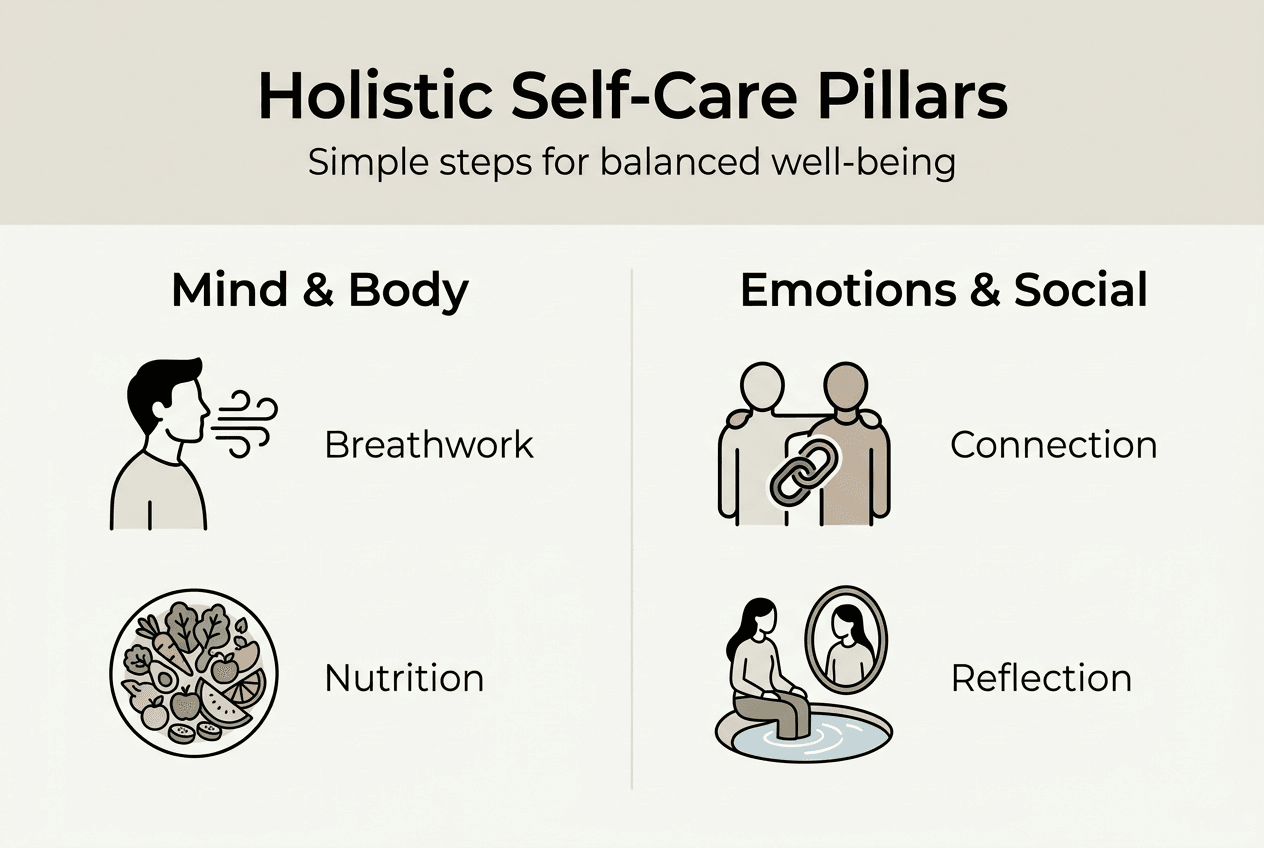
True holistic self-care incorporates five essential dimensions working together:
- Nervous system regulation through breathwork, meditation, or gentle movement
- Emotional processing via journaling, therapy, or creative expression
- Boundary establishment protecting your time, energy, and emotional capacity
- Joy reconnection through activities that genuinely delight and energize you
- Intentional agency creating moments where you exercise meaningful choice
Holistic wellness requires harmonious balance among all dimensions of being. When you address only physical health while ignoring emotional needs, or focus solely on mental clarity while neglecting bodily care, imbalance persists. The holistic wellness platform approach recognizes that each dimension influences others. Chronic stress affects digestion, poor sleep impairs emotional regulation, and social isolation undermines physical health.
Pro Tip: Reframe self-care as sustainability practice rather than pampering. Ask yourself, "What do I need to maintain my capacity to show up fully?" This shift transforms self-care from optional treat to non-negotiable foundation.
Sustainability distinguishes effective holistic self-care from fleeting wellness trends. You're not seeking perfection or dramatic transformation. Instead, you're building daily practices that support consistent well-being across decades. This requires honest assessment of your actual life circumstances, not idealized versions. A realistic daily self-care routine fits your schedule, honors your preferences, and adapts as your needs evolve.
Preparing your holistic self-care toolkit: essential elements and mindset
Building an effective self-care routine starts with understanding the five pillars that form its foundation. Nervous system regulation creates physiological calm, enabling clear thinking and emotional stability. Emotional processing prevents accumulated feelings from becoming overwhelming burdens. Boundaries protect your resources from depletion. Joy reconnection combats the numbing effects of chronic stress. Moments of agency restore your sense of control and capability.
The holistic model integrates seven health dimensions for comprehensive well-being. These include self-esteem, body image, social relations, environment, work satisfaction, health knowledge, and life purpose. Each dimension requires attention, though not equal emphasis at all times. Your toolkit should include practices addressing multiple dimensions simultaneously for efficiency.
| Essential Element | Recommended Practices | Mental Attitude | | --- | --- | | Nervous System Regulation | Deep breathing, progressive muscle relaxation, gentle yoga | Patience with your body's natural rhythms | | Emotional Processing | Journaling, therapy sessions, creative arts | Non-judgment toward your feelings | | Boundary Setting | Saying no, scheduling breaks, limiting exposure | Self-respect and assertiveness | | Joy Practices | Hobbies, nature time, play | Permission to prioritize delight | | Physical Wellness | Movement, nutrition, sleep hygiene | Body appreciation over criticism | | Social Connection | Quality time, vulnerable sharing, community | Openness to authentic relating | | Spiritual Alignment | Meditation, purpose reflection, values clarification | Curiosity about deeper meaning |
Your mindset determines whether your toolkit becomes useful resource or abandoned collection. Meet yourself where you actually are, not where you think you should be. If you're exhausted, start with rest rather than ambitious exercise plans. If you're emotionally numb, prioritize feeling practices over productivity optimization. Honesty about your current state enables appropriate practice selection.
Pro Tip: Create a physical or digital self-care menu listing practices across all dimensions. When decision fatigue strikes, simply choose from your pre-approved options rather than deliberating what might help.
Personalization transforms generic wellness advice into effective daily practice. Your holistic health treatments should reflect your unique preferences, constraints, and goals. Morning people might meditate at dawn, while night owls practice evening reflection. Introverts recharge through solitude, extroverts through connection. Someone managing chronic pain needs different movement practices than someone recovering from burnout.
Consistency matters more than duration or intensity. Five minutes of daily breathwork creates more benefit than monthly hour-long sessions. Small practices build neural pathways, establish habits, and accumulate results over time. Start with one practice per pillar, implemented consistently for three weeks before adding complexity. This approach prevents overwhelm while building sustainable momentum.
Executing your holistic self-care routine: practical steps and strategies
Implementing your holistic self-care routine requires structured approach balancing flexibility with consistency. Begin each day with nervous system regulation before external demands activate stress responses. Spend five to ten minutes in mindfulness meditation reducing stress by 30 to 40 percent through consistent practice. Simple breath awareness, body scanning, or guided meditation apps all provide accessible entry points.

Follow your morning practice with intentional nutrition choices. Whole-food diets improve gut health, directly influencing mental well-being through the gut-brain axis. Prioritize protein, healthy fats, and fiber-rich foods that stabilize blood sugar and sustain energy. Avoid processed foods, excessive caffeine, and sugar that create energy crashes and mood instability. Meal preparation on rest days ensures healthy options remain accessible during busy periods.
Physical movement should match your current capacity and preferences:
- Choose activities you genuinely enjoy rather than forcing yourself through dreaded workouts
- Start with ten to fifteen minutes daily, gradually increasing as your body adapts
- Mix cardiovascular exercise, strength training, and flexibility work across the week
- Include outdoor movement when possible for additional mental health benefits
- Listen to your body's signals, resting when needed rather than pushing through pain
| Mindfulness Technique | Best For | Time Required |
|---|---|---|
| Breath Awareness | Quick stress relief, accessibility | 3 to 5 minutes |
| Body Scan | Physical tension release, sleep preparation | 10 to 20 minutes |
| Loving-Kindness | Emotional healing, self-compassion | 10 to 15 minutes |
| Walking Meditation | Movement preference, nature connection | 15 to 30 minutes |
| Dietary Approach | Key Benefits | Considerations |
|---|---|---|
| Whole Foods | Nutrient density, gut health | Requires meal planning |
| Mediterranean | Heart health, inflammation reduction | Emphasizes specific food groups |
| Plant-Based | Environmental impact, fiber intake | Needs B12 supplementation |
| Intuitive Eating | Food relationship healing, flexibility | Requires unlearning diet culture |
Emotional check-ins throughout your day prevent accumulated stress from becoming overwhelming. Set reminders to pause and assess your internal state. Notice physical sensations, emotional tones, and thought patterns without judgment. When you identify distress, employ appropriate coping strategies from your toolkit. This might include brief breathing exercises, stepping outside, calling a friend, or journaling.
Pro Tip: Schedule self-care practices at the same time daily to leverage habit formation. Morning routines establish positive momentum, while evening practices support quality sleep and next-day readiness.
Social connection serves as vital self-care component often overlooked in individualistic wellness culture. Humans are inherently social beings requiring authentic relating for optimal health. Schedule regular quality time with people who energize rather than drain you. Practice vulnerable sharing when safe, allowing others to truly know you. Participate in community activities aligned with your values and interests. Working with holistic health practitioners provides professional support while building meaningful therapeutic relationships.
Common pitfalls undermine even well-designed routines. Perfectionism creates all-or-nothing thinking where missed practices feel like complete failure. Comparison to others' routines generates inadequacy rather than inspiration. Neglecting adaptation as life circumstances change leads to abandoned practices. Treating self-care as another productivity metric adds stress rather than reducing it. Avoid these traps by embracing imperfection, honoring your unique path, adjusting regularly, and remembering that self-care exists to support your well-being, not prove your worth.
Verifying your progress and adjusting your holistic self-care routine
Tracking your self-care effectiveness requires both objective measures and subjective reflection. Stress scores decreased and resilience increased with consistent self-care practices in research studies. Use standardized tools like the Perceived Stress Scale to quantify changes over time. Complete assessments monthly rather than daily to capture meaningful trends without obsessive monitoring.
Personal reflection provides equally valuable insight into your routine's impact. Journal weekly about your energy levels, emotional stability, physical sensations, relationship quality, and sense of purpose. Notice patterns connecting specific practices to particular outcomes. Perhaps morning meditation correlates with calmer afternoons, or evening walks improve sleep quality. These observations guide refinement of your personalized approach.
| Progress Indicator | Positive Signs | Adjustment Triggers |
|---|---|---|
| Stress Levels | Feeling calmer, better coping | Increased reactivity, overwhelm |
| Energy | Sustained vitality, fewer crashes | Persistent fatigue, difficulty waking |
| Emotional Balance | Wider range, quicker recovery | Numbness or constant intensity |
| Physical Health | Improved sleep, fewer illnesses | New symptoms, chronic issues |
| Relationships | Deeper connection, easier boundaries | Increased conflict, isolation |
| Life Satisfaction | Greater purpose, more joy | Emptiness, lack of meaning |
Several signs indicate your routine needs modification. Persistent resistance to practices suggests misalignment with your actual needs or preferences. Plateaued results after initial improvements mean your system adapted and requires new challenges. Increased stress despite consistent practice indicates external circumstances overwhelming your current capacity. Life transitions like job changes, moves, or relationship shifts necessitate routine adjustments matching new realities.
Adjustment strategies depend on specific challenges you're experiencing:
- If practices feel boring, introduce variety through new techniques or settings
- If time feels insufficient, break practices into smaller increments throughout the day
- If motivation wanes, reconnect with your deeper why and celebrate small wins
- If results plateau, deepen existing practices or add complementary approaches
- If overwhelm persists, simplify your routine and increase support resources
Pro Tip: Schedule quarterly self-care audits reviewing what's working, what's not, and what needs changing. This prevents drift into ineffective routines while maintaining beneficial practices.
Flexibility distinguishes sustainable routines from rigid systems destined for abandonment. Life includes periods of high demand requiring minimal maintenance routines and calmer seasons allowing expanded practices. Both serve important purposes. During crisis, your streamlined essentials maintain basic stability. During ease, your fuller routine builds reserves for future challenges. Neither represents failure or success, just appropriate matching of practices to circumstances.
Self-compassion throughout this process proves essential. You will miss practices, make choices that don't serve you, and experience setbacks. These moments offer learning opportunities rather than evidence of personal inadequacy. Treat yourself with the same kindness you'd offer a good friend navigating similar challenges. The health and wellness blog provides ongoing support, fresh perspectives, and evidence-based guidance as you refine your approach over time.
Long-term sustainability requires releasing perfection as the goal. Your aim isn't flawless execution but consistent return to practices supporting your well-being. Progress follows non-linear paths with advances, plateaus, and temporary retreats. Trust the cumulative effect of small, consistent actions over months and years. This patient approach builds genuine transformation rather than fleeting improvements that disappear under pressure.
Explore holistic health resources and support
Building a sustainable self-care routine becomes easier with professional guidance and curated resources. The Go Holistic platform connects you with evidence-based holistic health treatments spanning over 200 therapy types, from acupuncture and massage to Ayurveda and energy healing. Each treatment includes research summaries helping you understand potential benefits and applications.
Working with qualified holistic health practitioners personalizes your wellness journey beyond generic advice. Certified professionals assess your unique needs, recommend specific practices, and provide accountability supporting consistent implementation. The platform's AI technology analyzes your health concerns, matching you with appropriate practitioners and treatment modalities. You can browse verified providers, read reviews, and book consultations directly through the system. Whether you're addressing specific health challenges or optimizing overall well-being, professional support accelerates progress while preventing common pitfalls.
Frequently asked questions
What are the key benefits of a holistic self-care routine?
Holistic self-care routines reduce stress, anxiety, and depression while improving physical health, emotional stability, and life satisfaction. Research demonstrates measurable decreases in cortisol levels and perceived stress alongside increased resilience and overall well-being. Benefits extend beyond symptom reduction to include enhanced energy, clearer thinking, stronger relationships, and greater sense of purpose. These improvements accumulate over time, creating upward spirals where better self-care enables better life functioning, which further supports consistent self-care practice.
How do I start a holistic self-care routine if I'm very busy?
Begin with five-minute practices integrated into existing routines rather than adding separate time blocks. Practice breathwork while your coffee brews, do body scans during your commute, or journal for three minutes before bed. Consistency matters more than duration, so brief daily practices create more benefit than occasional lengthy sessions. Once micro-habits establish, gradually expand duration or add complementary practices. This approach prevents overwhelm while building sustainable momentum even within demanding schedules.
What are the essential components to include in my routine?
Your routine should address the five foundational pillars: nervous system regulation, emotional processing, boundary setting, joy reconnection, and intentional agency. Additionally, incorporate practices spanning seven wellness dimensions including self-esteem, body image, social relations, environment quality, work satisfaction, health knowledge, and life purpose. This doesn't require separate practices for each component. Many activities address multiple dimensions simultaneously, like yoga combining physical movement, mindfulness, and social connection when practiced in community settings.
How can I measure the effectiveness of my self-care routine?
Use validated questionnaires like the Perceived Stress Scale or Connor-Davidson Resilience Scale monthly to track quantifiable changes. Supplement objective measures with weekly journaling about energy levels, emotional range, physical sensations, relationship quality, and life satisfaction. Notice specific correlations between practices and outcomes, such as improved sleep following evening meditation or better mood after morning walks. Combine numerical data with qualitative reflection for comprehensive understanding of your routine's impact and areas needing adjustment.
Can holistic self-care routines help with mental health issues like anxiety?
Holistic self-care practices significantly reduce anxiety, stress, and depression symptoms through multiple mechanisms. Mindfulness meditation calms nervous system activation, whole-food nutrition stabilizes mood-regulating neurotransmitters, physical movement releases tension and endorphins, and social connection provides emotional support and perspective. While self-care complements professional mental health treatment, it shouldn't replace therapy or medication when clinically indicated. The combination of professional care and consistent self-care practices creates optimal outcomes for managing mental health challenges and preventing future episodes.
Recommended
- Holistic Health Treatments | goholistic
- Go Holistic - Your Path to Holistic Wellness | Alternative Medicine Platform
- Find Holistic Health Providers | Go Holistic
- Find Holistic Health Practitioners Near You | GoHolistic
- Wellness Self-Care Guide for Daily Balance and Relaxation – EQUA - Sustainable Water Bottles