

Every person dealing with persistent pain or mysterious symptoms knows how frustrating it can feel when standard treatments do not bring relief. This growing challenge drives more people to explore the differences between holistic and conventional medicine, searching for care that targets not only physical illness but also emotional and social well-being. Uncovering these distinct healthcare models can reveal new strategies to manage complex conditions and improve overall quality of life.
Table of Contents
- Defining Holistic vs Conventional Medicine
- Core Philosophies and Treatment Approaches
- Variations and Methods in Holistic Practice
- Patient Roles and Personalization in Care
- Risks, Safety, and Regulatory Considerations
- Comparing Cost, Accessibility, and Outcomes
Key Takeaways
| Point | Details |
|---|---|
| Conventional vs Holistic Medicine | Conventional medicine targets specific symptoms while holistic medicine addresses overall wellness and the interconnectedness of health factors. |
| Integration of Approaches | Modern healthcare increasingly values the combination of conventional and holistic methodologies for optimal patient outcomes. |
| Patient Engagement | Holistic medicine emphasizes active patient participation in their own health journeys, fostering a collaborative care approach. |
| Cost and Accessibility | Conventional treatments often have broader insurance coverage and standardized costs, while holistic care may require out-of-pocket investments. |
Defining Holistic vs Conventional Medicine
The landscape of healthcare encompasses two distinct yet increasingly interconnected approaches to wellness: conventional medicine and holistic medicine. While conventional medicine traditionally focuses on treating specific symptoms and diseases, holistic medicine takes a more comprehensive view of patient health, addressing physical, emotional, and social dimensions simultaneously.
Conventional medicine, rooted in scientific research and evidence-based practices, typically targets specific medical conditions through standardized diagnostic tools, pharmaceutical interventions, and surgical procedures. Global perspectives on medical integration highlight that while modern biomedicine remains critical, patients often require more nuanced treatment strategies, especially for chronic and complex health conditions.
Holistic medicine, by contrast, operates on a fundamentally different philosophical foundation. This approach views the human body as an interconnected system, recognizing that physical symptoms often stem from deeper emotional, environmental, or lifestyle factors. Key characteristics of holistic medicine include:
- Patient-centered care focusing on entire wellness
- Consideration of multiple health dimensions simultaneously
- Integration of traditional and alternative healing practices
- Emphasis on prevention and root cause resolution
- Personalized treatment plans tailored to individual needs
The emerging medical paradigm increasingly recognizes the value of integrating both approaches. Modern healthcare is gradually moving towards a more comprehensive model that combines the precision of conventional diagnostic techniques with the holistic understanding of patient wellness.
Holistic medicine does not reject conventional medical practices but seeks to complement them, creating a more comprehensive approach to healing.
Pro tip: When exploring healthcare options, consider practitioners who demonstrate an openness to integrative approaches that combine the strengths of both conventional and holistic methodologies.
Core Philosophies and Treatment Approaches
The core philosophies of conventional and holistic medicine represent fundamentally different approaches to understanding and treating human health. Conventional medicine predominantly operates through a reductionist model, focusing on specific symptoms, isolated biological mechanisms, and targeted interventions. In contrast, holistic medicine integrates comprehensive wellness strategies that consider the entire human experience beyond mere physical manifestations.
Conventional medical treatment typically follows a linear, disease-centered approach characterized by:
- Diagnostic tests targeting specific symptoms
- Pharmaceutical interventions
- Surgical procedures
- Evidence-based clinical protocols
- Standardized treatment algorithms
Holistic medicine embraces a more nuanced perspective, recognizing that health emerges from complex interactions between physical, emotional, spiritual, and environmental factors. This approach prioritizes understanding root causes and supporting the body's inherent healing capabilities through diverse strategies.
Key characteristics of holistic treatment methodologies include:
- Personalized care plans
- Emphasis on preventative wellness
- Incorporation of lifestyle and nutritional guidance
- Mind-body-spirit interconnectedness
- Natural and complementary healing techniques
Holistic medicine views patients as active participants in their healing journey, not passive recipients of medical interventions.
Modern integrative healthcare increasingly recognizes the value of combining these approaches, acknowledging that both conventional precision and holistic comprehensiveness can contribute to optimal patient outcomes.
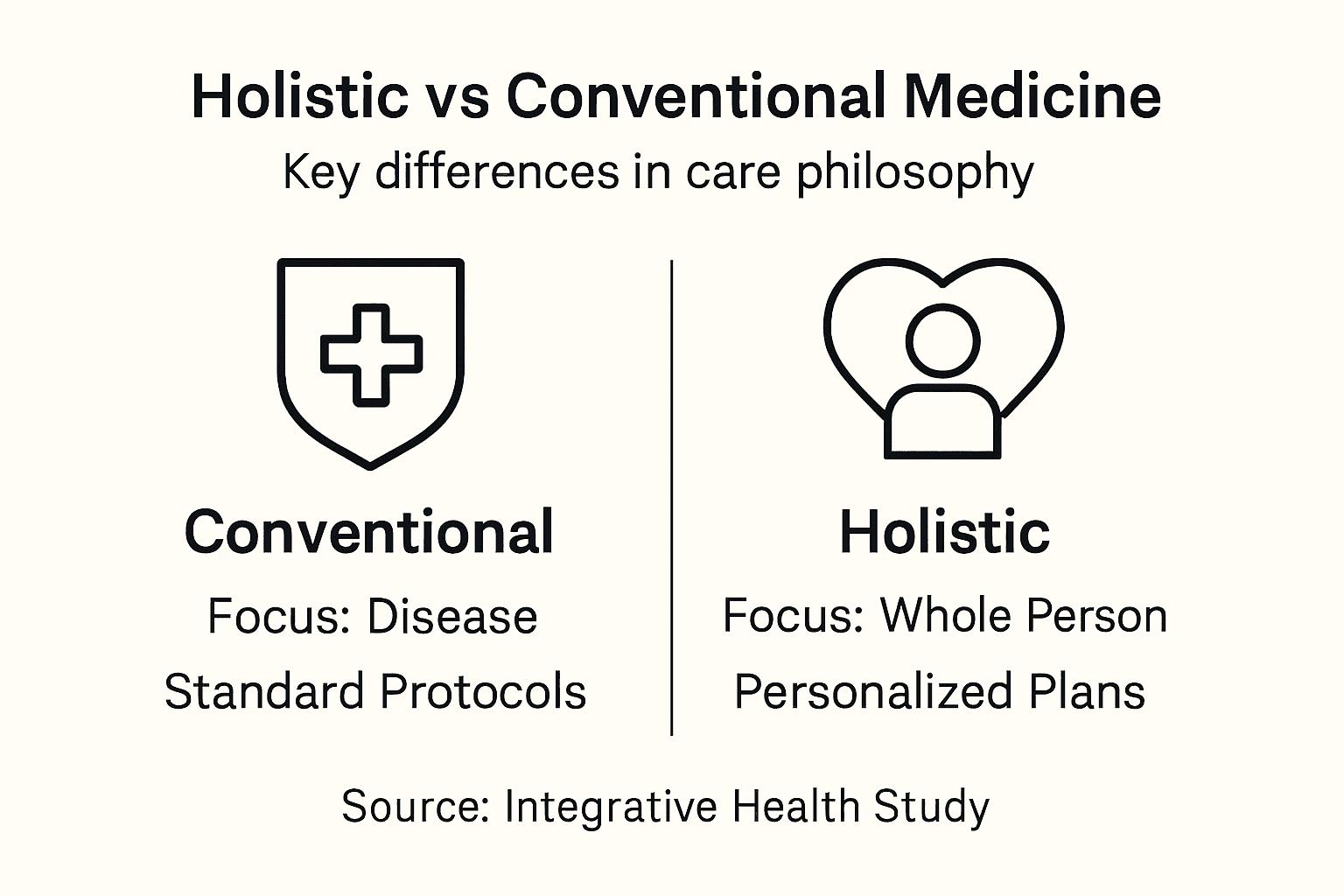
Here's a concise comparison of conventional and holistic medicine philosophies:
| Perspective | Conventional Medicine | Holistic Medicine |
|---|---|---|
| Main Focus | Treats specific symptoms | Treats whole person |
| Approach | Standardized protocols | Personalized care plans |
| Prevention Strategy | Reactionary, after symptoms occur | Prevention and root cause resolution |
| Patient Role | Passive recipient | Active participant |
Pro tip: Seek healthcare practitioners who demonstrate flexibility in combining evidence-based conventional treatments with holistic wellness strategies.
Variations and Methods in Holistic Practice
Holistic medicine encompasses a remarkably diverse array of healing practices that transcend conventional medical boundaries. Global holistic approaches integrate multiple healing traditions that emphasize comprehensive wellness through culturally rich and individually tailored methodologies.
Traditional holistic practices from around the world include:
- Acupuncture: Chinese healing technique targeting energy pathways
- Ayurveda: Ancient Indian system balancing body, mind, and spirit
- Herbal Medicine: Natural remedy approaches using plant-based treatments
- Meditation: Mindfulness practices promoting mental and emotional healing
- Nutritional Therapy: Dietary interventions supporting overall wellness
Unlike conventional medicine's symptom-focused approach, these holistic methods share fundamental principles of addressing root causes and promoting natural healing. Each practice offers unique perspectives on health, recognizing the intricate connections between physical, emotional, and spiritual well-being.
Key therapeutic approaches in holistic practice involve:
- Personalized treatment plans
- Emphasis on preventive care
- Holistic diagnostic techniques
- Mind-body healing strategies
- Integrative wellness protocols
Holistic medicine views health as a dynamic balance, not merely the absence of disease.
Modern holistic practices continue evolving, incorporating scientific research and traditional wisdom to create comprehensive, patient-centered healing experiences.

Pro tip: Research multiple holistic practitioners and compare their approaches to find the most resonant healing methodology for your individual wellness journey.
Patient Roles and Personalization in Care
Holistic healthcare fundamentally transforms patients from passive recipients to active participants in their wellness journey. Patient-centered care revolutionizes treatment approaches by recognizing each individual's unique physical, emotional, and social context.
Key characteristics of patient personalization in holistic medicine include:
- Deep collaborative decision-making
- Comprehensive health assessments
- Individualized treatment strategies
- Consideration of personal lifestyle factors
- Emotional and spiritual wellness integration
- Ongoing health education and empowerment
Traditional medical models typically viewed patients as recipients of standardized treatments. In contrast, holistic approaches recognize that healing is a deeply personal experience requiring active patient engagement, mutual respect, and tailored interventions that address root causes rather than isolated symptoms.
The patient's role in holistic care involves:
- Providing detailed personal health history
- Participating in treatment plan development
- Implementing recommended lifestyle modifications
- Maintaining open communication with practitioners
- Taking responsibility for personal wellness journey
Personalized care transforms patients from passive observers to empowered health architects.
Modern holistic practitioners view patients as partners, recognizing that sustainable healing requires mutual commitment, trust, and individualized understanding.
Pro tip: Prepare a comprehensive personal health narrative before consulting holistic practitioners to maximize the personalization of your wellness strategy.
Risks, Safety, and Regulatory Considerations
Navigating the complex landscape of holistic medicine requires a nuanced understanding of potential risks and safety considerations. Herbal medicine safety demands careful evaluation due to significant variability in preparation, standardization, and potential interactions with conventional treatments.
Key safety considerations in holistic practices include:
- Potential drug-herb interactions
- Lack of standardized practitioner training
- Variability in treatment quality
- Inconsistent regulatory oversight
- Risk of misdiagnosis or delayed conventional treatment
- Potential allergic reactions to natural compounds
Unlike conventional medicine with its rigorous regulatory frameworks, holistic approaches often operate in less structured environments. This complexity necessitates proactive patient engagement and thorough research before pursuing alternative treatments.
Critical safety steps for patients include:
- Consulting licensed and certified practitioners
- Disclosing all current medications
- Researching treatment backgrounds
- Maintaining open communication with healthcare providers
- Monitoring personal responses to treatments
- Avoiding self-diagnosis or unsupervised treatments
Patient safety requires a balanced approach that respects both traditional wisdom and modern medical standards.
The integration of holistic and conventional medical practices continues to evolve, with increasing emphasis on evidence-based approaches and comprehensive safety protocols.
Pro tip: Always maintain transparent communication with all your healthcare providers about any holistic treatments you are considering or currently using.
Comparing Cost, Accessibility, and Outcomes
Healthcare consumers increasingly seek comprehensive understanding of treatment options, weighing the complex interplay between costs, accessibility, and potential health outcomes. Integrative medicine offers nuanced healthcare perspectives that challenge traditional medical economic models.
Key comparative factors between conventional and holistic approaches include:
- Initial treatment costs
- Long-term healthcare expenses
- Insurance coverage availability
- Geographic treatment accessibility
- Prevention versus intervention strategies
- Individual health outcome potentials
Conventional medical treatments typically feature more standardized pricing structures and broader insurance coverage. Holistic approaches often require out-of-pocket investments, with costs varying significantly based on practitioner expertise, treatment complexity, and regional availability.
Outcome considerations reveal important distinctions:
- Conventional medicine: Rapid symptom management
- Holistic medicine: Comprehensive wellness restoration
- Conventional approaches: Standardized protocols
- Holistic strategies: Personalized healing pathways
- Conventional treatments: Targeted interventions
- Holistic methods: Root cause exploration
Healthcare value transcends immediate monetary expenditures and encompasses comprehensive personal wellness.
Emergent research suggests that integrated approaches combining conventional and holistic strategies may optimize both health outcomes and long-term cost-effectiveness.
This table highlights the cost and accessibility differences between conventional and holistic healthcare:
| Factor | Conventional Care | Holistic Care |
|---|---|---|
| Initial Cost | Usually insured or covered | Often out-of-pocket |
| Accessibility | Broad national access | Varies by region/practitioner |
| Insurance Coverage | High, standardized | Limited, often excluded |
| Outcome Focus | Rapid symptom management | Comprehensive wellness |
Pro tip: Request detailed cost breakdowns and potential insurance coverage options before committing to any comprehensive treatment plan.
Discover the Best of Holistic and Conventional Medicine for Your Wellness Journey
Navigating the differences between holistic and conventional medicine can feel overwhelming when trying to find the right path for your health. This article highlights the challenge of balancing symptom-focused treatments with whole-person care while emphasizing personalized plans and patient empowerment. If you are looking to embrace a comprehensive approach that combines evidence-based holistic therapies with trusted medical practices, Go Holistic provides exactly what you need.
Explore our platform at Go Holistic where you can access a curated directory of certified holistic practitioners offering acupuncture, Ayurveda, nutritional therapy, and more. Our AI-powered system personalizes recommendations based on your unique health concerns, backed by research and safety information to help you make informed choices. Take control of your wellness now by connecting with licensed providers and discovering natural, non-invasive treatments designed to complement any conventional care you receive. Visit Go Holistic and start your personalized health journey today.
Frequently Asked Questions
What is the main difference between holistic and conventional medicine?
Holistic medicine focuses on treating the whole person, including physical, emotional, and social factors, while conventional medicine primarily targets specific symptoms and diseases using standardized protocols and interventions.
How does patient participation differ in holistic vs. conventional medicine?
In holistic medicine, patients are seen as active participants in their wellness journey, collaborating with practitioners to create personalized care plans. In contrast, conventional medicine typically views patients as passive recipients of treatment.
What are some common holistic practices?
Common holistic practices include acupuncture, Ayurveda, herbal medicine, meditation, and nutritional therapy, each focusing on the overall balance and wellness of the individual.
Are there risks associated with holistic medicine?
Yes, there are potential risks, including drug-herb interactions, variability in practitioner training, and lack of regulatory oversight. It's essential to consult licensed practitioners and disclose all current medications before starting any holistic treatment.